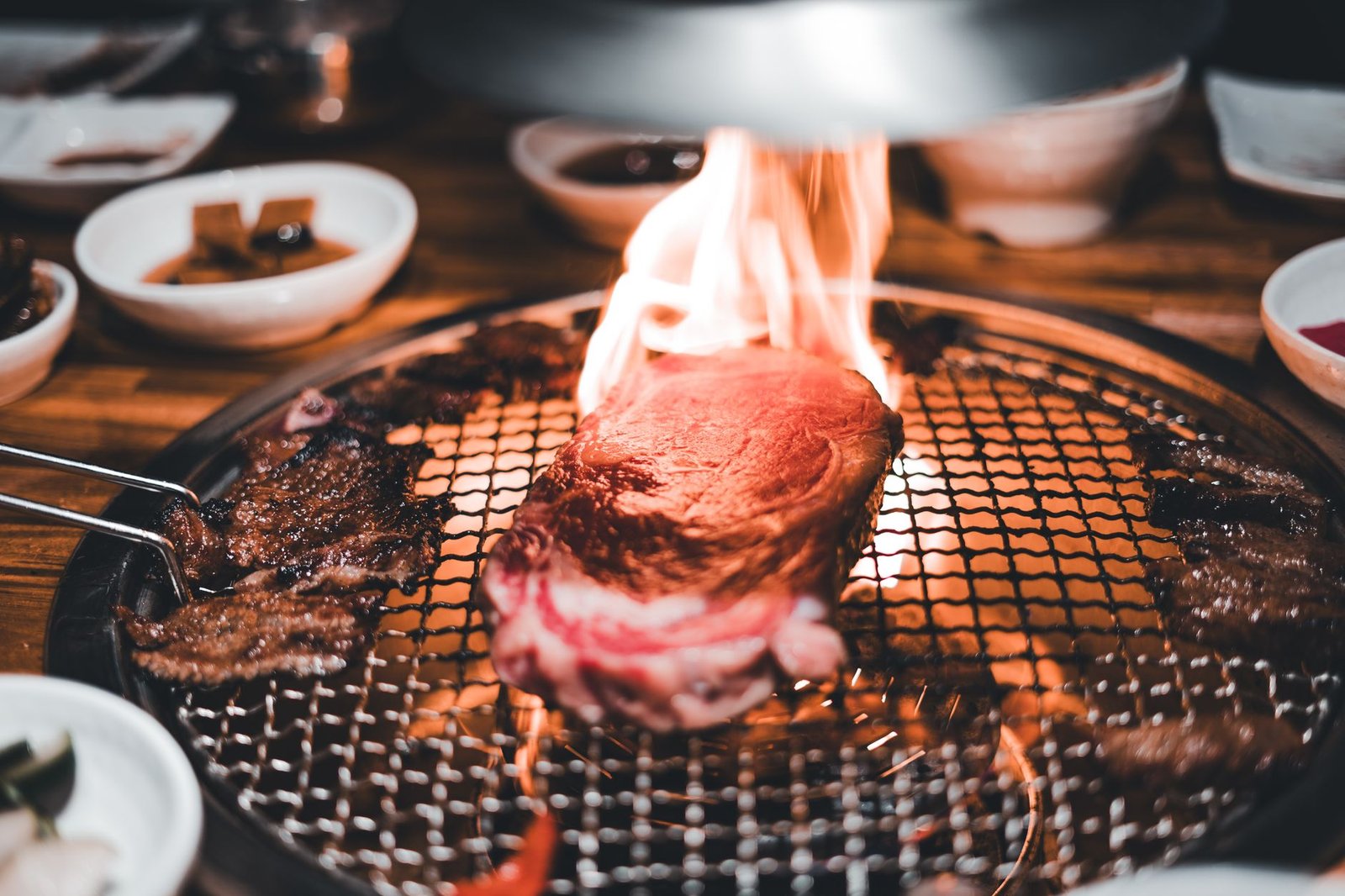
Sit down, order meat by the portion, grill with the tongs and scissors, and refill side dishes free. Pay at the counter or table; no tip is expected.
What Korean BBQ Restaurants in Seoul Are Like
Korean BBQ restaurants are built around a grill set into your table, or a portable burner placed on it. You cook the meat yourself, or staff do much of it for you, and you eat it in small bites alongside rice, lettuce, and side dishes. It is a slow, social meal rather than a quick stop, and most groups stay for an hour or more.
The restaurant provides the equipment: table grills, tongs, kitchen scissors for cutting meat, and aprons to protect your clothing (as listed by the Korea Tourism Organization, english.visitkorea.or.kr). You do not need to bring or arrange anything.
Before you go
- Group size: Most places are set up for two or more diners sharing a grill. Solo diners may find it harder to be seated or to order, so a group of two or more is simpler.
- Hours: Popular restaurants in districts such as Mapo, including the Hongdae area, commonly operate from 11:00 to 23:00 daily (as of October 2026, Korea Tourism Organization). Last order times differ by restaurant and are not centrally listed, so check the venue directly if you plan a late dinner.
- Clothing: Smoke and cooking aromas cling to fabric. Wear something you can wash, and use the apron if one is offered.
- Language: Multilingual signs, English menus, and tablet ordering apps are commonly available in major tourist districts (as of October 2026, Korea Tourism Organization). Outside those areas, expect Korean-only menus and use photos or a translation app.
Video: VisitSeoul TV (official YouTube). Use this official clip to get a feel for Korean BBQ before your trip; our guide covers the practical details.
Ordering: Meat Cuts, Portions, and Minimums
Meat is usually ordered by the portion, often described as one serving (inbun, 인분). Menus list cuts of pork, such as pork belly (samgyeopsal) and pork neck, and beef cuts such as short rib (galbi) and marinated beef (bulgogi). If you are unsure, pork belly is the most common first order.
I cannot give reliable price ranges here. Specific 2026 per-serving prices and any minimum order rules could not be verified from official sources, so read the menu or the posted board outside before you sit down. Some restaurants ask for a minimum number of portions per table; if the rule matters to you, confirm it when you are seated.
Order one or two meat portions first, then add more once you see how filling they are. Grilling is paced, and ordering in rounds is normal and avoids overcooked leftovers.
Steps for ordering
- Check the menu or the board outside for the meats offered and any posted minimums.
- When seated, ask whether the grill will be lit by staff. Many places do it for you.
- Order your first meat by the portion. Use the tablet if there is one, or call staff with a polite "excuse me" (jeogiyo, 저기요) or a button on the table.
- Wait for banchan, lettuce, and dipping sauces to arrive before the meat starts cooking.
- Place the meat on the grill, cook, and cut it with the scissors (see the next section).
- Order more meat, drinks, or a rice or noodle dish toward the end of the meal.
- Pay when you finish (see the payment section below).
Grilling Etiquette and Using the Scissors
If staff cook for you, let them. They know the grill and the cut, and interfering can lead to uneven results. If you cook yourself, a few habits make the meal smoother.
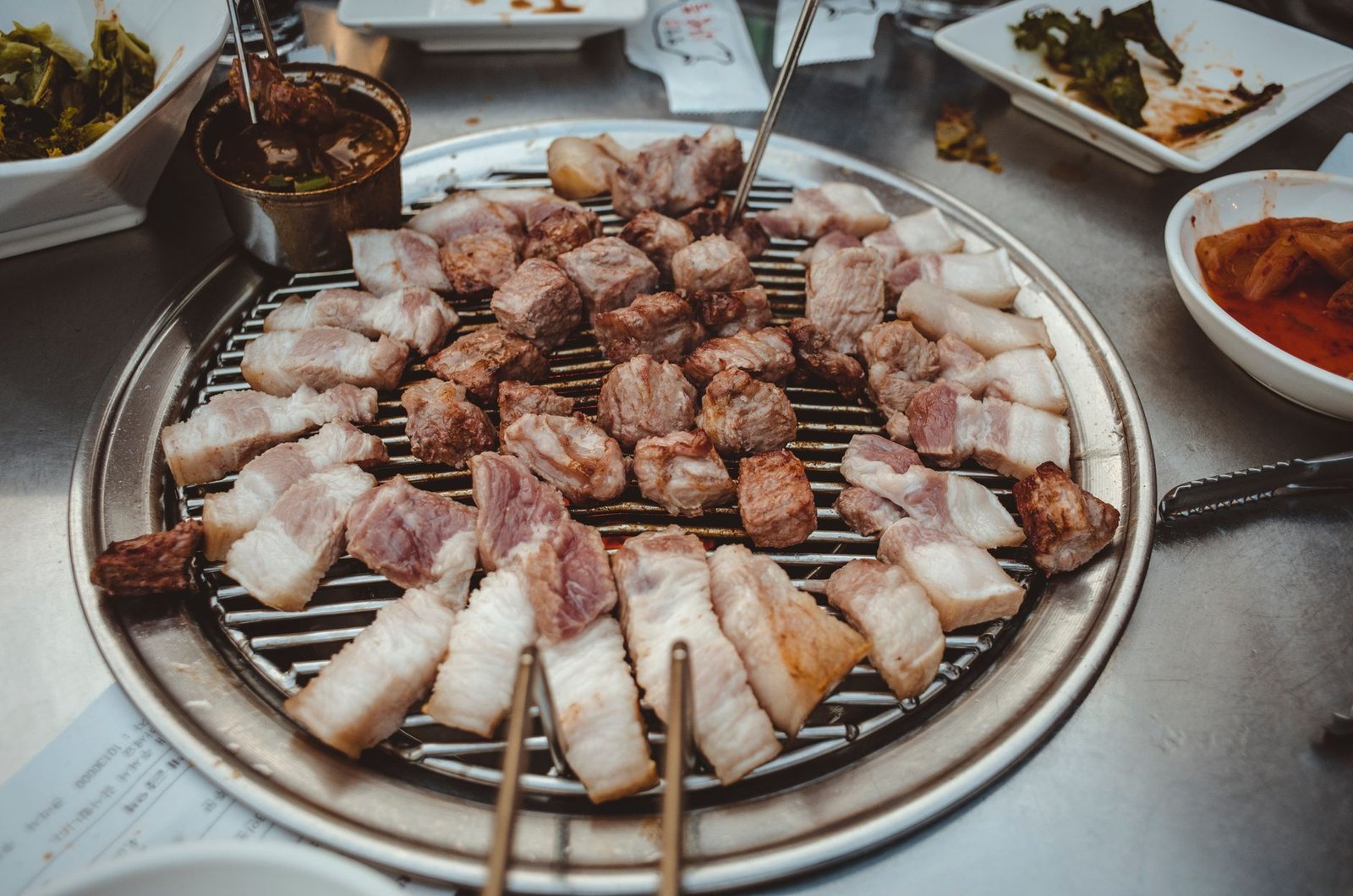
- Use the tongs for raw meat and the scissors to cut. Cut thick pieces such as pork belly into bite-size strips on the grill. Scissors are standard, not unusual.
- Turn the meat once or twice. Pork should be cooked through. Beef cuts vary, so follow staff guidance when it is offered.
- Move cooked pieces to the edge of the grill to keep them warm while new meat cooks in the center.
- Do not crowd the grill. Too much meat steams rather than sears.
- Ask for a grill change if it blackens heavily. Staff will usually replace the grill plate.
For basic table manners, official guidance advises waiting for the eldest person at the table to start eating, avoiding sticking chopsticks vertically into a bowl of rice, using a spoon for rice and soup, and placing utensils back on the table at the end of the meal (english.visitseoul.net).
Do not touch the hot grill or the metal edges, and keep loose sleeves and bag straps away from the flame. Hot oil can splatter when fatty cuts are placed down.
For a deeper look at how to build each bite, see our guide on how to eat Korean BBQ like a local.
Banchan, Lettuce Wraps, and Side Dishes
Banchan are the small side dishes that arrive at the table, such as kimchi and fresh vegetables. They are served with the meal, and free refills are standard policy, either by asking staff or at a self-service side dish bar (as of October 2026, Korea Tourism Organization). You do not need to pay extra for a refill of ordinary banchan.
Making a wrap
Lettuce and perilla leaves are used for ssam, or wraps. Take a leaf in your hand, add a piece of grilled meat, a dab of dipping sauce such as ssamjang (a seasoned bean paste), and perhaps garlic, a slice of raw onion, or a little kimchi. Fold it and eat it in one bite. A smaller wrap is easier to manage than an overstuffed one.
- Grilled garlic and kimchi can be cooked on the edge of the grill if you like.
- Take only what you will eat. Refills are free, but leaving large amounts of food is considered wasteful.
- If a side dish bar is present, take a small plate and return as needed.
Ask for more lettuce, garlic, or sauce as soon as you run low. Staff expect these requests and rarely mind.
Drinks, Soju, and Ordering Extra Rice or Noodles
Soju and beer are the traditional companions to grilled meat, and many diners order them by the bottle. Soft drinks and water are also available. If you do not drink alcohol, there is no expectation to order it, although menus will show it prominently.
When pouring for others, a common courtesy is to use both hands or support your pouring arm with the other hand, and to pour for those older than you before yourself. Turning slightly away when drinking in front of elders is a traditional courtesy that you may notice but are not required to copy.
Finishing the meal
Many diners end with a rice or noodle dish rather than plain rice at the start. Typical choices include cold noodles (naengmyeon), a stew such as doenjang jjigae (soybean paste stew), or fried rice cooked in the leftover grill oil in some restaurants. Availability and prices differ by venue, so check the menu board for these items. Order them near the end so they arrive while you are still at the table.
- Plain rice is usually ordered separately if you want it alongside the meat.
- Use a spoon for rice and soup, as the official etiquette guidance suggests.
- At the end, place your utensils back on the table instead of leaving them in a bowl.
Paying, Service Charges, and Tipping Norms
Service charges or cover fees are generally not added to restaurant bills in South Korea, because listed menu prices include taxes and service (english.visitseoul.net, as of October 2026). Tipping is not customary or expected at Korean BBQ restaurants, including for US visitors, who may be used to adding a percentage. Leaving extra money is not necessary, and staff may try to return it.
Payment methods
Seoul restaurants widely accept major credit cards, mobile payment platforms such as Samsung Pay, and cash in Korean won (as of October 2026, Korea Tourism Organization). Foreign-issued Visa and Mastercard cards work reliably for restaurant transactions throughout Korea (as of October 2026, Korea Tourism Organization).
- Bring a card with no foreign transaction fee if you have one; check the terms with your own bank, as I cannot verify them here.
- Carry some won in cash as a backup for small or older restaurants.
- Payment is normally made at the counter near the entrance, not at the table, though tablet-ordering places may vary. Watch what other diners do or ask staff.
Check the final bill against what you ordered. Extra side dishes you did not request, or drinks and rice you did, can appear as separate items. If an amount looks wrong, ask politely while you are still at the counter.
For broader traveler updates on Korea, see South Korea travel news and key policy updates.
Good Areas in Seoul to Try Korean BBQ
Korean BBQ restaurants are spread across the city, so you do not need to travel far from where you are staying. Two areas are practical starting points for visitors.
- Mapo and the Hongdae area: Popular restaurants here commonly operate from 11:00 to 23:00 daily (as of October 2026, Korea Tourism Organization). Last order times vary by restaurant, so confirm if you arrive late.
- Myeongdong: A major tourist district where English menus, signs, and tablet ordering are commonly available (as of October 2026, Korea Tourism Organization). Last order times vary by venue and are not centrally listed.
In tourist-heavy areas, menus are easier to read, though the experience can feel more geared toward visitors. Local neighborhoods can offer a more casual atmosphere, with fewer English options. If you are sightseeing at Gyeongbokgung Palace during the day, you can plan dinner in a nearby district afterward.
To keep things simple: pick a restaurant with a visible menu, order one round of meat, let staff help with the grill, use banchan refills freely, and pay by card without adding a tip. That covers nearly every first-time situation you are likely to face.
Prices and hours can vary by branch and season — check the official site before you go.
Sources checked October 2026: visitseoul.net, visitkorea.or.kr, visitkorea.or.kr, visitkorea.or.kr, visitkorea.or.kr, visitkorea.or.kr.