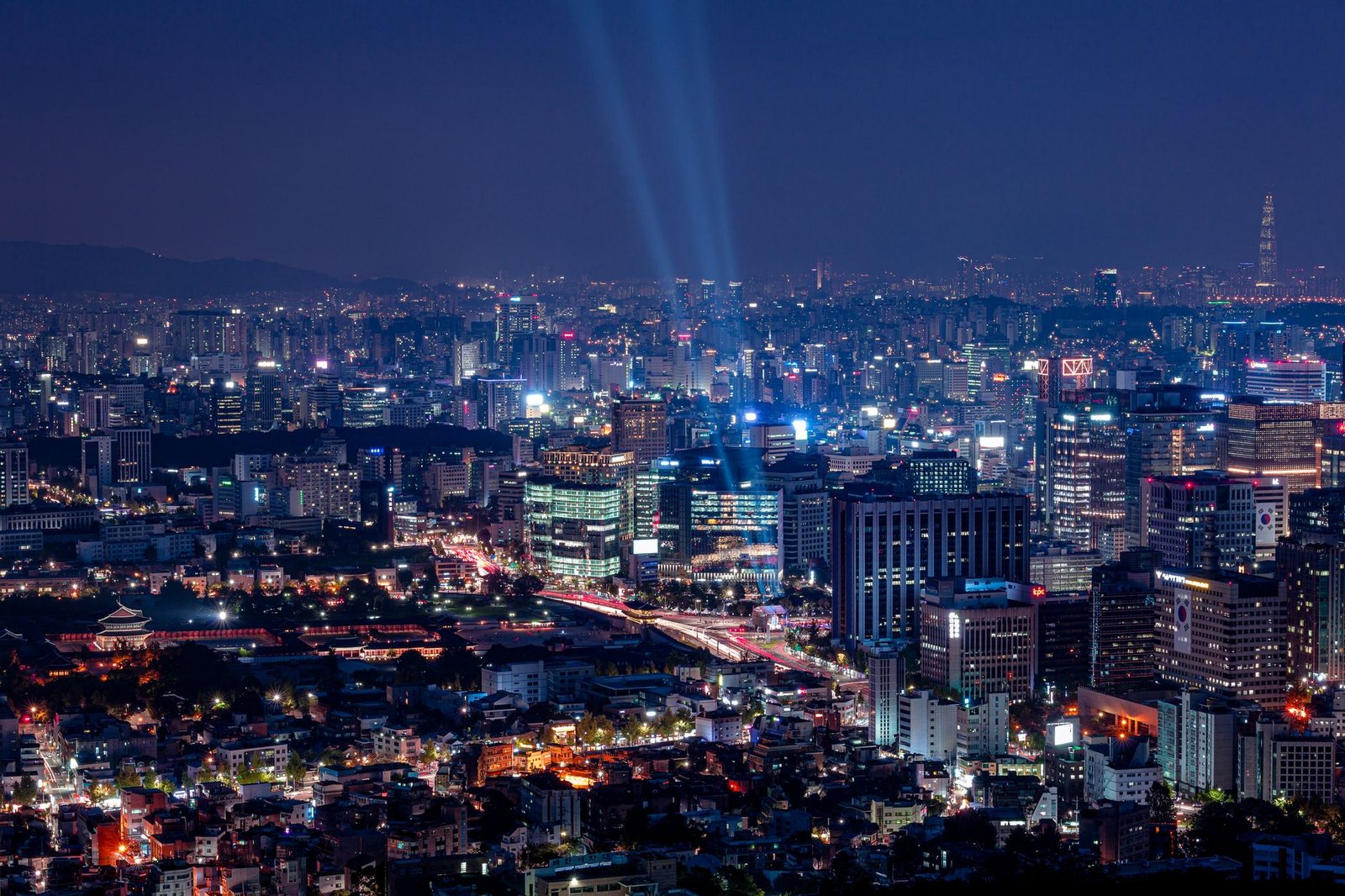
Yes. The US State Department rates South Korea Level 1, Exercise Normal Precautions (as of November 2026). Expect low everyday risk, some petty crime and scams, and a few specific issues worth planning for.
Short answer: how safe is South Korea for US travellers
For most US visitors, South Korea is a comfortable and orderly destination. The U.S. Department of State lists it at Level 1, Exercise Normal Precautions, the lowest advisory tier (advisory issued May 28, 2025; checked November 2026, U.S. Department of State). That is the same tier given to many countries that travellers visit without much worry.
The advisory still names a few things to keep in mind. Large public demonstrations can occur with little notice and may disrupt transport. Security tensions on the Korean Peninsula remain high because of North Korean missile tests and military activity. South Korea also holds nationwide civil emergency drills during the year, so you may see or hear one without it signalling a real threat.
In practice, daily life for visitors is unaffected by these points. Trains run, streets are busy late into the evening, and the main risks are the ordinary ones: pickpocketing in crowds, traffic, and the occasional overcharge. The sections below cover each theme and point to related guides.
- US advisory level
- Level 1 – Exercise Normal Precautions (as of November 2026, U.S. Department of State)
- Visa-free stay
- Up to 90 days for US passport holders (as of November 2026, K-ETA site)
- K-ETA
- US travellers are temporarily exempt for tourist visits through December 31, 2026 (as of November 2026, K-ETA)
If your trip falls after that exemption date, check the K-ETA site before you book, because the rule is time-limited.
Crime levels and common scams to watch for
Violent crime against visitors is uncommon, and most reports from travellers involve petty theft or money disputes rather than anything threatening. The research notes available for this guide do not include crime statistics, so this article does not quote figures. Check the State Department advisory page linked above for the current wording.
Sensible habits go a long way. Keep your phone and wallet in a front or zipped pocket on crowded subways and at night markets, and do not leave bags unattended on café tables, a habit that is common locally but not a guarantee for visitors. Keep your passport secure and carry a copy or photo of it.
Scams that tend to affect tourists are mostly commercial: taxis taking indirect routes, shops quoting inflated prices without displayed tags, and aggressive touting in nightlife areas. Agree on or check prices before ordering, use the metered taxi or an app, and ask for an itemised bill if a total looks wrong.
If you have a dispute with a shop, hotel or taxi that you cannot resolve on the spot, the 1330 Korea Travel Hotline can help with tourist assistance and commercial disputes (as of November 2026, VisitKorea). Details are in the hotline section below.
Demonstrations are the other practical issue. They are usually concentrated in specific areas of central Seoul, and the main effect is road closures and crowded transit. Allow extra time on days when a large gathering is announced, and avoid joining crowds out of curiosity.
Safety for solo women and LGBTQ+ travellers
Solo women commonly travel in Seoul and other cities, and busy districts remain active late in the evening. Well-lit streets, many convenience stores and frequent public transport contribute to a sense of ease. That said, nightlife areas have the usual risks: drinks left unattended, intoxicated crowds and unwanted attention late at night.
Basic precautions apply as they would at home. Watch your drink, stay with your group in busy bars, use a licensed taxi or a ride app rather than accepting informal rides, and share your location with someone you trust. For a closer look at specific neighbourhoods, see Is It Safe for a Solo Female Traveler to Walk at Night in Hongdae or Myeongdong?
For LGBTQ+ travellers, the research notes for this guide do not cover local laws or social attitudes in detail, so this article does not make specific legal claims. Before you travel, read the current State Department advisory and the embassy's guidance, and consider how comfortable you are with public displays of affection, which are generally low-key in Korea for all couples. Seoul has visible LGBTQ+ venues, but attitudes vary by area and setting.
Save 112 (police) and the US Embassy number in your phone before you land. Having them ready matters more than any other single safety step.
If anything happens, you can contact police at 112 and, for US citizens, the embassy in Seoul. Both are covered in the sections that follow.
Health, medicine, and water: what to know before you go
South Korea has a modern healthcare system, and you can usually find clinics and pharmacies in cities without difficulty. Even so, US health insurance often does not cover care abroad. Check your policy, and consider travel medical insurance that covers treatment and, if needed, evacuation. For a broader overview of how insurance and emergency response work for international visitors, see Your Essential Guide to US Healthcare, Insurance, and Emergency Response for International Travelers.
For minor ailments, local pharmacies stock common over-the-counter travel medications, including pain relievers, fever reducers, cold and flu remedies, digestive aids, motion sickness products, hangover and fatigue kits, and basic wound care supplies (as of November 2026, VisitKorea). If you take a prescription medicine, bring enough for the whole trip in its original packaging and a note from your prescriber. Do not assume an identical brand will be available.
Rules on bringing certain medicines into Korea can be strict. The notes for this guide do not list them, so check the official customs and embassy guidance before packing controlled or unusual prescriptions.
On tap water, Korean tap water is described as meeting safety standards and generally drinkable, although many locals and hotels prefer bottled or filtered water. The official standards page could not be confirmed as updated, so treat this as general guidance and follow your hotel's advice. The dedicated article, Is Tap Water Safe to Drink in Korea?, covers it in more detail; Korean tap water is generally considered safe to drink, though locals and hotels often prefer bottled or filtered water, and the official standards could not be verified, so check official sources for current information.
If you have a sensitive stomach, bottled water is an easy and inexpensive choice, and it is widely sold at convenience stores.
Emergency numbers and reaching the US Embassy
Two numbers cover most emergencies. Dial 112 for police and 119 for fire and ambulance (as of November 2026, VisitKorea). Both work for urgent situations anywhere in the country. If you cannot speak Korean, state your location and the word for what you need, such as police or ambulance, and stay on the line.
- Police
- 112 (as of November 2026, VisitKorea)
- Fire and ambulance
- 119 (as of November 2026, VisitKorea)
For US citizens, the US Embassy in Seoul handles lost or stolen passports, arrests, serious injuries and other consular matters. Its details are listed below, and you can confirm them on the embassy contact page.
- Address
- 188 Sejong-daero, Jongno-gu, Seoul 03141, Republic of Korea
- Phone
- +82-2-397-4114
- Routine consular services
- By advance appointment, Monday to Friday 08:30–11:00 and 13:00–15:00; closed Wednesday and Friday afternoons and on US and Korean public holidays (as of November 2026, US Embassy)
Do not walk in expecting routine services. Book through the embassy appointment system first. For a genuine emergency involving a US citizen, call the embassy number rather than waiting for an appointment.
Keep a photo of your passport photo page separate from the original. It makes replacement faster if the document is lost or stolen.
Getting help: Korea Travel Hotline (1330) and tourist police
The Korea Travel Hotline, 1330, is a useful first call for non-emergency problems. It runs 24 hours a day, 7 days a week, and supports Korean, English, Japanese, Chinese, Russian, Vietnamese, Thai and Malay (as of November 2026, VisitKorea). It can help with travel information, tourist assistance and commercial disputes, and it can act as an interpreter link when you need to talk to a local business or service.
Use 1330 for matters like a disputed taxi fare, a confusing hotel charge, directions, or help finding a hospital. Use 112 or 119 when there is danger, injury or a crime in progress.
Seoul also has a tourist police presence. An older VisitKorea source says tourist police safety centres operate in busy areas such as Myeong-dong, Dongdaemun and Hongdae, and that they can be reached through 112 or via 1330. This information could not be verified as current, so confirm locations and hours with 1330 or the VisitKorea site before relying on a specific office.
If you are unsure which service you need, call 1330 first for a non-urgent issue and 112 for anything involving safety. Either way, you will be directed to the right place.
For a theft report, such as a stolen phone or wallet, you will typically need to go to a police station in person. Take your passport, and request a copy of the report if your insurer asks for one. Your insurer will specify what documentation it requires.
Before You Fly: Entry Rules and Pre-Trip Safety Checks
Safety in Korea starts before you land. A few small admin steps remove most of the avoidable stress on arrival, and they are worth doing in the week before departure rather than at the airport.
Entry rules for US passport holders
US passport holders are temporarily exempt from applying for a K-ETA for tourist visits through December 31, 2026 (as of the research check, Official K-ETA Website / VisitKorea). Visa-free entry allows a stay of up to 90 days (Official K-ETA Website / VisitKorea). If your trip falls close to the end of 2026, check the official K-ETA website again before you book, because exemption periods are set by the Korean government and can change.
The standard K-ETA fee is 10,000 KRW, roughly $7–$8 USD (Official K-ETA Website). Exempt travelers do not have to pay it. Some visitors apply voluntarily so they can skip filling in a paper arrival card. That is a convenience choice, not a safety requirement.
Only use the official K-ETA website. Look-alike sites charge extra fees for something travelers either do not need or can obtain directly. If you decide to apply voluntarily, type the address yourself rather than following an advert.
Read the current advisory
The US State Department lists South Korea at Level 1 – Exercise Normal Precautions (issued May 28, 2025, U.S. Department of State Travel Advisories). That is the lowest level. The advisory still names a few concerns worth knowing about:
- Demonstrations: large public demonstrations can occur with little notice and cause transit disruptions.
- Peninsula tensions: security tensions remain high because of North Korean missile tests and military activities.
- Civil drills: South Korea regularly conducts nation-wide civil emergency drills throughout the year.
In practice, these items affect your schedule more than your personal safety. A demonstration might delay a bus or close a road near a central square, so leave extra buffer on the day of a flight or a timed booking.
A short pre-departure checklist
- Confirm the K-ETA exemption status on the official K-ETA website for your travel dates.
- Save 112 (police), 119 (fire and ambulance) and 1330 (Korea Travel Hotline) in your phone.
- Save the US Embassy Seoul number, +82-2-397-4114, and its address: 188 Sejong-daero, Jongno-gu, Seoul 03141.
- Check that your travel insurance covers medical care abroad. Our guide to US healthcare, insurance and emergency response for international travelers explains what to look for.
- Pack any prescription medicine in its original packaging, and carry enough for the whole trip.
Doing these five things takes less than an hour and covers the most common gaps travelers run into.
Staying Well on the Ground: Water, Pharmacies and Everyday Health
Day-to-day health problems for visitors are usually minor: a cold, a stomach upset, sore feet, or a hangover. Korea is well set up for all of these, and knowing where to go saves time.
Drinking water
Korean tap water meets safety standards and is generally considered safe to drink, although bottled or filtered water is widely preferred by locals and hotels. Note that the official standards page could not be confirmed as updated, so treat this as general guidance rather than a guarantee. If you have a sensitive stomach, or simply want to follow local habit, use bottled or filtered water. Our guide on whether tap water is safe to drink in Korea covers the topic in more detail.
What pharmacies stock
Local Korean pharmacies stock common over-the-counter travel medications (VisitKorea). That includes:
- pain relievers and fever reducers
- cold and flu remedies
- digestive aids
- motion sickness products
- fatigue and hangover kits
- basic wound care supplies
For minor ailments, a pharmacy is usually the fastest option. Describe your symptoms plainly, point to the item on your phone if you have a translation app open, and ask the pharmacist to confirm the dosage. Product names and strengths can differ from what you know at home, so do not assume an identical brand exists.
If you take a specific prescription drug, do not count on buying the same one locally. Bring enough supply and keep it in your carry-on, not checked luggage.
When it is more than a minor problem
For a serious injury or sudden illness, call 119 for fire and ambulance (VisitKorea). If you are unsure whether something is an emergency, or you need help finding English-speaking assistance, the 1330 Korea Travel Hotline runs 24 hours a day, 7 days a week and supports Korean, English, Japanese, Chinese, Russian, Vietnamese, Thai and Malay (VisitKorea).
Keep your insurance details and policy number somewhere you can reach them offline, such as a screenshot. Many travelers pay up front and claim later, so keep itemised receipts and any medical documents.
Practical habits that reduce risk
- Carry a small first-aid kit with plasters for blisters if you plan to walk a lot.
- Keep a note of any allergies written in Korean as well as English.
- Do not wait until a minor problem becomes a major one; a pharmacy visit early in the day is easier than an evening scramble.
If Something Goes Wrong: Practical Steps for Common Situations
Most trips pass without incident, but it helps to have a plan. The right contact depends on the problem, and mixing them up wastes time.
Which number to call
| Situation | Contact |
|---|---|
| Crime in progress, assault, theft report | 112 police (VisitKorea) |
| Fire, medical emergency, ambulance | 119 (VisitKorea) |
| Tourist information, translation help, commercial disputes | 1330 Korea Travel Hotline, 24/7 (VisitKorea) |
| Lost or stolen passport, serious welfare concern | US Embassy Seoul, +82-2-397-4114 |
Tourist police
Seoul Tourist Police are reported to operate safety centers in busy tourist areas such as Myeong-dong, Dongdaemun and Hongdae, and can reportedly be reached through the 112 police line or via 1330, but this comes from an older source that we could not verify, so please check the official VisitKorea site for current locations and contact details. This information comes from an older source, so confirm the current locations and contact method with 1330 or VisitKorea before relying on a specific office. If you are in trouble, calling 112 or 1330 is always a safe starting point.
Lost or stolen passport
A lost passport is the most common reason for a visitor to need the embassy. The sequence below is a sensible order of action.
- Report the loss or theft to the police at 112 or at a local station, and ask for a written report if one is available.
- Contact the US Embassy Seoul on +82-2-397-4114 to explain the situation.
- Book an appointment. In-person routine services require one in advance.
- Bring the police report, any photo ID you still have, and any copy of your passport you saved.
- US Embassy Seoul address
- 188 Sejong-daero, Jongno-gu, Seoul 03141, Republic of Korea
- Phone
- +82-2-397-4114
- Consular appointments
- Monday–Friday 08:30–11:00 and 13:00–15:00; closed Wednesday and Friday afternoons and on US and Korean public holidays (as of the research check, U.S. Embassy & Consulate in the Republic of Korea)
Do not turn up at the embassy without an appointment for routine services. Because of the limited hours and holiday closures, a lost passport late in the week can cost extra days, so check the embassy website for the current process.
Late-night concerns
Central districts are busy into the evening, but sensible habits still apply: stay with your group, keep your phone charged, and know how to call 112. For more detail on evening walking, read our guide on walking at night in Hongdae or Myeongdong as a solo female traveler.
Disruptions and drills
Because large demonstrations can occur with little notice, and civil emergency drills happen regularly through the year, a sudden road closure or siren is not necessarily a sign of danger. Follow local instructions, check your route again, and use the 1330 hotline if you need help understanding what is happening.
One firm boundary
The US lists North Korea at Level 4 – Do Not Travel, citing risks of arrest and wrongful detention, and US passports are not valid for travel to, in or through North Korea without a Special Validation, which is issued only in rare, extraordinary circumstances (U.S. Department of State Travel Advisories). Treat any border-area day trip with that in mind and book only through reputable operators that clearly explain where you can and cannot go.
In short: set up your entry paperwork and contacts before you fly, use pharmacies for minor issues, and know which number fits which problem. With those basics in place, a trip to South Korea is straightforward, and you can check the official sources again close to departure for any updates.
Why South Korea is not North Korea: travel rules for US citizens
Many first-time visitors worry because of headlines about North Korea. South Korea and North Korea are separate countries with entirely different travel conditions, and a trip to Seoul, Busan or Jeju has no connection with North Korean entry rules.
The State Department rates North Korea at Level 4, Do Not Travel, citing serious risks of arrest, long-term detention and wrongful detention (U.S. Department of State). In addition, US passports are legally invalid for travel to, in or through North Korea unless the Secretary of State grants a Special Validation, which happens only in rare and extraordinary circumstances.
South Korea, by contrast, sits at Level 1, and US citizens can enter visa-free for up to 90 days. The K-ETA exemption for US passport holders runs through December 31, 2026, and the standard K-ETA fee is ₩10,000 (as of November 2026, K-ETA site). Exempt travellers do not pay unless they choose to apply voluntarily, for example to skip the paper arrival card.
Peninsula tensions are real, and the State Department notes them. They do not usually affect a tourist itinerary, but follow official announcements, and enrol in the State Department's traveller alert programme if you want updates.
To sum up: South Korea is a low-risk destination for US travellers when you take ordinary precautions, carry insurance, and save 112, 119, 1330 and the embassy number before arrival. Re-check the advisory and K-ETA rules close to your departure date, since both can change.
Sources checked November 2026: visitkorea.or.kr, k-eta.go.kr, visitkorea.or.kr, state.gov, visitkorea.or.kr, haniseoul.com.