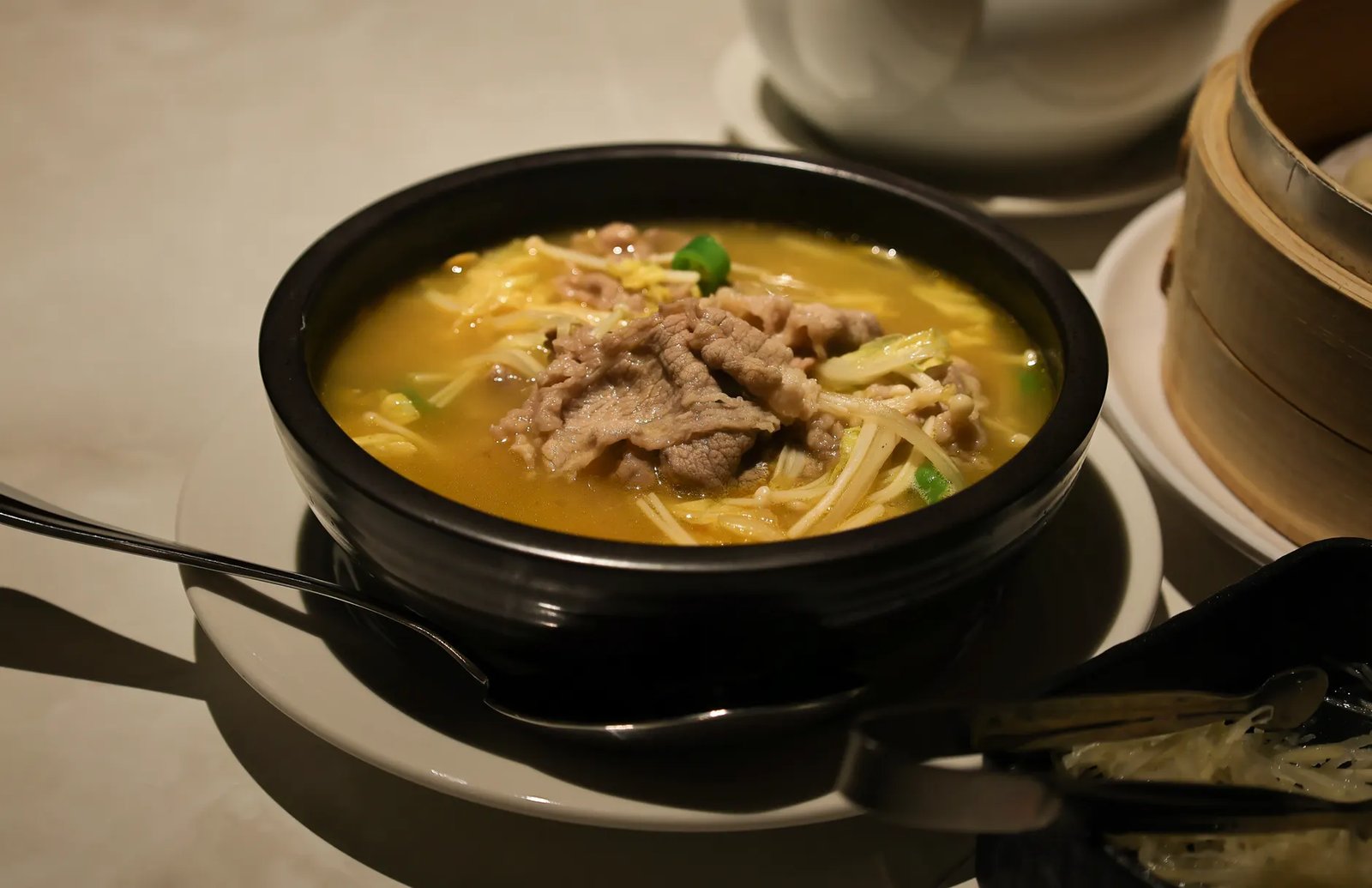
Busan's food culture is defined by its coastal geography and history as a wartime refuge, resulting in bold flavors, rich broths, and abundant seafood.
Why Busan Has a Unique Culinary Identity
Busan's culinary landscape stands apart from Seoul and other inland regions of South Korea. Positioned along the southeastern coastline, the port city has always had direct access to diverse maritime resources.
Refugee cooks adapted familiar dishes using available military relief rations, cheap cuts of meat, and local seafood. Wheat flour replaced hard-to-find buckwheat, pork bones were boiled into nutrient-rich soups, and street market stalls flourished into vibrant culinary centers. Today, dining in Busan connects visitors directly to this heritage. Whether arriving by train at Busan Station or flying from Gimpo to Gimhae, experiencing these traditional flavors is an essential part of exploring the city.
Dwaeji Gukbap: Busan's Signature Pork Soup
1. Dwaeji Gukbap (Pork Rice Soup)
What it is: A comforting bowl of long-simmered pork bone broth served with tender slices of pork shoulder, belly, or offal. The dish is typically served piping hot alongside steamed rice, fresh chives, raw garlic, green chili peppers, fermented soybean paste (ssamjang), and salted shrimp (saeujeot) used to season the soup at the table.
Why it fits the reader: As Busan's most iconic comfort food, dwaeji gukbap offers an authentic look into local dining culture. It provides a hearty, highly satisfying meal that is particularly popular for breakfast, cold weather days, or late-night dining after exploring the city.
Practical details: Dwaeji gukbap eateries line streets across Busan, with dense concentrations around Busan Station (Dwaeji Gukbap Alley) and Seomyeon. The average price for a bowl of dwaeji gukbap at popular restaurants near Busan Station ranges from approximately ₩9,000 to ₩12,000 (as of April 2026, VisitKorea). Most specialized eateries operate daily from early morning until late evening, with several open 24 hours.
Local Tip: Do not add salt right away. Season your broth by stirring in a spoonful of saeujeot (salted shrimp) and a handful of fresh green chives (buchu) to add savory depth and cut through the richness of the pork broth.
Honest drawback: The deep pork bone broth has a rich, slightly fatty aroma that may feel heavy for diners who prefer light or strictly lean soups.
Milmyeon: Refreshing Wheat Noodles Born in Wartime
2. Milmyeon (Cold Wheat Noodles)
What it is: A chilled noodle dish made with wheat flour noodles served in a cold, flavorful broth (mul-milmyeon) or tossed with a spicy red chili sauce (bibim-milmyeon). Unlike standard cold buckwheat naengmyeon broth (which primarily uses beef broth and/or dongchimi radish water kimchi), Busan milmyeon broth is simmered with pork or beef bones and infused with traditional medicinal herbs such as licorice and angelica root (as of February 2026, Korea.net).
Why it fits the reader: The use of wheat flour originated during the Korean War when buckwheat was scarce and foreign aid provided wheat rations. The resulting noodles are chewy, accessible, and paired with an aromatic, deeply refreshing broth that contrasts sharply with standard cold noodle dishes found in Seoul.
Practical details: Milmyeon specialty shops are ubiquitous in Busan, particularly in the Seomyeon, Haeundae, and Jung-gu districts. Operating hours vary by restaurant, so check official site details before visiting. Prices per bowl are generally affordable, making it a budget-friendly lunch option.
Honest drawback: The subtle herbal flavor from the licorice and angelica root in the chilled broth can surprise first-time visitors expecting a standard tangy vinegar base.
Ssiat Hotteok: Sweet Seed-Filled Pancakes
3. Ssiat Hotteok (Seed-Stuffed Sweet Pancake)
What it is: A hot, crispy griddled pancake made from dough filled with dark brown sugar and cinnamon. Immediately after frying in butter or oil, the pancake is slit open and generously stuffed with a spoonful of toasted seeds, including sunflower seeds, pumpkin seeds, and pine nuts.
Why it fits the reader: While hotteok is eaten throughout South Korea, Busan's seed-stuffed version offers a unique textural contrast. The melting caramelized sugar combines with the crunchy, nutty filling to create Busan's premier street snack.
Practical details: The primary location to try this dish is BIFF Square in Nampo-dong. Ssiat hotteok vendors at BIFF Square operate daily from approximately 10:00 AM / 11:00 AM to 9:00 PM / 10:00 PM, with peak activity and crowds occurring during the late afternoon and evening hours (as of August 2026, Trip.com). Individual pancakes are inexpensive and served in a small paper cup for easy walking consumption.
Honest drawback: Stalls at BIFF Square frequently draw long lines, and the melted sugar center inside the freshly fried pastry can be scaldingly hot if eaten too quickly.
Busan Eomuk: Premium Artisanal Fish Cakes
4. Busan Eomuk (Artisanal Fish Cakes)
What it is: Processed fish cakes made from fresh ground fish meat mixed with starch, vegetables, or seafood seasonings. While cheap fish cake skewers on wooden sticks are common across Korea, Busan produces premium artisanal eomuk featuring over 70% real fish meat content, shaped into bakery-style savory pastries, cheese-stuffed croquettes, and hot pot ingredients.
Why it fits the reader: Busan's proximity to major coastal fisheries established it as the national capital of fish cake production. Visiting a flagship eomuk center allows visitors to sample elevated versions of a classic Korean staple while learning about local culinary history.
Practical details: Major producers operate modern, multi-story flagship stores across the city. Historic Busan eomuk flagships like the Samjin Amook Main Store in Yeongdo provide English product descriptions, tags, and multilingual menus/signage for foreign visitors (as of July 2026, VisitKorea). Most stores operate daily from 09:00 AM to 8:00 PM or 9:00 PM.
- Primary Location
- Samjin Amook Main Store, Yeongdo-gu, Busan
- Accessibility
- Multilingual signage and English tags available
- Best For
- On-site snack cafe or travel gifts
Honest drawback: Fresh, cooked fish cakes purchased in open display bakery counters must be consumed quickly and cannot be brought through customs on long-haul flights home.
Bibim Dangmyeon: Spicy Glass Noodle Bowls
5. Bibim Dangmyeon (Spicy Stirred Glass Noodles)
What it is: Soft, boiled glass sweet potato noodles (dangmyeon) topped with pickled radish, spinach, sliced fish cake, chives, and a spicy red chili condiment. It is mixed thoroughly at the table and eaten hot or lukewarm.
Why it fits the reader: Originating in the traditional outdoor markets during times of hardship, bibim dangmyeon is a quick, light dish unique to Busan's alleyway market vendors. It provides insight into the historical alley market food culture of Jung-gu.
Practical details: The most famous vendors gather in the food alley of Gukje Market. Visitors can reach Gukje Market by taking Busan Subway Line 1 to Jagalchi Station and walking approximately 5 to 7 minutes from Exit 7 (as of June 2026, VisitBusan). Market stalls typically open around 09:00 AM / 10:00 AM and close by 7:00 PM / 8:00 PM.
Honest drawback: Seating at market stalls consists of tiny outdoor plastic stools crammed along narrow alleys, which may feel uncomfortably tight during busy hours.
Fresh Seafood and Eel at Jagalchi Market
6. Live Seafood and Grilled Sea Eel (Gom장어)
What it is: Freshly caught ocean fish, sea cucumber, live octopus, and sea eel (곰장어 / gom-jangeo). Sea eel is commonly stir-fried on hot iron plates with spicy gochujang sauce or grilled over charcoal with salt.
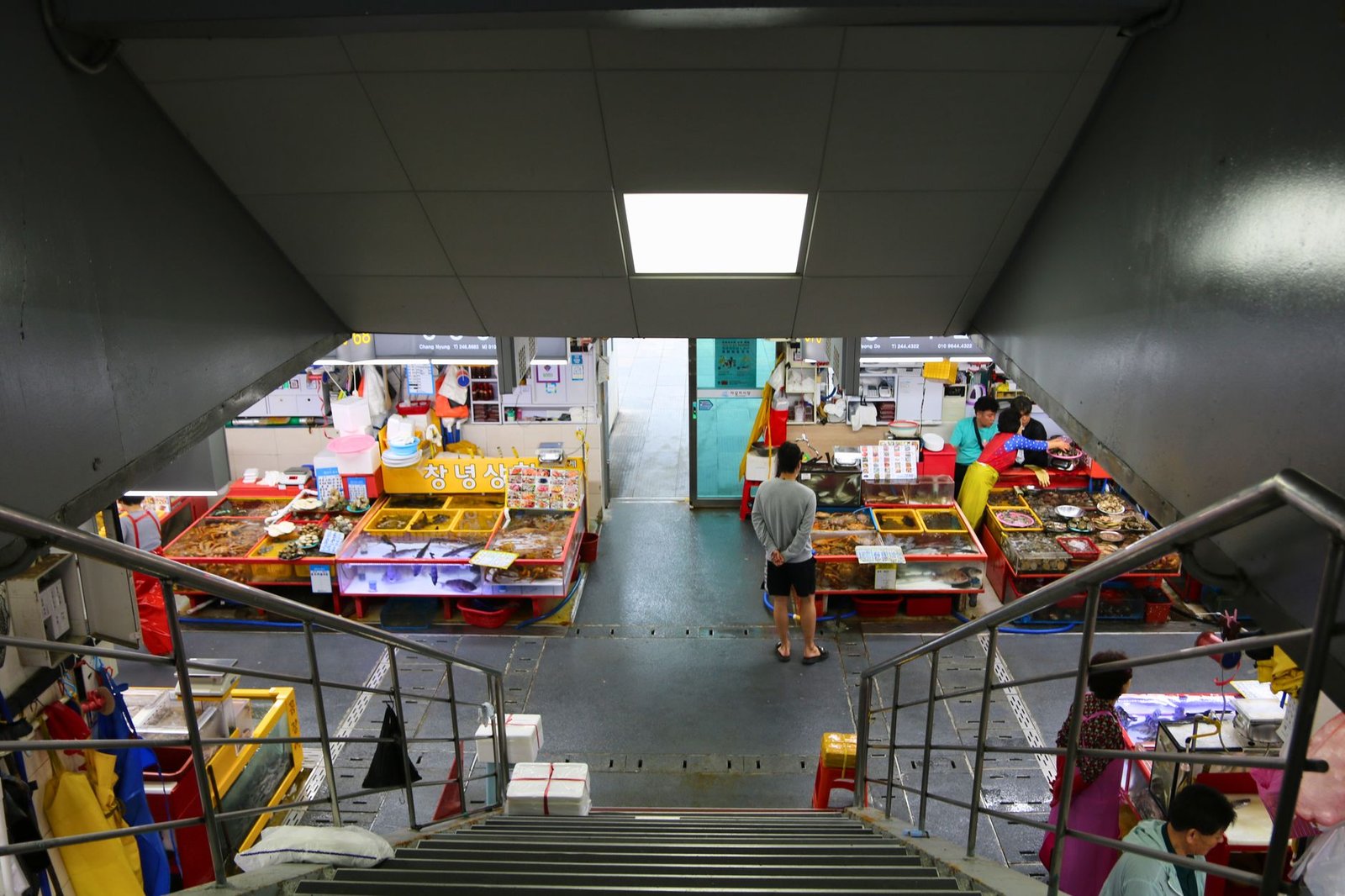
Why it fits the reader: As Korea's largest coastal seafood market, Jagalchi offers an energetic market environment where diners select live seafood on the ground floor and have it prepared immediately in upper-floor restaurants.
Practical details: Jagalchi Market operates daily from 05:00 to 22:00, with market-wide closing days occurring on the first and third Tuesdays of each month (as of September 2026, VisitBusan). For detailed floor layouts and ordering steps, consult our comprehensive Jagalchi Market Guide.
Market Pitfall: Always clarify preparation fees (sangsacharim per-person table cover charge) with upper-floor restaurants before handing over seafood purchased from ground-floor vendors to avoid unexpected bill additions.
Honest drawback: Seafood pricing varies based on daily market catches and weight, requiring active communication with vendors compared to fixed-menu restaurants.
Tips for Enjoying Busan Food Specialties
To maximize your culinary exploration across Busan, keep several practical factors in mind when planning your itinerary across districts like Nampo-dong, Seomyeon, and Haeundae.
- Payment Methods: Standard credit cards are widely accepted at brick-and-mortar restaurants and major market shops. However, small street food stalls at BIFF Square and Gukje Market alleyways often require Korean cash or local bank transfer. Carrying a modest amount of cash is recommended for market snacks.
- Market Schedules: Traditional markets open early, but individual food stalls typically operate between 10:00 AM and 8:00 PM. Note that major markets like Jagalchi close systematically on designated days (first and third Tuesdays of the month).
- District Clustering: Group your culinary visits by location. Jagalchi Market, BIFF Square, and Gukje Market are all within short walking distance of each other in the Nampo-dong area, allowing you to combine several food stops into a single morning or afternoon outing. When transitioning between coastal sightseeing and food stops, review our guide to exploring Busan from Haeundae to Gamcheon.
Busan's food culture offers a direct reflection of its coastal history and resilient spirit. By prioritizing key regional dishes like dwaeji gukbap, milmyeon, and freshly prepared coastal seafood, visitors can experience a distinct and memorable side of South Korean cuisine.
Sources checked October 2026: phototriplog.com, koreaplate.com, trip.com, visitkorea.or.kr, visitkorea.or.kr, mykoreankitchen.com. Prices and opening hours change — check the official site before you go.