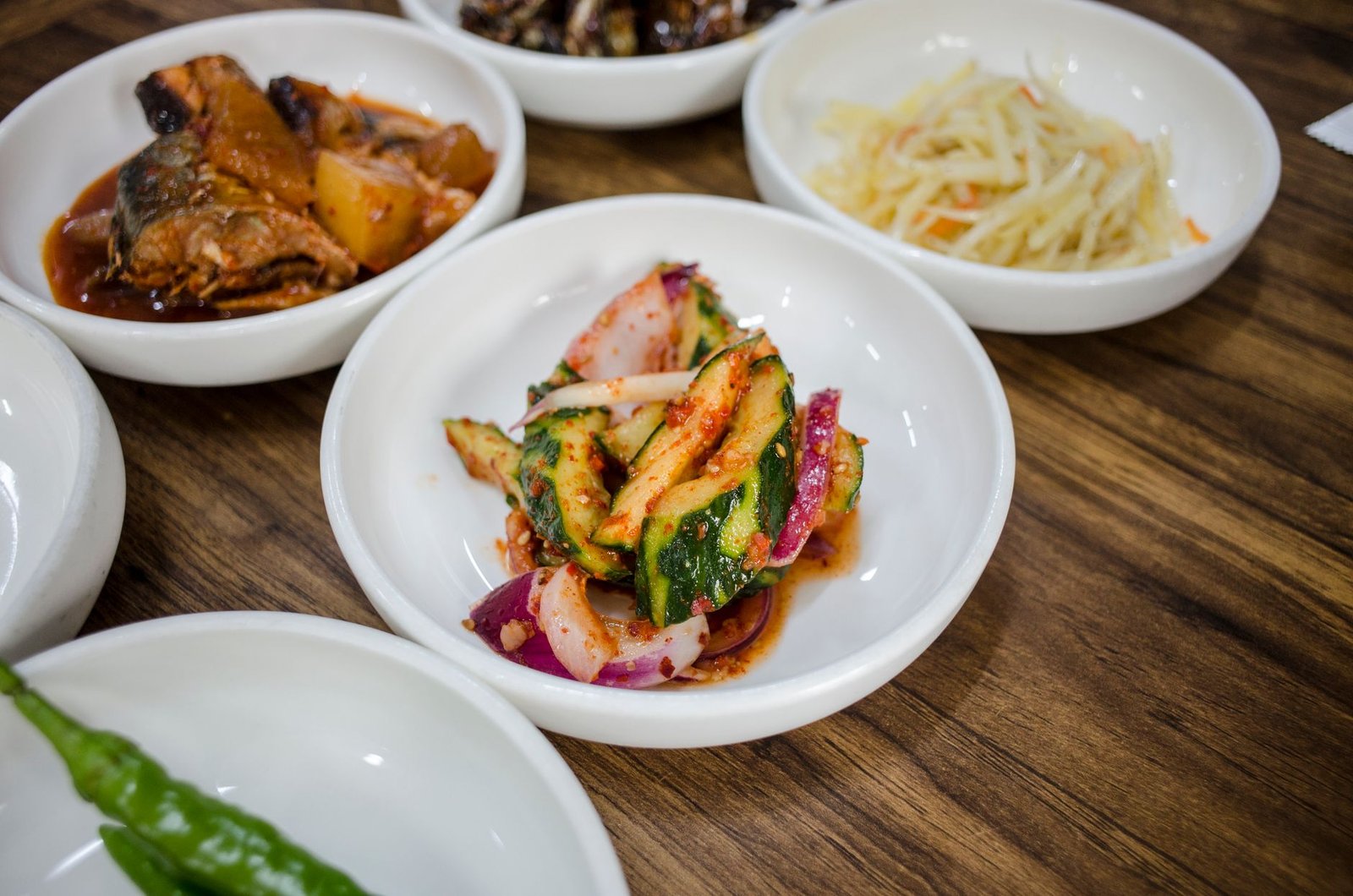
Navigating South Korea's food culture requires understanding a few unique dining mechanics, from self-service side dish refills to hidden utensil drawers and wireless table call buttons.
Essential Korean Dishes Every First-Timer Should Try
South Korean cuisine is built around rich broths, fermented ingredients, aromatic oils, and a harmonious balance of sweet, salty, spicy, and savory flavors. For first-time visitors entering a local restaurant, the variety of dishes can appear overwhelming. Starting with widely accessible culinary staples provides a reliable introduction to the foundation of Korean cooking.
Bibimbap remains one of the most recognized dishes across the peninsula. Served either in a standard bowl or a sizzling hot stone pot (dolsot bibimbap), it features a bed of warm white rice topped with neatly arranged seasoned vegetables (namul), sauteed meat or tofu, a dollop of gochujang (fermented red chili paste), and a fried or raw egg yolk. Mixing the ingredients thoroughly before eating ensures that every bite balances texture and spice. In Seoul, a standard serving of bibimbap averages between ₩10,300 and ₩11,800 (as of October 2026, Korea Consumer Agency / Chamgagyeok).
Stews and soups form the core of daily Korean comfort food. Kimchi jjigae, a fiery stew made with well-aged kimchi, pork belly or tuna, tofu, and scallions, delivers a deep, tangy Umami profile. A standard kimchi jjigae set meal in Seoul averages approximately ₩8,600 to ₩8,800 (as of October 2026, Korea Consumer Agency / Chamgagyeok). Another staple is doenjang jjigae, a savory soybean paste stew packed with vegetables, clams or beef, and tofu, offering a mild, earthier alternative to chili-heavy broths. For chicken dishes, samgyetang features a whole young chicken stuffed with glutinous rice, ginseng, garlic, and jujubes, simmered into a soothing broth historically consumed during hot summer months for stamina.
To explore iconic local regional specialties and foundational recipes, consult the Seoul Food Guide: Must-Try K-BBQ, Kimchi & Tteokbokki for International Visitors or read our breakdown of Top 5 Korean Foods Americans Can't Resist: A Tourist's Guide to Korean Cuisine.
Korean BBQ and Chimaek: Social Dining Experiences
Communal dining sits at the heart of Korean food culture, with tabletop Korean BBQ (gogi-gu-i) standing out as an essential social activity. Restaurants specialize in specific cuts of meat, most commonly samgyeopsal (uncured pork belly), moksal (pork shoulder), galbi (marinated beef or pork ribs), and chadolbaegi (thinly shaved beef brisket). Diners or staff grill the meat over tabletop gas burners or embedded charcoal braziers.
Eating Korean BBQ involves creating individual lettuce wraps known as ssam. Take a fresh leaf of lettuce or perilla, place a freshly grilled piece of meat inside, add a dab of ssamjang (a seasoned paste of soybean and chili paste), and layer in grilled garlic slices, pickled radish, or scallion salad. Fold the leaf into a single compact bite. Because BBQ venues calculate meat portions per person, most establishments enforce a minimum initial order of two portions, even if you are dining alone.
Another integral social dining tradition is chimaek, a portmanteau of chicken and maekju (beer). Korean fried chicken is famous for its double-frying technique, which renders a paper-thin, ultra-crispy skin that retains crunch even when tossed in heavy glazes. Common choices include huraideu (plain crispy fried), yangnyeom (a sweet and spicy garlic-chili glaze), and ganjang (garlic soy sauce). Most specialized chicken spots offer half-and-half (ban-ban) orders, allowing diners to sample two distinct sauces in one serving.
Plan your group outings by reviewing How to Eat Korean BBQ Like a Local: A Grilling and Ssam-Wrapping Guide and The Ultimate Chimaek Experience: Why Koreans Love Chicken & Beer.
Understanding Korean Table Setting and Banchan Etiquette
When sitting down at a traditional or casual Korean diner, the table is quickly filled with small side dishes called banchan. Included automatically with almost every main meal order, banchan range from various styles of kimchi and pickled radish to seasoned bean sprouts, braised potatoes, spinach, and stir-fried dried anchovies. Banchan are communal and complimentary, meant to be shared alongside individual bowls of rice.
Refill Norms: Banchan refills are almost always free of charge. In casual spots, simply ask the staff for more by pointing to the dish, or look for a self-service station (marked self-bar) where you can dish out extra kimchi and side dishes yourself.
Flatware and table etiquette in Korea differ noticeably from neighboring East Asian countries. Chopsticks are flat and made of stainless steel, paired with a long-handled metal spoon. Rather than lifting rice or soup bowls to your mouth, bowls remain seated on the table throughout the meal. Use the long spoon exclusively for eating rice and drinking broth, and reserve chopsticks for picking up meat, noodles, and banchan.
In many casual diners, table space is optimized by keeping utensils and napkins hidden. Look along the side edge of your wooden table for a sliding built-in drawer containing stainless steel chopsticks, spoons, tissue napkins, and wet wipes. If the drawer is absent, flatware will be provided in a metal container on top of the desk.
For a detailed breakdown of table setup and side dish mechanics, read Free Water, Zero Tips: Your Complete Guide to Dining in Korean Restaurants Without Confusion.
Navigating Korean Restaurants: Ordering and Call Buttons
Ordering food in South Korea is streamlined, quiet, and designed to minimize unnecessary table interruptions. Diners are expected to initiate contact with restaurant staff only when ready to order, request additional water, or ask for the bill.
Most casual eateries install a small wireless call button (often labeled Call or 벨) directly on the tabletop surface. Pressing this button triggers a melodic chime or a digital table number display at the service counter, prompting a staff member to walk over. In modern or high-volume venues, these wireless table call buttons or integrated staff-call icons on tabletop digital touchscreens are standard features across casual South Korean restaurants (as of October 2026, VisitKorea).
Calling Staff Manually: If your table lacks a wireless call button, refrain from waving dramatically across the room. Instead, make eye contact with the server and speak clearly using the phrase "Yeogiyo!" ("Over here, please!") or address an older female server as "Eomonim".
When finishing your meal, do not wait at the table for a server to bring you a check. Take your printed bill slip—which is usually placed on your table or tucked inside a plastic clip right after your food is served—and walk to the cash register stationed near the restaurant entrance to pay.
Solo Dining vs. Shared Meals in South Korea
Historically, eating out in South Korea was predominantly a group activity centered around shared hot pots, BBQ, and large platters. However, the rise of honbap culture (a slang term combining "alone" and "rice") has transformed the dining landscape, making solo dining widespread, acceptable, and remarkably efficient in urban areas.
Single-serving dishes are easy to find at neighborhood joints, fast-casual shops (gimbap chains), and soup specialists. Dishes specifically meant for single diners include individual soup bowls like gukbap (pork or beef rice soup), kimchi jjigae sets, bibimbap, naengmyeon (cold buckwheat noodles), and tonkatsu. Many modern solo-friendly venues feature single-seat counter rows equipped with individual power outlets and digital tablet ordering interfaces.
| Meal Type | Solo Traveler Suitability | Ordering Strategy |
|---|---|---|
| Gukbap / Soups | Very High | Single portion standard; quick counter service. |
| Bibimbap / Noodles | Very High | 1 order per person; individual bowls. |
| Korean BBQ (Samgyeopsal) | Moderate to Low | Requires paying for minimum 2 meat portions. |
| Budae Jjigae / Dakgalbi | Low | Large stew pans typically sold minimum 2-person share. |
If you wish to enjoy dishes usually reserved for groups, such as Korean BBQ or large stew pans, be prepared to pay for two full portions even when dining alone. To find venues configured for individual travelers, explore Solo Dining in Seoul: The Best Restaurants for Eating Alone.
Street Food Essentials at Traditional Markets
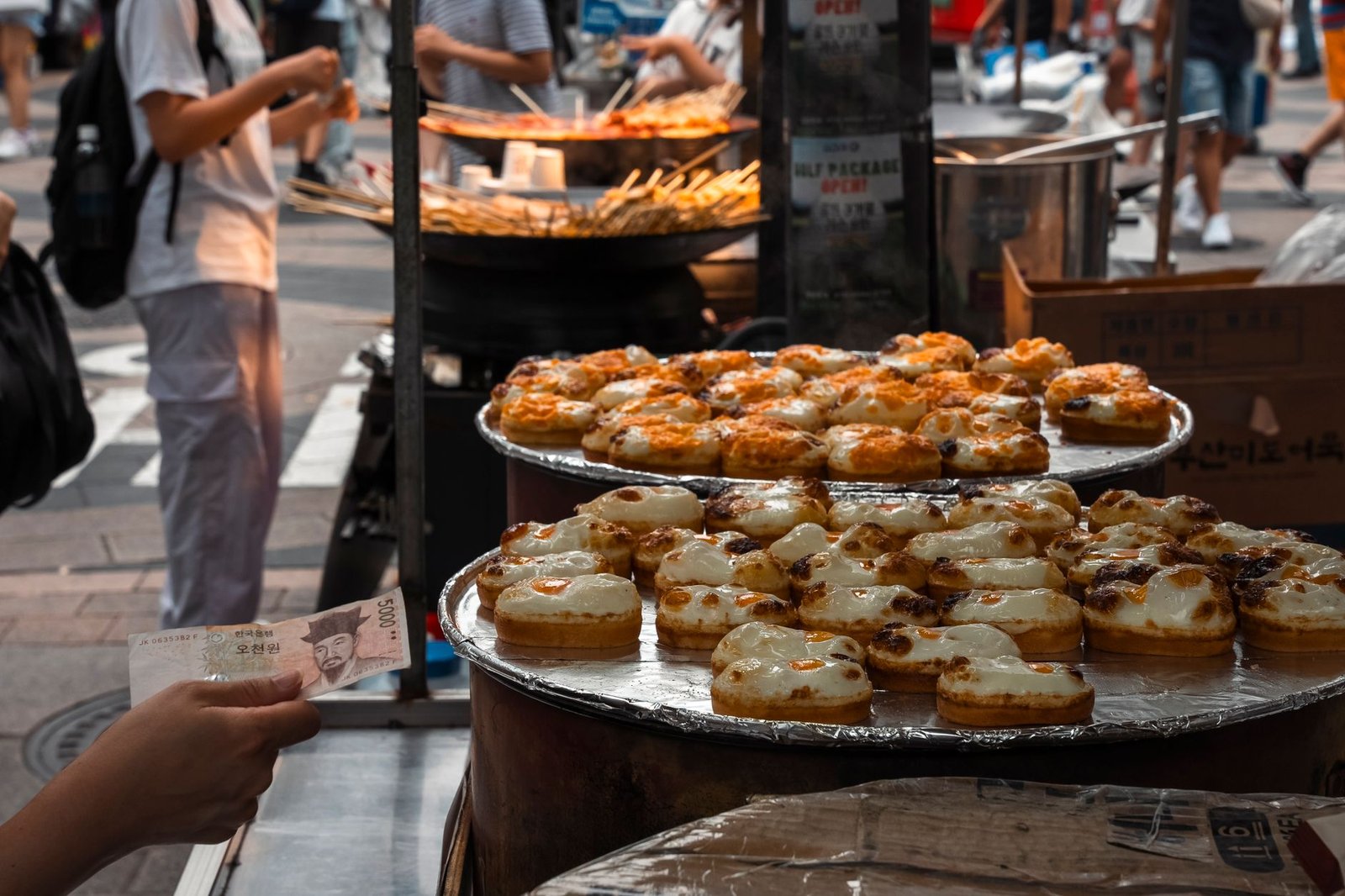
Traditional markets offer a vital window into authentic Korean culinary history and fast, affordable street food. Venues like Seoul's historic Gwangjang Market feature dense rows of open-air stalls operated by skilled vendors specializing in single signature dishes passed down through generations.
The food stalls at Gwangjang Market operate daily from 09:00 to 23:00 (as of October 2026, VisitSeoul). When walking through market aisles, look for crowded stalls with high turnover—a sure sign of fresh ingredients and well-maintained oil temperatures.
- Bindaetteok (Mung Bean Pancakes): Ground mung beans mixed with vegetables and pork, shallow-fried in large iron griddles until golden and crispy. Served with soy-dipping sauce with raw onions.
- Mayak Gimbap: Mini seaweed rice rolls stuffed with pickled radish, spinach, and carrot, brushed with sesame oil and sesame seeds. Named "addictive gimbap" due to its signature sweet-mustard dipping sauce.
- Tteokbokki: Thick, chewy rice cakes simmered in a glossy, sweet-and-spicy gochujang broth, frequently served alongside fish cakes (eomuk) steeped in hot broth.
- Yukhoe: Korean-style beef tartare made from fresh raw beef seasoned with sesame oil, soy sauce, and garlic, served over crispy slices of Korean pear and topped with a raw egg yolk.
Before visiting market alleys, review detailed stall logistics in our Gwangjang Market Food Guide: Ordering Yukhoe, Bindaetteok, and Stall Payment Tips and consult Don't Go to Gwangjang Market Without Reading This Survival Guide.
Convenience Stores and Late-Night Eats
Korean convenience stores (such as GS25, CU, and Seven-Eleven) function as far more than neighborhood corner shops—they serve as late-night mini-diners open 24 hours a day. Outfitted with hot water dispensers, microwave lines, and specialized self-cook stations, convenience stores are central to modern urban eating culture.
A widespread daily routine involves purchasing pre-packaged ice cups along with concentrated liquid drink pouches (ranging from sweet peach iced tea to hazelnut coffee andade). Another staple is the instant ramen cooker—an automated hot-water induction plate that boils foil bowl ramen to exact time and temperature specifications within minutes.
For late-night cravings or budget meal combinations, check our guides on Korean vs Japanese Convenience Stores: Han River Ramen Cookers & Secret Combinations and learn the outdoor dining process with the Han River Ramen Guide: How to Eat Like a Local in Seoul.
Cafe Culture, Modern Desserts, and Traditional Teas
South Korea boasts one of the most concentrated cafe cultures in the world, where cafes serve as social spaces, remote workspaces, and architectural showrooms. Ordering an iced Americano (often abbreviated locally as "A-A") is the default order year-round for locals.
The dessert landscape effortlessly combines traditional rice-based confectioneries with modern pastry trends. Bingsu—shaved ice topped with sweetened red beans (pat-bingsu), fresh mango, or rice cakes—is an essential summer dessert shared among friends. Traditional sweets like yakgwa (honey-and-ginger deep-fried wheat pastries) and gaeseong juak (chewy rice flour donuts glazed with grain syrup) have experienced a widespread resurgence across contemporary boutique tea houses.
To navigate neighborhood bakery trends and traditional teahouses, read Trending K-Desserts Across Generations: From Gaeseong Juak to Tanghulu and review Korea's Cafe Culture: 7 Things Every Tourist Should Know.
Dietary Restrictions and Vegetarian Options in Korea
Navigating strict dietary needs in South Korea requires careful planning, as traditional Korean cooking frequently uses hidden seafood or pork bases. Kimchi, broths, and vegetable side dishes often contain fish sauce, salted shrimp (saeujeot), or dried anchovy stock, making dishes that appear vegetable-based unsuitable for strict vegetarians or vegans.
To assist international travelers, official tourism boards provide strict restaurant classification systems. The Korea Tourism Organization manages halal options through four official designations: "Halal Certified", "Self Certified", "Muslim Friendly", and "Pork Free" (as of October 2026, VisitKorea). Digital menu kiosks at franchised eateries also increasingly support ingredient exclusion requests or feature dedicated vegetarian options.
Temple Cuisine: For reliably vegan dining free from garlic, onions, and meat products, seek out traditional Korean Temple Food (Sachal Emsik) restaurants across major cities. These establishments utilize seasonal wild herbs, lotus root, and house-fermented pastes.
Detailed dietary resources are available in How to Easily Find Vegan Restaurants and Temple Food in Korea and Top 7 Vegan Korean Dishes That Aren't Just Bibimbap.
Budgeting, Payment Norms, and Tipping Etiquette for Dining in Korea
Understanding payment etiquette ensures a smooth dining experience across South Korea. Menu pricing transparently reflects final costs, removing hidden service charges or surprise add-ons at the cash register.
Tipping is not required or expected in any dining context in South Korea, as menu prices include all taxes and service charges by law (as of October 2026, VisitKorea). Attempting to leave cash tips on tables may cause confusion, as staff will assume you accidentally left money behind.
- Tipping Policy
- Strictly 0%. Tipping is not practiced or expected anywhere.
- Casual Meal Cost
- ₩8,500 – ₩12,000 per person (Soups, Bibimbap, Diners).
- K-BBQ Meal Cost
- ₩18,000 – ₩30,000 per portion of pork or beef.
- Market Payment Options
- KRW cash required at small stalls; cards at permanent shops.
Payment methods depend heavily on venue size. South Korean Won (KRW) cash remains required or strongly preferred at small outdoor street food stalls, while major credit cards and prepaid travel cards (such as WOWPASS or Tmoney) are accepted at larger permanent market vendors and standard brick-and-mortar restaurants (as of October 2026, VisitSeoul).
For elevated culinary experiences on a moderate budget, read Seoul Michelin Bib Gourmand: Eat Like a Local for Under $40. With basic table etiquette, an understanding of self-service side dishes, and realistic budget expectations, exploring South Korea’s rich food culture is straightforward, accessible, and deeply rewarding.
All Food guides on Korea360
- How to Easily Find Vegan Restaurants and Temple Food in Korea
- Trending K-Desserts Across Generations: From Gaeseong Juak to Tanghulu
- Korean Han River Ramen Maker & Viral Convenience Store Combination Recipes
- Korean vs Japanese Convenience Stores: Han River Ramen Cookers & Secret Combinations
- Gwangjang Night Market Ordering Guide: Expert Tips for Visiting with International Friends
- Gwangjang Market Food Guide: Ordering Yukhoe, Bindaetteok, and Stall Payment Tips
- Gwangjang Market Night Stalls: Beginner Ordering, Payments & Menu Guide
- Korea's Chicken Brand Rankings Compared: Which One Do Locals Actually Choose?
- Solo Dining in Seoul: The Best Restaurants for Eating Alone
- How to Order Baemin Delivery in Korea Without a Resident ID
- How to Eat Korean BBQ Like a Local: A Grilling and Ssam-Wrapping Guide
- Seongsu-Dong and Hannam-Dong Cafes: Seoul's Two Hottest Neighborhoods
- Gwangjang Market Seoul: What to Eat and How to Avoid the Crowds
- Making Kimchi Like a Local: Review of a Traditional Hanok Cooking Class in Seoul
- Traditional vs Modern: The Ultimate K-Dessert Cafe Tour in Seoul
- The Ultimate Myeongdong Bingsu Cafe Guide for English-Speaking Tourists
- Seoul Michelin Bib Gourmand: Eat Like a Local for Under $40
- How to Book Seoul's Michelin Restaurants as a Foreigner
- Top 5 Hanjeongsik Restaurants in Seoul: From Budget to Luxury
- Hanjeongsik: Everything You Need to Know About the Korean Royal Feast
- Korean Ice Cup Drink Trend: 5 Refreshing Mixes to Try at GS25 and CU
- 7 Epic Korean Convenience Store Hacks Every Tourist Must Try
- Kimchi Making 101: A Must-Try K-Food Experience for Foodies
- Korea's Cafe Culture: 7 Things Every Tourist Should Know
Sources checked October 2026: howmuchkorea.com, sbs.co.kr, rankorea.com, visitkorea.or.kr, travelinginkorea.com, nicekoreanfriend.com. Prices and opening hours change — check the official site before you go.