Korean etiquette centers on mutual respect, age hierarchy, and consideration in public spaces. Mastering simple gestures like two-handed passing, transit seating rules, and dining customs ensures smooth, respectful travel across South Korea.
Basic Greetings and Respectful Body Language
South Korean social interactions are grounded in a deep-rooted system of age hierarchy, social order, and mutual consideration. For travelers visiting from Australia, New Zealand, or Western countries, adapting to these unspoken social expectations requires only a few simple adjustments to daily habits. Understanding how body language communicates respect is the most effective way to navigate daily interactions, whether buying coffee at a neighborhood cafe, checking into a guesthouse, or asking for directions on a busy street.
The standard physical greeting across South Korea is a bow rather than a handshake. When meeting shopkeepers, hotel staff, or acquaintances, a slight bow of the head and upper torso—at roughly a 15 to 30-degree angle—signals politeness and goodwill. Physical contact such as firm handshakes, backslaps, or casual hugs between strangers or loose acquaintances is uncommon in public settings. If a local host or older adult offers a handshake, accept it gently, reinforcing the gesture with a subtle head bow.
The Two-Handed Passing Gesture
One of the most frequent cultural customs foreign visitors encounter is the physical transfer of everyday items. In South Korea, handing over or receiving an object using a single hand can appear dismissive or overly casual. Whenever you hand over or receive payment cards, cash, receipts, business cards, or beverages, you should always use both hands. Alternatively, extend your right hand while lightly supporting your right wrist or forearm with your left hand. This subtle posture demonstrates complete focus and deference to the person you are interacting with.
Local Tip: When entering a shop, restaurant, or convenience store, a gentle head bow accompanied by a clear greeting of "Annyeonghaseyo" (hello) sets an immediate tone of mutual respect. When leaving, saying "Kamsahamnida" (thank you) with a small head tilt is standard practice.
Eye contact in traditional Korean culture is handled with greater moderation than in Western societies. Prolonged, direct eye contact with elders or figures of authority can be perceived as confrontation or defiance. Maintaining soft eye contact combined with periodic downward glances shows attentiveness without appearing aggressive. Pay close attention to posture as well; standing with your hands shoved deep inside your pockets or slouching while speaking to seniors can convey disinterest.
Dining Etiquette: Chopsticks, Spoons, and Table Rules
Dining in South Korea is a communal experience centered on shared dishes, side plates (banchan), and collective enjoyment. However, specific structural rules govern how meals begin, progress, and finish. Recognizing these table customs prevents accidental offense and makes group meals far more relaxed.
Before touching your utensils or drinks at a shared table, wait for the oldest person or the host to sit down and begin eating. Once the senior member takes their first bite or sip, everyone else at the table may begin. Similarly, pace your dining speed so that you do not finish significantly ahead of older dining companions.
Korean meal settings feature a flat metal spoon and a pair of metal chopsticks. Each utensil has a designated role. Use your spoon exclusively for eating rice and clear soups or stews. Use your chopsticks for picking up solid side dishes, meat, and vegetables. Avoid holding both the spoon and chopsticks in one hand simultaneously; place the utensil you are not actively using flat on the table or resting on the provided porcelain holder.
Pitfall to Avoid: Never stick your chopsticks vertically upright into a bowl of cooked rice. This gesture mimics the vertical placement of incense sticks burnt during traditional Korean ancestral memorial services (jesa) and funeral rites. Always rest your chopsticks horizontally across the top of your bowl or on the utensil holder.
Unlike dining customs in some neighboring Asian nations, dining bowls in South Korea—including soup bowls and rice bowls—must remain resting on the dining table throughout the meal. Lifting a bowl to your mouth to drink broth or sweep rice into your mouth is considered poor table manners. Instead, leave the bowl flat on the wood or tablecloth and use your spoon to bring food to your mouth. If you want to explore more specific mealtime mistakes made by international travelers, read our guide on Korean table manners tourists often get wrong.
Korean Drinking Culture and Pouring Etiquette
Evening dining in South Korea often includes traditional alcoholic beverages like soju or makgeolli. Drinking customs are heavily structured around social hierarchy, deference, and hospitality. Following these pour-and-receive rituals ensures smooth interactions during social dinners or business gatherings.
The foundational rule of Korean drinking culture is that you should never pour your own alcoholic drink. Pouring for yourself can make you appear isolated or uncared for by your companions. Instead, keep a watchful eye on your dining partners' glasses. When someone's glass is empty or nearly empty, offer to refill it. Someone at the table will promptly notice your empty glass and return the favor.
How to Pour and Receive Drinks
When pouring a drink for an elder, senior colleague, or someone you have just met, hold the bottle or bottle neck with your right hand while supporting your right elbow or wrist with your left hand. Alternatively, hold the bottle with both hands if it is heavy. When receiving a refill from someone older or senior to you, hold your cup with both hands as they pour.
- Observe the Table: Check if an elder or dining companion's glass is empty before topping up your own.
- Pour with Respect: Hold the bottle with your right hand while resting your left hand under your right wrist or forearm.
- Receive with Both Hands: Hold your glass with both hands while a companion fills it.
- Turn Away to Sip: Turn your head and torso slightly away from elders when taking a drink.
When taking a sip of alcohol in the presence of elders or senior companions, it is polite to turn your head and torso slightly away from them while blocking your glass with your hand. Drinking directly facing an elder is viewed as overly assertive. If an elder offers you a drink directly, it is polite to accept at least the first glass using both hands, even if you only take a small sip before putting it down.
Subway and Public Transit Conduct in Korea
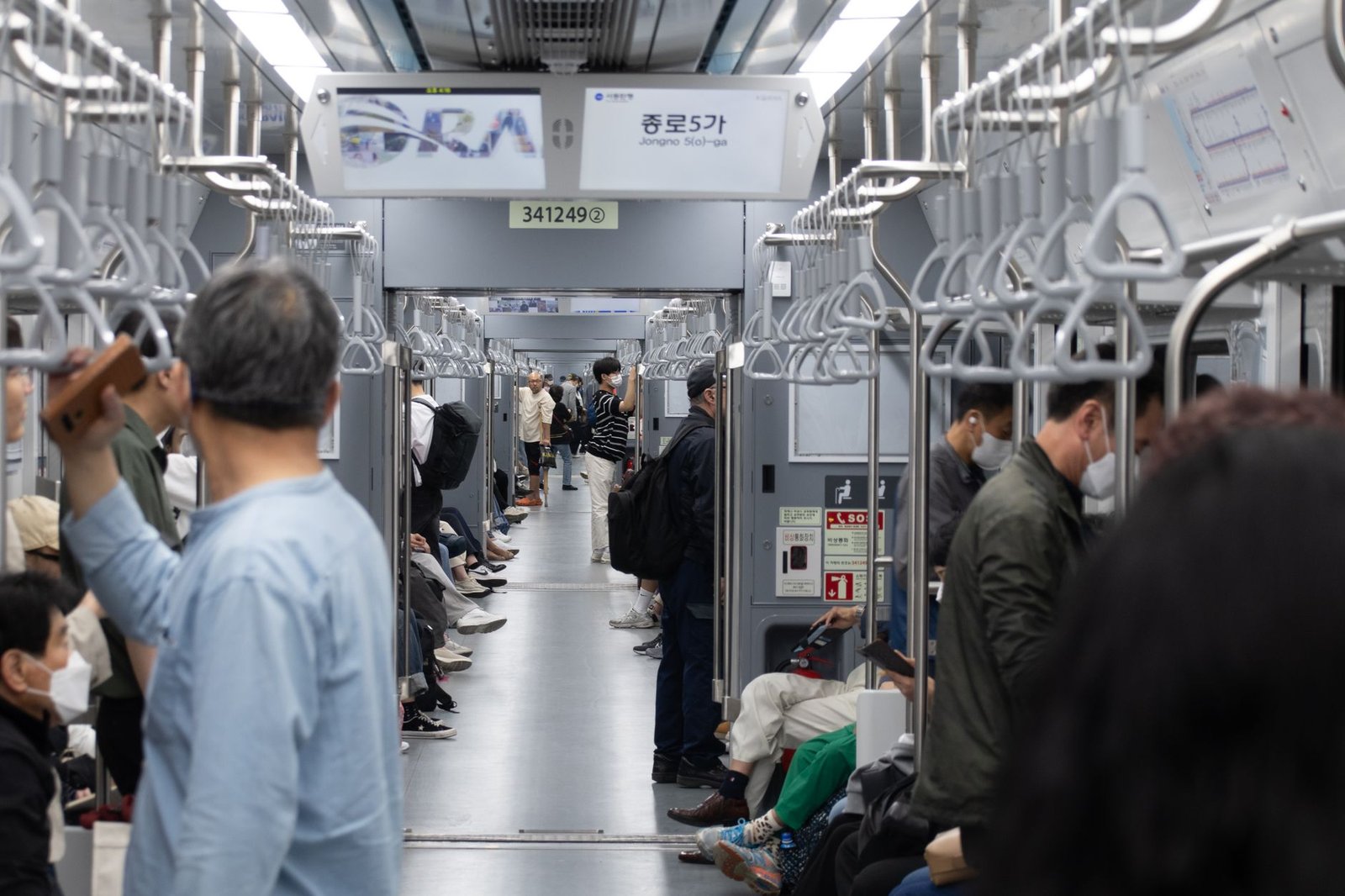
South Korea boasts one of the most efficient, clean, and safe public transit networks in the world. The Seoul Metropolitan Subway and regional bus systems move millions of commuters daily. Maintaining this efficiency relies on strict public adherence to shared transit norms.
Noise control is taken very seriously on trains and buses. Passengers are expected to keep conversations in low, hushed tones. Making loud phone calls, playing music or video audio without headphones, or shouting across subway cars is frowned upon. Mobile phones should be switched to silent or vibrate mode upon boarding.
- Priority Seating Rules
- Yellow-marked priority seats at train car ends are for elderly passengers, people with disabilities, injured travelers, and parents with infants. Pink seats and floor decals are strictly for pregnant women and must stay vacant (as of October 2026, Visit Seoul).
- Subway Escalator Flow
- Stand on the right side of escalators to allow walking passengers to pass on the left.
- Boarding Courtesy
- Queue neatly behind the painted door markers on station platforms and let arriving passengers exit fully before stepping aboard.
Prices and hours can vary by branch and season — check the official site before you go.
Seating allocation on train cars requires close attention. Subway cars feature designated yellow-marked priority seats located at the far ends of each carriage. These seats are specifically reserved for elderly passengers, people with physical disabilities, injured travelers, and parents carrying infants or small children. Even if the train is completely crowded, travelers who do not fit these categories should refrain from sitting in them.
Furthermore, pink-colored individual seats and matching pink floor decals marked in subway cars are exclusively reserved for pregnant women. These pink seats are designed to remain vacant at all times—even when empty—so that an expectant mother can sit down immediately without having to ask someone to move.
Temple and Sacred Site Etiquette for Travelers
Visiting historical Buddhist temples such as Jogyesa Temple in central Seoul or Haeinsa in the countryside provides deep insight into Korea's spiritual traditions. Because active temples are places of daily worship, reflection, and community prayer, visitors must strictly adhere to site regulations.
Dress code requirements are enforced at active Buddhist temples. Visitors must wear modest clothing that covers shoulders, chest, upper arms, and knees. Sleeveless tank tops, low-cut shirts, short skirts, and revealing athletic shorts are inappropriate inside temple grounds. If you arrive in warm-weather clothing, carry a light scarf or jacket to cover up before entering sacred zones.
Footwear rules are equally strict inside temple structures. Shoes must be removed before stepping onto the elevated wooden floors of main prayer buildings and Dharma halls. Place your shoes neatly on the designated exterior shelves provided near the entrances.
Practical Tip: Always carry a clean pair of socks in your day bag. Bare feet are generally prohibited inside temple halls, so slipping on clean socks after removing your shoes maintains proper hygiene and shows respect for the sacred space.
When stepping across the threshold into a main prayer hall, never step directly onto the raised wooden door sill. Instead, step cleanly over it. Walk quietly around the perimeter of the hall, avoid stepping directly in front of seated worshipers, and keep camera flash turned off completely. If you are interested in wellness etiquette rules in South Korea, view our guide to jjimjilbang culture and bathhouse etiquette.
Removing Shoes and Managing Waste in Public Spaces
Maintaining cleanliness in both private homes and shared public spaces is a core civic responsibility in South Korean daily life. Two areas where Western travelers frequently face unexpected adjustments are indoor footwear rules and municipal waste disposal.
Shoes must be removed at the designated entryway—known as the hyeon-gwan—when entering traditional Korean guesthouses, Hanok stays, private residences, and traditional dining establishments featuring raised wooden floor seating. The hyeon-gwan is typically a step lower than the main floor. Take off your footwear in this lowered entry zone before stepping up onto the main floor. Slippers are often provided by hosts for indoor hallway use, though you should remove indoor slippers before stepping onto straw mats or traditional heated floors (ondol).
Public street trash cans are scarce throughout Seoul. Travelers should expect to carry their personal litter—such as beverage cups, snack wrappers, or tissue paper—throughout the day until reaching designated waste stations. Bins are routinely found near subway station turnstiles, inside convenience stores, or within your accommodation.
South Korea operates a strict mandatory waste separation system overseen by regional environmental authorities. Waste must be meticulously separated into designated bins for recyclables (plastics, paper, cardboard, aluminum cans, and glass bottles) and general non-recyclable waste. Conscientious sorting of litter keeps public hubs clean and avoids placing unnecessary burden on service workers.
Tipping, Payments, and Handling Money Respectfully
Navigating commercial transactions across South Korea is straightforward, as payment processing is highly modern and transparent. However, payment interaction norms differ sharply from common Western customs, particularly regarding gratuities.
Tipping is not customary in South Korea for dining at restaurants, ordering drinks at bars, or taking city taxis. Value-added tax and service overhead costs are fully built into the menu price or taxi meter fare. Offering a cash tip to a waiter, barista, or taxi driver can cause genuine confusion, discomfort, or embarrassment. Quality service is treated as a standard professional expectation rather than a service favor requiring additional gratuity. If you travel frequently and want to compare European tipping expectations, check our essential Italian travel etiquette guide.
Handling Cash, Cards, and Receipts
When settling a bill at a restaurant, retail store, or market stall, present your credit card or cash using both hands. Alternatively, pass your payment method using your right hand while supporting your right wrist or forearm with your left hand. Cashiers will return your payment card, cash change, and physical store receipts using the exact same two-handed technique.
When receiving paper banknotes or store receipts, accept them with both hands and glance at them briefly before tucking them away, rather than immediately stuffing them unceremoniously into a pocket. Demonstrating mindfulness in these small daily exchanges shows genuine respect for your hosts and ensures your journey through South Korea is welcoming, smooth, and culturally rewarding.
Sources checked October 2026: visitseoul.net, epickor.com, visitseoul.net, traveloka.com, koreanplate.com, gogohanguk.com.