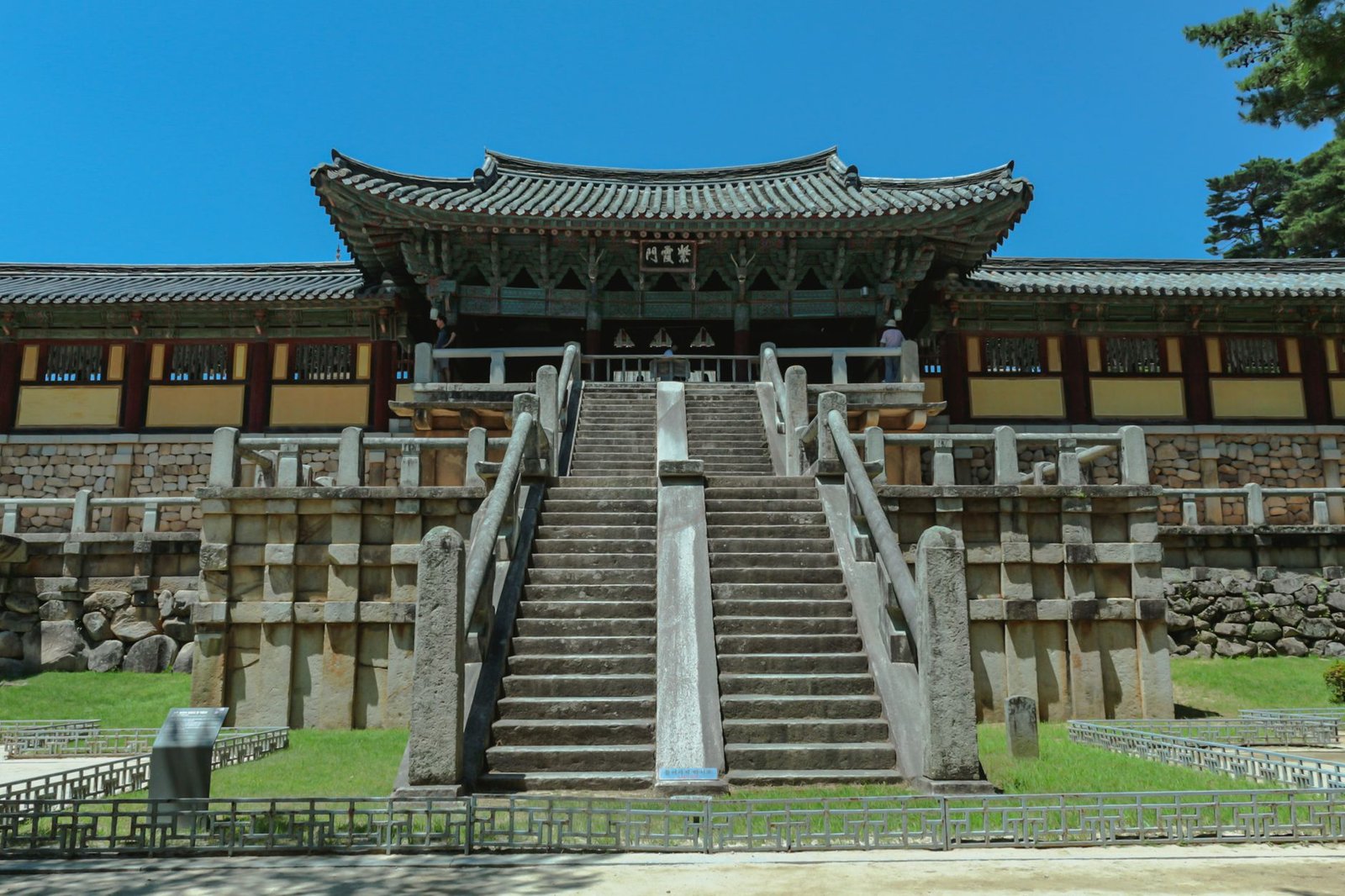
Gyeongju serves as South Korea's premier historical destination, featuring ancient Silla Dynasty royal tombs, Buddhist temples, and historic palace grounds. This pillar guide covers KTX schedules, local transit routes, entry fees, and travel budgeting for international visitors.
Why Gyeongju-si Belongs on Your South Korea Itinerary
Located in the southeastern region of the Korean peninsula, Gyeongju-si served as the historic capital of the ancient Silla Kingdom, which governed large portions of the Korean peninsula for nearly a millennium. Often referred to as a museum without walls, the city contains an extraordinary concentration of ancient Buddhist temples, royal burial mounds, palace foundations, and early astronomical structures. For international travelers journeying along the primary transit corridor between Seoul and Busan, stopping in Gyeongju offers an immersive window into Korea's deep foundational history that contrasts sharply with the glass skyscrapers and fast-paced urbanism of modern metropolitan hubs.
Unlike modern cities where historical ruins are isolated inside enclosed museums, central Gyeongju seamlessly integrates ancient landscape architecture directly into its daily urban layout. Enormous grassy burial mounds rise alongside lively cafe streets, while ancient astronomical observatories sit within walkable public parklands. The city's manageable geography makes it exceptionally welcoming for independent travelers who prefer exploring historical sites on foot, by standard bicycle, or via short local public bus journeys across town.
For Australian and New Zealand travelers organizing multi-week itineraries across South Korea, Gyeongju provides a logical and relaxing midway stop. Spending one to two nights in the city allows ample time to experience both high-profile UNESCO World Heritage monuments and the relaxed, traditional atmosphere of the surrounding neighborhoods without feeling rushed or overwhelmed by transit logistics.
How to Reach Gyeongju-si from Seoul and Busan
Reaching Gyeongju by public transport is remarkably efficient thanks to South Korea's high-speed rail networks and intercity transport infrastructure. Express KTX trains departing from Seoul Station arrive at Gyeongju Station (formerly known as Singyeongju Station) in approximately 2 hours to 2 hours 10 minutes. A standard adult economy ticket costs ₩49,300 (as of October 2026, Korail). Travelers looking to secure seats during peak travel seasons can consult Korail's official service platform directly or read a helpful step-by-step KTX ticket booking guide before departure.
Prices and hours can vary by branch and season — check the official site before you go.
- KTX Transit Time (Seoul to Gyeongju)
- 2 hours 00 minutes to 2 hours 10 minutes
- KTX Standard Fare
- ₩49,300 (as of October 2026, Korail)
- Local Bus Transfer Time
- 20 to 30 minutes to downtown
When traveling northbound from Busan, high-speed rail connections from Busan Station reach Gyeongju Station in approximately 30 minutes, making rapid transfers between coastal and historic regions straightforward. Intercity buses also operate regularly between Busan Central Bus Terminal and Gyeongju Express Bus Terminal, offering alternative regional transit options for travelers without rail reservations.
Because high-speed rail tickets can sell out during holiday periods and autumn weekends, booking rail passes or individual point-to-point tickets two to three weeks in advance is strongly recommended for international visitors planning structured itineraries.
Managing Luggage and Transit Connections at Gyeongju Station
Gyeongju KTX Station sits approximately 15 kilometers southwest of the main historic downtown center. Upon exiting the train platforms, travelers will find well-organized transit stops positioned directly outside the main arrival terminal. Local city bus routes—including lines 50, 60, 70, and 700—depart regularly from the station forecourt, taking approximately 20 to 30 minutes to reach downtown Gyeongju near the Express Bus Terminal and Daereungwon Tumuli Park.
For travelers arriving early in the morning before hotel check-in times, managing heavy suitcases is simple and convenient. Automated luggage storage lockers are located inside Gyeongju KTX Station, with rates ranging from ₩2,000 to ₩6,000 per day depending on locker size (as of October 2026, Korail). Storage options accommodate small daypacks, carry-on bags, and large check-in suitcases.
Local Tip: Paying for local city buses requires a physical transit card or exact change. Before leaving the train station, ensure your T-money card is loaded with sufficient credit. Read our guide on how to buy and top up a T-money card to streamline your transit throughout South Korea.
Taxis are also readily available from designated ranks directly outside the station doors. A taxi journey from the high-speed rail terminal to central Hwangridan-gil offers a quick alternative for families or small travel groups carrying multiple pieces of heavy luggage.
Must-Visit UNESCO World Heritage Sites: Bulguksa Temple and Seokguram Grotto
Situated on the pine-covered slopes of Mount Tohamsan, Bulguksa Temple stands as one of South Korea's premier Buddhist architectural masterworks. Constructed during the peak of the Silla Dynasty in the 8th century, the temple complex features stone terraces, grand timber prayer halls, and two famous original pagodas: Dabotap and Seokgatap. The exquisite masonry at Bulguksa demonstrates remarkable mathematical precision and structural engineering from ancient Korean stone artisans.
- Bulguksa Operating Hours
- 09:00 to 18:00 daily (exit by 19:00; closes 17:00–17:30 during winter and autumn)
- Bulguksa Admission Fee
- Free (as of October 2026, Visit Korea)
- Location
- Mount Tohamsan, Gyeongju-si
Bulguksa Temple is open daily from 09:00 to 18:00, with visitors required to exit the grounds by 19:00. Daily closing hours shift earlier to 17:00–17:30 during autumn and winter months, and general site admission is completely free (as of October 2026, Visit Korea). Detailed destination updates are available on Visit Korea's Bulguksa official page. Arriving at 09:00 allows visitors to walk the courtyards in relative morning tranquility before tour groups arrive.
Located further up the mountain road, Seokguram Grotto houses a monumental granite Buddha statue seated inside a domed stone sanctuary facing east towards the sea. Connected to Bulguksa by a short local bus ride or an uphill forest trail, visiting both sites together provides a complete view of Silla spiritual heritage.
Exploring Donggung Palace and Wolji Pond at Night
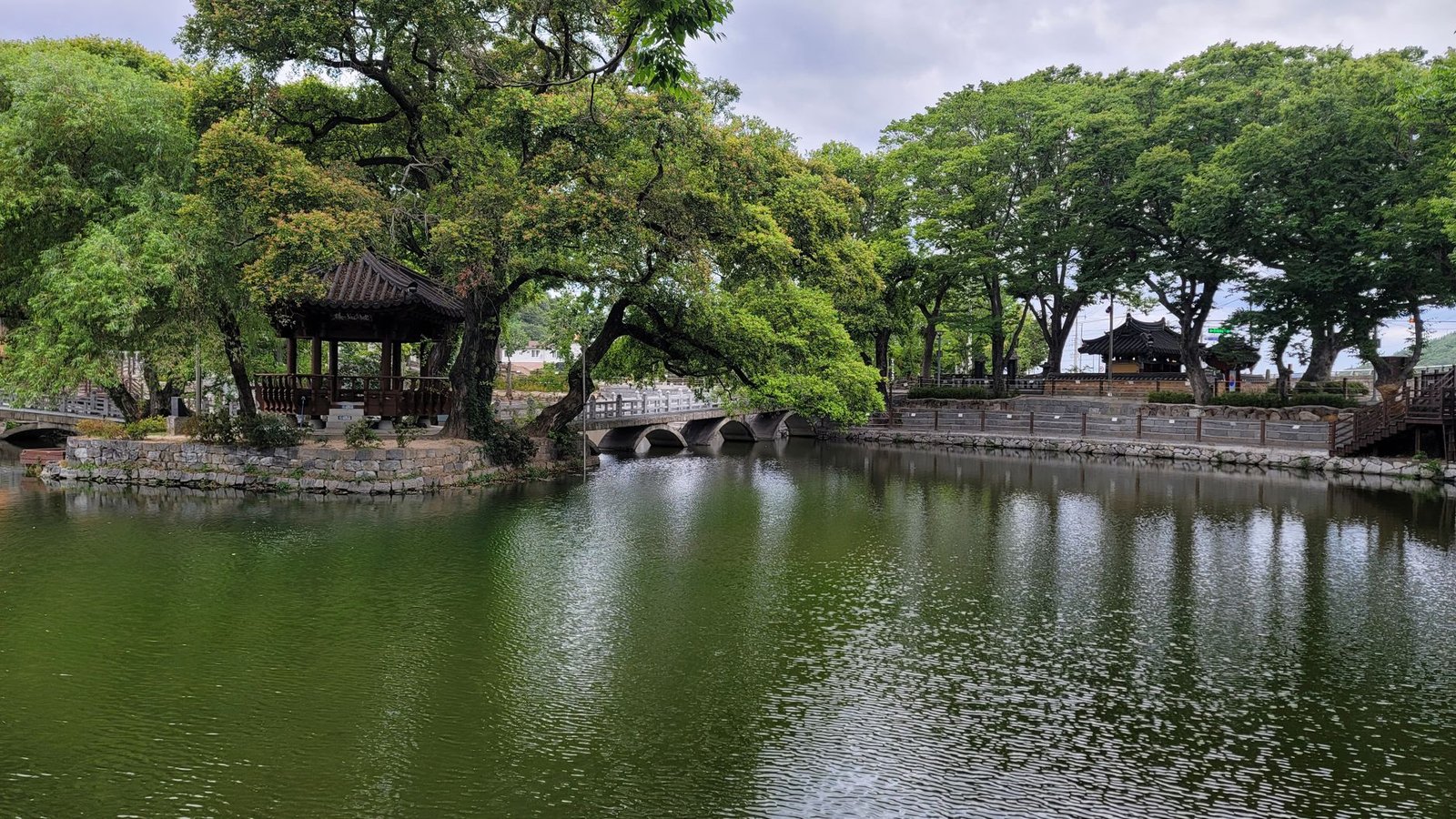
Donggung Palace and Wolji Pond (historically known as Anapji) served as a secondary palace complex for the crown prince of Silla and a grand venue for royal banquets. The royal estate was artfully designed with artificial islands, stone embankments, and winding shorelines engineered so that observers could not take in the entire pond from any single vantage point, creating an illusion of vast natural water landscape.
While the palace grounds are open during the day, the site comes to life during late afternoon and evening hours. At sunset, soft automated floodlights illuminate the traditional wooden pavilions, stone foundations, and pine trees, creating mirror-like reflections across the water surface. The location is widely recognized as one of the most picturesque night photography spots in South Korea.
- Operating Hours
- 09:00 to 22:00 daily (last entry and ticketing at 21:30)
- Adult Ticket
- ₩3,000 (as of October 2026, Visit Korea)
- Youth Ticket (Teens)
- ₩2,000 (as of October 2026, Visit Korea)
- Child Ticket
- ₩1,000 (as of October 2026, Visit Korea)
Donggung Palace and Wolji Pond open daily from 09:00 to 22:00, with final entry and ticket sales ending at 21:30. Entry fees are ₩3,000 for adults, ₩2,000 for teenagers, and ₩1,000 for children (as of October 2026, Visit Korea). Because evening entry lines can grow long on pleasant weekend nights, arriving 30 minutes before sunset ensures smooth ticket acquisition before maximum lighting conditions begin.
Discovering Royal Tombs at Daereungwon Tumuli Park
Daereungwon Tumuli Park forms a serene historic zone in central Gyeongju, containing 23 giant grassy burial mounds where ancient Kings, Queens, and high-ranking nobles of the Silla Dynasty were buried. These immense earthen mounds were constructed over wooden burial chambers surrounded by thick protective layers of river stones and soil, successfully safeguarding internal treasures for well over a thousand years.
The most famous burial mound inside the enclosed park complex is Cheonmachong (The Heavenly Horse Tomb). Excavated in the 1970s, it is the only royal mound open to the public where visitors can walk inside a restored inner chamber display. Interior glass showcases present detailed replicas of royal gold crowns, ornate glass vessels, iron weaponry, and decorative horse harness trappings recovered from the site.
Local Tip: Daereungwon features wide, flat stone pathways that are easy to navigate on foot. Plan to pair your morning walk through Daereungwon with adjacent visits to Hwangridan-gil street and Cheomseongdae Observatory, as all three attractions are directly linked by pedestrian routes.
Strolling through Daereungwon offers a peaceful atmospheric experience characterized by manicured lawns, tall pine trees, and smooth rolling green mounds. Visiting during early morning hours allows travelers to take in the impressive scale of the royal tombs in relative quiet.
Walking Cheomseongdae Observatory and Surrounding Historic Zone
Located a short, pleasant walk east of Daereungwon Tumuli Park stands Cheomseongdae Observatory. Constructed during the 7th-century reign of Queen Seondeok, it holds international recognition as the oldest surviving astronomical observatory in East Asia. Built using 362 stone blocks symbolizing the days of the lunar year, the iconic bottle-shaped tower was used by ancient royal stargazers to observe celestial movements, track seasonal changes, and calculate solar alignments.
The surrounding parklands form the vast Gyeongju Historic Areas zone. Open green lawns and seasonal gardens encircle the monument, creating a favorite public park space for both local residents and international visitors. Depending on the time of year, fields surrounding Cheomseongdae bloom with vibrant pink muhly grass, bright yellow canola, or colorful autumn cosmos.
Walking paths lead directly from Cheomseongdae to Gyerim Forest, a dense woodland connected to the ancient origin legends of the Kim royal clan, as well as Wolseong Fortress, where ongoing archaeological excavations continue to uncover structural foundations of the primary Silla royal palace complex.
Modern Culture and Dining on Hwangridan-gil Street
Directly bordering the western edge of Daereungwon Tumuli Park lies Hwangridan-gil, Gyeongju's vibrant cultural lifestyle and dining hub. While preserving traditional Hanok timber architecture, former residential homes along these narrow alleys have been thoughtfully renovated into independent cafes, artisan bakeries, boutique craft shops, and local dining spots.
Hwangridan-gil is the primary destination in Gyeongju for sampling regional snacks and popular local treats. Travelers can pick up freshly baked Hwangnam Bread—thin pastries packed with sweet red bean paste—as well as hot 10-Won Bread, a golden coin-shaped waffle filled with melted mozzarella cheese. The neighborhood also features traditional sit-down restaurants offering complete Korean table-d'hôte meals (Hanjeongsik), hand-cut noodles, and modern fusion dishes.
Warning: Weekend afternoons on Hwangridan-gil draw heavy pedestrian crowds and long queues at popular restaurants. Schedule sit-down lunches slightly before 12:00 PM or dinners around 5:30 PM to secure tables without excessive wait times.
The neighborhood provides an ideal evening setting for quiet walks, combining classic roofline architecture with contemporary food and cafe culture.
Traditional Stays and Accommodation Options in Gyeongju
Accommodation options in Gyeongju cater to a wide spectrum of travel styles, ranging from beautifully restored traditional Korean guesthouses (Hanok) near the historic center to expansive lakeside resort hotels located around the Bomun Lake complex.
Residing in a traditional Hanok near Hwangridan-gil or Daereungwon places you within immediate walking distance of central attractions and evening dining streets. Many modern Hanok boutique properties feature high-end comforts such as comfortable elevated bedding, private modern bathrooms, and traditional underfloor heating systems (Ondol). For inspiration on authentic stays across Korea, explore our feature on traditional Hanoks with modern beds and jacuzzis.
For travelers who prefer large resort amenities, spacious hotel grounds, or family golf facilities, the Bomun Lake Resort area located 15 minutes east of downtown by taxi offers international-style hotels. Staying near Bomun Lake requires brief local bus rides or taxis to reach central historic sites, but provides scenic lake walks and quiet natural surroundings.
Getting Around Gyeongju-si: Local Buses, Bikes, and Taxis
Gyeongju's historic central zone is remarkably flat and compact, making standard bicycle riding one of the most enjoyable ways to move between major sights. Bicycle rental shops operate near Hwangridan-gil and close to the central Express Bus Terminal.
- Full-Day Bicycle Rental Cost
- ₩10,000 to ₩15,000 per day (as of October 2026, Visit Korea)
- Transit Card Compatibility
- T-money accepted on all city bus routes
- Taxi Hailing
- Available at major hubs and via Kakao T app
Renting a standard city bicycle for a full day costs between ₩10,000 and ₩15,000 near Hwangridan-gil and the main bus terminal area (as of October 2026, Visit Korea). Dedicated cycling trails link Daereungwon, Cheomseongdae, Donggung Palace, and the Gyeongju National Museum, allowing cyclists to travel safely away from major vehicular traffic.
For longer journeys across the municipality—such as heading out to Bulguksa Temple—local city buses operate frequently from marked downtown stops. Fares are easily paid using standard T-money cards. Taxis are also plentiful for quick urban hops and can be flagged on street corners or ordered via mobile ride applications.
Travel Budgeting and Seasonal Advice for AU/NZ Travelers
Gyeongju experiences four distinct seasons throughout the year. For Australian and New Zealand visitors accustomed to southern hemisphere weather patterns, visiting during spring (March to May) or autumn (September to November) provides the most comfortable conditions for outdoor walking tours.
Autumn brings crisp, dry weather with clear blue skies and colorful fall foliage across Mount Tohamsan and central parklands. Spring features extensive cherry blossom displays framing ancient stone monuments and lining the shores of Bomun Lake. For precise seasonal timing across South Korea, review our detailed Seoul cherry blossom and autumn foliage peak guide.
- Daily Budget Estimate
- ₩70,000–120,000 KRW per day (as of October 2026, XE)
- AUD Equivalent
- Approx. AUD 75–130 per day (as of October 2026, XE)
- NZD Equivalent
- Approx. NZD 93–160 per day (as of October 2026, XE)
Budget planning for travelers from Australia and New Zealand is simple and predictable. Foreign exchange rates average approximately ₩930–935 KRW to 1 AUD and ₩750–755 KRW to 1 NZD (as of October 2026, XE). A typical daily Gyeongju travel budget—covering mid-range accommodation, meals, local transport, and site admission—ranges from ₩70,000 to ₩120,000 KRW per person per day. This equates to roughly AUD 75–130 or NZD 93–160 per day (as of October 2026, XE), representing exceptional value for a major historical center.
Sample Gyeongju Itineraries and Practical Travel Wrap-Up
To maximize your time in Gyeongju, structuring your daily sightseeing geographically significantly reduces transit time between monuments. Below are two field-tested routes designed for short stopovers or dedicated multi-day visits.
- 1-Day Express Itinerary: Arrive at Gyeongju Station via KTX. Take bus 50 or 70 to the downtown terminal. Spend the morning exploring Daereungwon Tumuli Park and Cheomseongdae Observatory on foot. Enjoy a local Hanjeongsik lunch on Hwangridan-gil. In the afternoon, take a local bus to Bulguksa Temple. Return downtown for dinner and finish the night viewing lights at Donggung Palace and Wolji Pond.
- 2-Day Relaxed Itinerary: Day 1: Explore central historical sites on a rental bicycle (Daereungwon, Cheomseongdae, Gyerim Forest, and the Gyeongju National Museum). Spend the afternoon enjoying cafes on Hwangridan-gil and view Wolji Pond at night. Day 2: Take a morning trip to Mount Tohamsan to tour Bulguksa Temple and Seokguram Grotto. Return downtown for regional bakery treats before catching your evening train onward to Busan or Seoul.
Gyeongju brilliantly bridges South Korea's royal Silla heritage with modern, pedestrian-friendly travel infrastructure. By organizing train reservations early, securing central Hanok accommodations, and keeping a topped-up T-money card ready, travelers from Australia, New Zealand, and beyond can comfortably experience South Korea's ancient capital at a relaxed and memorable pace.
Sources checked October 2026: koreajourneys.com, asiatravelrules.com, seouloffscript.com, korail.com, rome2rio.com, koreatodo.com.