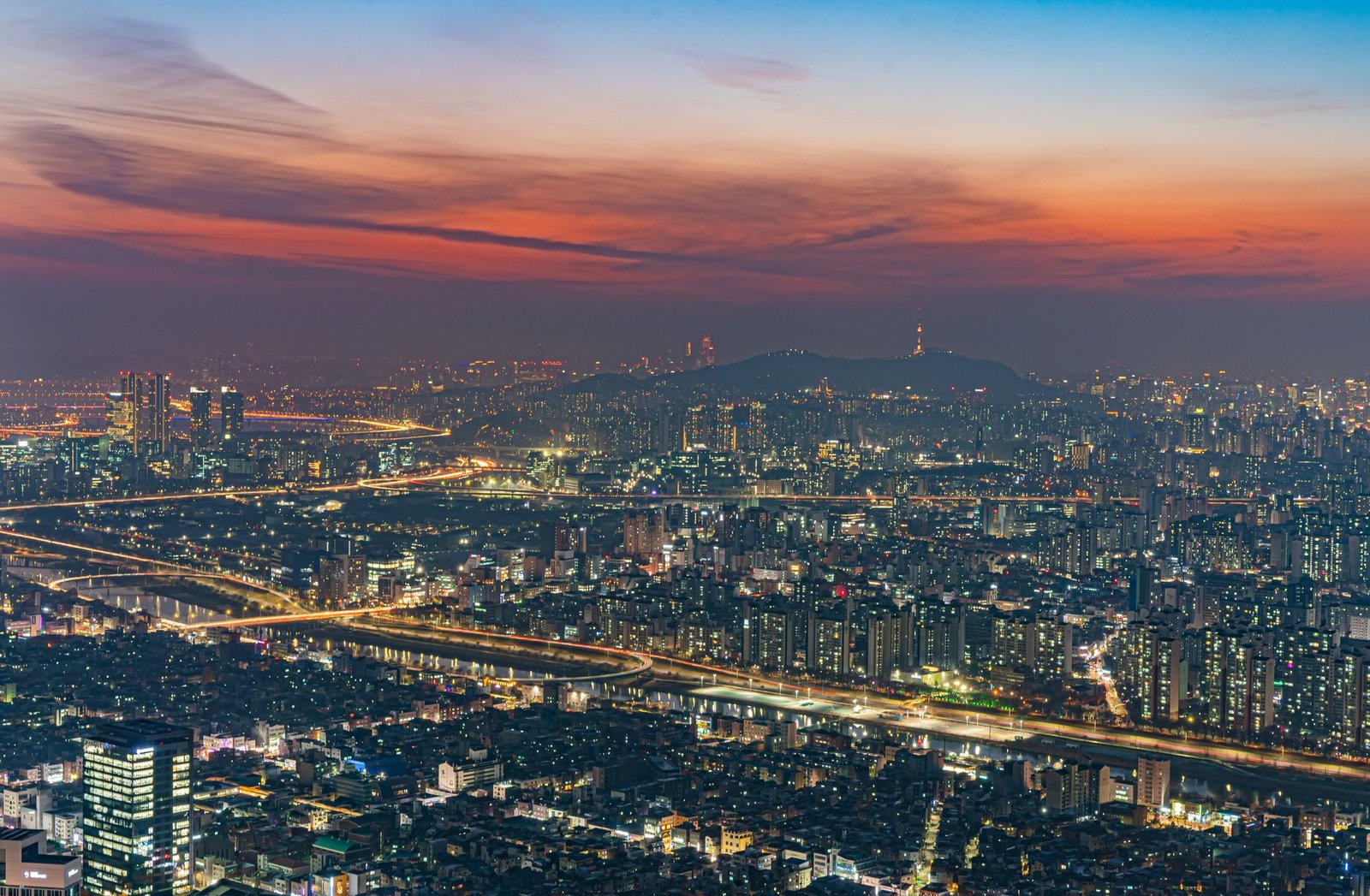
South Korea is currently Level 1, Exercise Normal Precautions, on the US State Department scale (as of October 2026, travel.state.gov). Check the official advisory page before booking and again before you fly.
What the US travel advisory for South Korea currently says
South Korea currently carries a Level 1: Exercise Normal Precautions advisory from the US State Department (as of October 2026, travel.state.gov). That is the lowest of the four levels and signals standard international travel precautions rather than a specific warning against visiting.
Level 1 does not mean the advisory text is empty. The State Department lists several reasons for caution, and they are worth reading in full on the official page:
- Large-scale political demonstrations can occur with little notice and may disrupt transportation or essential services.
- Tensions on the Korean Peninsula remain high because of North Korean missile launches and military activities.
- Consular services, including passport processing, are not available at the U.S. Consulate in Busan. They can only be accessed at the U.S. Embassy in Seoul.
For most visitors, these points translate into practical habits: allow extra time on days when protests are announced, know where your embassy is, and keep your plans flexible. The official source is the South Korea travel advisory page.
Advisory levels can change. Treat anything you read in an article, including this one, as a snapshot and confirm the level on travel.state.gov before you book and before you fly.
How US advisory levels work and what each one means
The State Department uses a four-level system for every country. Knowing the scale helps you put a Level 1 in context without over- or under-reacting.
| Level | Name | What it means |
|---|---|---|
| 1 | Exercise Normal Precautions | The lowest level for safety and security risks; standard international travel precautions apply. |
| 2 | Exercise Increased Caution | Be aware of heightened risks to safety and security. |
| 3 | Reconsider Travel | Avoid travel because of serious safety and security risks. |
| 4 | Do Not Travel | The highest level, reflecting life-threatening risks; the U.S. government may have very limited or no capability to assist in emergencies. |
Two practical points about reading these. First, the level is only a headline. The text underneath explains the specific risks, and sometimes a country has a different treatment for particular regions. Second, a level describes risk at the time of publication, so check the date on the advisory page as well as the number.
The full list of countries is on the State Department travel advisories index, which is useful if you are comparing destinations on a multi-country trip.
Risks to know about: North Korea tensions, the DMZ, and crowds
North Korea tensions
The advisory mentions continued high tensions due to North Korean missile launches and military activities. In daily life in Seoul and other cities, this rarely affects a tourist itinerary. News headlines can sound more dramatic than the situation on the ground, so rely on official alerts rather than social media for decisions about changing plans.
The DMZ and Joint Security Area
The border area is the one place where the tension is part of the visit itself, and access is tightly controlled. Based on Korea Tourism Organization information:
- Independent travel into the Civilian Control Zone and DMZ is strictly prohibited. Visits must be booked through official tour agencies authorized by the United Nations Command.
- You must present a valid passport (or alien registration card) on the day of the tour for security and identification checks.
- Children aged 7 and under are restricted from Joint Security Area (JSA/Panmunjeom) tours.
- Foreign civilian entry to Panmunjeom (JSA) remains subject to military suspension and operational closures.
Do not build a fixed itinerary around a JSA visit. Closures can happen with little notice, so choose a booking option that lets you reschedule or get a refund, and carry your actual passport, not a photocopy.
Details are on the Visit Korea page maintained by the Korea Tourism Organization.
Demonstrations and crowds
Large political demonstrations are the most concrete risk the advisory names. They tend to cluster in central areas and can slow buses, subways, and road traffic. Leave extra time on days with big rallies, avoid joining crowds, and keep a backup route to the airport on your departure day.
Checking the advisory and alerts before you fly
Doing this takes about ten minutes. Run through it when you book, and again a few days before departure.
- Open the State Department's South Korea advisory page directly rather than relying on a search snippet or a third-party summary.
- Note the level and the date of the most recent update. At the time of checking, the level is 1: Exercise Normal Precautions (as of October 2026, travel.state.gov).
- Read the reasons listed beneath the level, especially the notes on demonstrations, North Korean activity, and consular access.
- Enroll in the Smart Traveler Enrollment Program (STEP) at step.state.gov so the embassy can send you security alerts and reach you in an emergency.
- Bookmark the alerts section of the U.S. Embassy Seoul website, kr.usembassy.gov, for official security messages.
- Save the embassy and helpline numbers in your phone (listed below) and keep a photo of your passport photo page stored separately from the passport itself.
- Recheck the advisory the day before you fly, since levels and alerts can be updated at any time.
If you are traveling with a group or family, have everyone enroll in STEP with their own contact details, not just the trip organizer.
Staying informed during your trip: alerts, embassy, and 1330 hotline
Once you arrive, you mainly need two things: a reliable alert channel and a human you can call.
Official alert channels
The U.S. Embassy's security alerts reach you through STEP and are also posted on the embassy website. The embassy has used these channels for situations such as a political situation alert and a nationwide civil defense drill notice, so it is worth reading them even when they look routine. Examples include the security alert on the political situation and the notice about the nationwide civil defense drill on August 20, 2026.
A civil defense drill is a good example of a non-event that can still surprise visitors: you may hear sirens or see traffic and pedestrian changes. An advance alert tells you what is happening.
The 1330 Korea Travel Hotline
The Korea Tourism Organization runs the 1330 hotline for travel help, such as directions, transport, and general tourist questions (as of October 2026, english.visitkorea.or.kr):
- Hours
- 24 hours a day, 7 days a week
- Phone languages
- Korean, English, Japanese, Chinese, Russian, Vietnamese, Thai, and Malay
- Online chat languages
- Korean, English, Japanese, Simplified Chinese, and Traditional Chinese (real time)
Prices and hours can vary by branch and season — check the official site before you go.
1330 is for travel assistance, not for emergencies or consular matters, which go through the contacts in the final section.
Safety questions also come up around nightlife areas. For practical context, see our guides on walking at night in Hongdae or Myeongdong and Hongdae Club Street late at night.
Entry requirements that matter alongside the advisory
The advisory covers safety, not entry rules, so check both. For US passport holders, two points from the K-ETA official site matter (as of October 2026, k-eta.go.kr):
- U.S. passport holders are currently exempt from obtaining a K-ETA under a temporary exemption extension.
- Visa-free entry for tourism or short visits allows a stay of up to 90 days.
The K-ETA exemption is described as temporary and has been extended. Confirm the status on the official K-ETA site shortly before departure, because an airline can refuse boarding if you are missing a required authorization.
Also check that your passport is valid for your planned stay according to the official sources and your airline's requirements. Do not rely on a blog or forum post for this; the airline check-in desk applies the rules, and an outdated rule will not help you at the counter.
If your plans include time at the airport before departure, our guide to Incheon Airport duty-free coupons and pre-orders may help with planning.
Emergency contacts and what to do if something goes wrong
Save these numbers before you arrive. They come from the U.S. Embassy Seoul and the State Department (as of October 2026, kr.usembassy.gov):
- Embassy emergency line, within South Korea
- 02-397-4114
- Embassy emergency line, from outside South Korea
- +82-2-397-4114
- State Department Consular Affairs helpline (toll-free)
- +1 (888) 407-4747
- SeoulInfoACS@state.gov
If something goes wrong, a simple order of actions works in most situations:
- Immediate danger or medical emergency: contact local emergency services first, then the embassy.
- Lost or stolen passport: contact the U.S. Embassy in Seoul. Passport processing is not available at the Busan consulate, so plan the trip to Seoul if you are elsewhere in the country.
- Travel disruption from a demonstration or drill: check embassy alerts, allow more time, and use the 1330 hotline for transport questions.
- Questions that are not urgent: email American Citizen Services.
For most visitors, South Korea at Level 1 is a trip that calls for ordinary awareness rather than special worry. Check the advisory page when you book and again before you fly, enroll in STEP, save the numbers above, and confirm the K-ETA status. With those done, you can spend your attention on the trip itself, whether that is a museum visit like the National Museum of Korea or an evening show in Seoul.
Sources checked October 2026: state.gov, state.gov, state.gov, k-eta.go.kr, usembassy.gov, usembassy.gov.