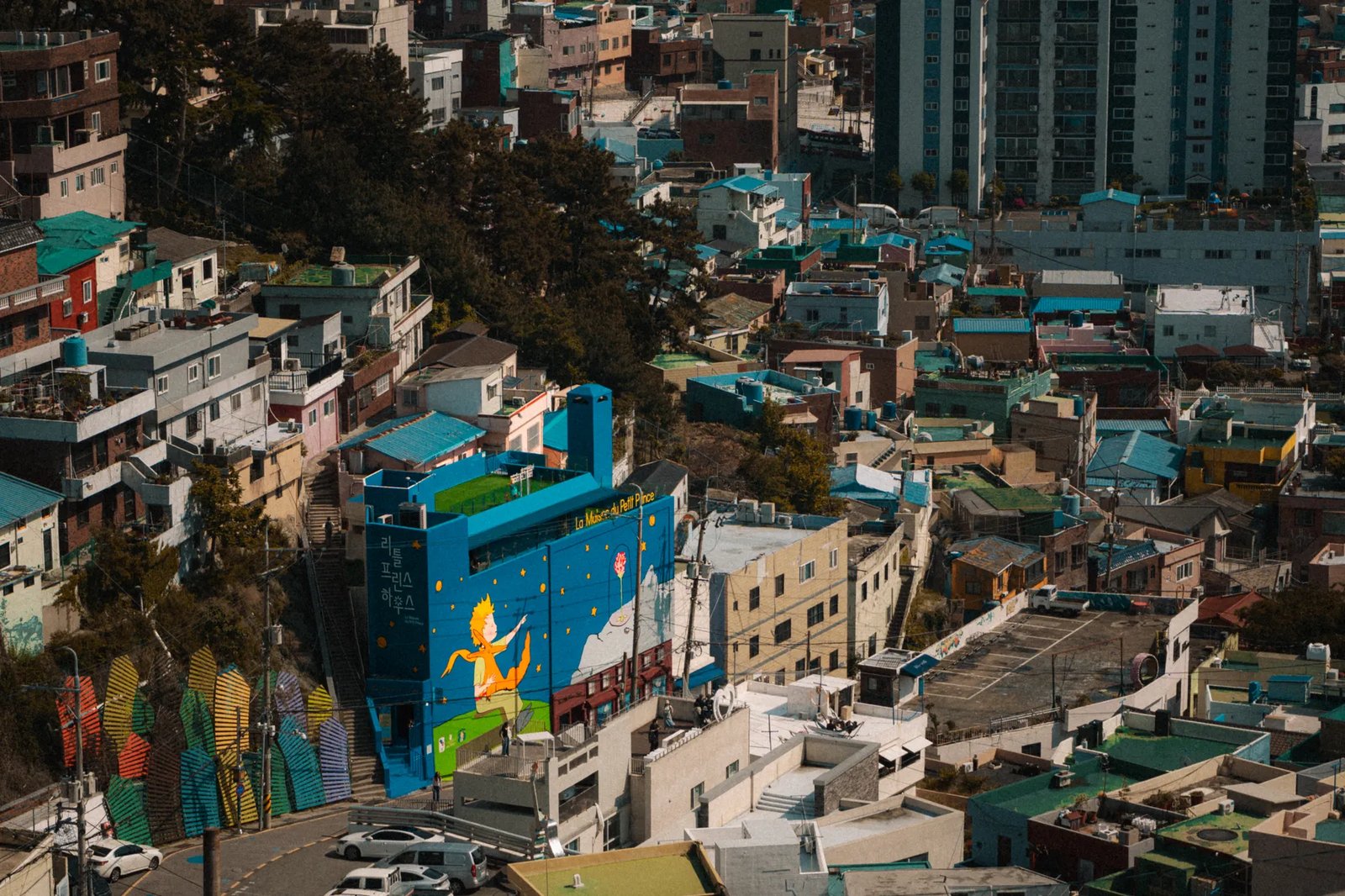
Tongyeong works well as a two-day trip: one day for the mural village and market, one for the cable car and coast. From Seoul, a direct express bus takes about four hours.
Why Visit Tongyeong Beyond Seoul
Tongyeong is a port city on Korea's southern coast, known for its seafood, its island-dotted bay, and a long association with art and music. It is quieter and slower than Seoul, and most sights sit close enough together that two days feel comfortable rather than rushed.
This plan suits travellers who already have a few days in Seoul behind them and want to see a working coastal city. If you are still planning the capital, start with the Seoul Travel Guide: Complete Planner for First-Time Visitors.
The route below is compact: Day 1 covers the mural hillside and the central market area, Day 2 goes up Mireuksan by cable car and looks out over the bay. Meals are built around oysters and other local seafood.
Route at a glance
- Seoul to Tongyeong by express bus (about 4 hours).
- Day 1: Dongpirang Mural Village, then Tongyeong Central Market and the harbour area.
- Day 2: Mireuksan Cable Car, then optional Skyline Luge, then a seafood dinner before returning.
Getting to Tongyeong from Seoul
The simplest route is the direct express bus from Seoul Express Bus Terminal (Gyeongbu Terminal) to Tongyeong Central Bus Terminal. The journey takes roughly 4 hours to 4 hours 10 minutes (as of October 2026, Visit Korea). Fares range from about ₩25,000 to ₩43,000 depending on seat class: Standard, Excellent, or Premium (as of October 2026, Visit Korea).
There is no KTX station in Tongyeong. If you prefer the train, you would take KTX from Seoul Station to Jinju Station or Masan Station, which takes approximately 2.5 to 3 hours (as of October 2026, Letskorail / Visit Korea). From there you would continue by local intercity bus or taxi. Once you add the transfer, the total time is not dramatically shorter than the direct bus, and the bus avoids a change.
Aim for a morning bus so you arrive in the early afternoon. That leaves time to check in and walk the harbour before dinner. For timetables and live seat availability, check the official bus booking channels or the route pages on Rome2rio.
For local transport once you arrive, a transportation card is useful on city buses. The T-Money Card guide explains how to buy and recharge one. Confirm in advance that the card is accepted on the Tongyeong buses you plan to use.
Day 1: Dongpirang Mural Village and Tongyeong Central Market
Day 1 is a walking day. Wear comfortable shoes, because the mural village is on a hillside with steps and narrow lanes.
Afternoon: Dongpirang Mural Village
Dongpirang is a hillside neighbourhood where the old lanes are decorated with murals, and it looks out over the harbour. The name is often explained as combining "dong" (east) with a word meaning a cliff or ledge, which fits the setting. Allow about 1.5 to 2 hours to walk up through the alleys, stop at viewpoints, and come back down at an easy pace.
Residents still live here, so keep voices low, do not enter private yards, and avoid photographing people without asking.
Late afternoon: Tongyeong Central Market and harbour
From the mural village, the central market and the waterfront are a short walk or brief taxi ride downhill, normally ten to fifteen minutes on foot. The market is the place to see the local catch, dried seafood, and stalls selling snacks. Even if you do not buy anything, walking the aisles is a good introduction to what the region eats.
Finish with a slow walk along the harbour as the light fades. Exact shop opening hours vary by stall, so treat any specific time you are given on site as the authority.
- Day 1 walking time
- Roughly 3 to 4 hours in total, including stops
- Best for
- Murals, harbour views, market browsing
- Pace
- Easy, with some hills and steps
Prices and hours can vary by branch and season — check the official site before you go.
If you enjoy this kind of slow historic-city walking, Gyeongju is a natural follow-up elsewhere in the south-east.
Day 2: Mireuksan Cable Car and Coastal Views
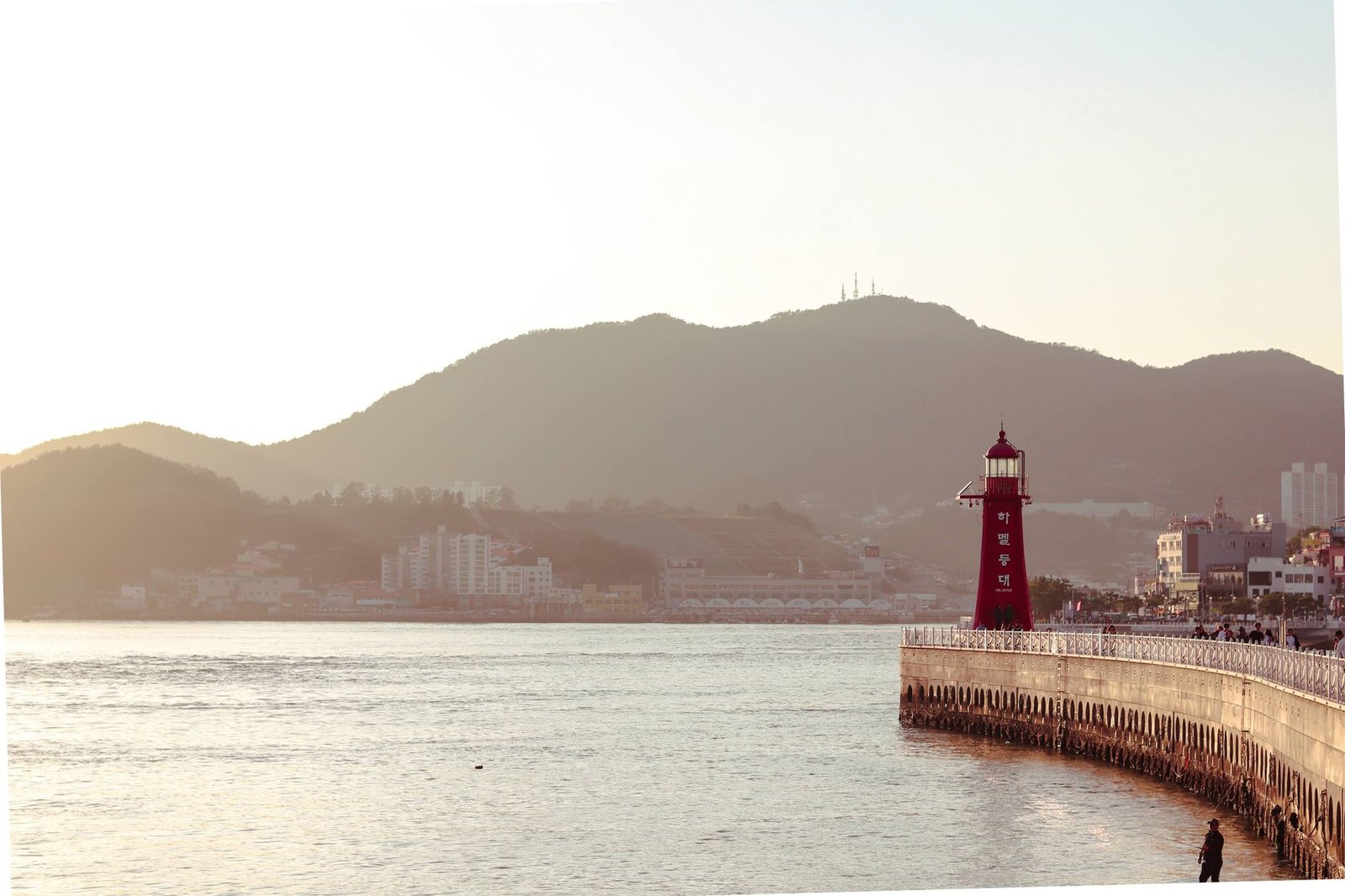
Day 2 centres on the Mireuksan Cable Car, also called the Tongyeong Cable Car, which carries you up the mountain for wide views of the bay and its islands.
Morning: Mireuksan Cable Car
Ticket prices (as of October 2026, Visit Korea):
| Ticket | Adult | Senior | Child |
|---|---|---|---|
| Round trip | ₩17,000 | ₩14,000 | ₩13,000 |
| One way | ₩13,500 | ₩11,500 | ₩11,000 |
Operating hours are 10:00 to 18:00 on weekdays and 09:00 to 18:00 on weekends, with final ticketing 50 minutes before closing (as of October 2026, Visit Korea).
The cable car is closed on the 2nd and 4th Wednesday of each month, and it can also stop for weather. Check the operator's notices at cablecar.ttdc.kr before you go, and do not schedule this stop on a closure Wednesday (as of October 2026, Visit Korea).
Plan about two hours for the ride up, time at the summit viewpoints, and the ride down. A round-trip ticket is the practical choice unless you intend to walk down.
Optional: Skyline Luge Tongyeong
If you want something more active, Skyline Luge is open year-round, including late October and November, and closes only in severe weather such as heavy rain or lightning (as of October 2026, Visit Korea / Skyline Luge). Hours are 10:00 to 17:00 on weekdays and 10:00 to 18:00 on weekends and public holidays (as of October 2026, Visit Korea). A 4-ride plus 1 digital photo combo is ₩37,000 for adults, and a 5-ride plus 2 photo combo is ₩41,000 (as of October 2026, skylineluge.kr). Tandem child passes are ₩15,000.
It is entirely optional. If you are short on time, the cable car alone gives you the coastal view.
Afternoon and evening
Return to the harbour area for a final seafood meal, then take an evening or next-day bus back toward Seoul. Given the four-hour ride, many visitors prefer to stay the night rather than leave late.
Where to Eat: Oysters and Local Seafood
Tongyeong is well known for seafood, and oysters are the dish most associated with the area. In Korea, oysters appear raw, grilled, steamed, fried, in rice dishes, and in soups. Menus near the market and harbour usually list these by type, and many restaurants display photos, which makes ordering easier without Korean.
- Raw or grilled oysters: Best from autumn into winter, when oysters are generally in season.
- Fresh fish and shellfish sets: Often priced per portion or by weight; ask the price before ordering anything sold by weight.
- Market snacks: Good for a light lunch between sights.
Specific restaurant prices and hours change often and are not confirmed here, so check menus on site. If you have a shellfish allergy or avoid raw seafood, say so clearly, and use a translation app to confirm ingredients.
Many seafood restaurants prefer two or more diners for set menus. If you are travelling alone, look for single-portion dishes such as oyster rice or soup.
Where to Stay and Getting Around
Staying near the harbour or the central market keeps you close to restaurants and to the walk up to the mural village. Specific hotel rates are not listed in this guide because they vary by season and weekday, so compare current prices on your booking platform.
For getting around, the central areas are walkable, and local buses and taxis cover the rest. Taxis run on the meter, and you pay the metered fare by card, cash, or transportation card (as of October 2026, Visit Korea). For a regional overview of local buses and onward connections, see Korea Atlas.
A taxi is the easiest option for the cable car base if you do not want to sort out bus numbers. Ask your accommodation to write the destination in Korean, or show it on your phone.
Practical Tips for US Travellers: Entry, Tipping, and Power
Entry rules
US passport holders on tourist visits of under 90 days are temporarily exempt from the K-ETA requirement through December 31, 2026 (as of October 2026, Visit Korea / K-ETA). You may still apply voluntarily for a K-ETA, which costs ₩10,000, and doing so lets you skip the paper arrival card at immigration (as of October 2026, Visit Korea / K-ETA). Rules can change, so confirm on the official K-ETA site before you fly, especially if your trip falls near or after that date.
Tipping
Tipping is not customary or expected in Korean restaurants, because menu prices include VAT and service (as of October 2026, Visit Korea). Taxi drivers also do not expect tips; you pay the metered fare.
Plugs and voltage
Korea uses 220-volt electricity at 60 Hz, with outlets that take two-round-prong plugs, Types C and F (as of October 2026, Visit Korea). US devices with a 120-volt-only charger need a converter, though most phone and laptop chargers are dual-voltage. Check the label, and bring a plug adapter.
Wrap-up
Two days is enough for Tongyeong's main sights: the mural village and market on the first day, the cable car and coast on the second. Book a morning bus from Seoul, avoid the cable car's closure Wednesdays, and check weather updates before heading up the mountain. If you are building a wider trip, pair this with Seoul sights such as Gyeongbokgung Palace before or after.
Sources checked October 2026: koreaatlas.com, rome2rio.com, visitkorea.or.kr, rome2rio.com, kupi.com, koreatravelatlas.com.