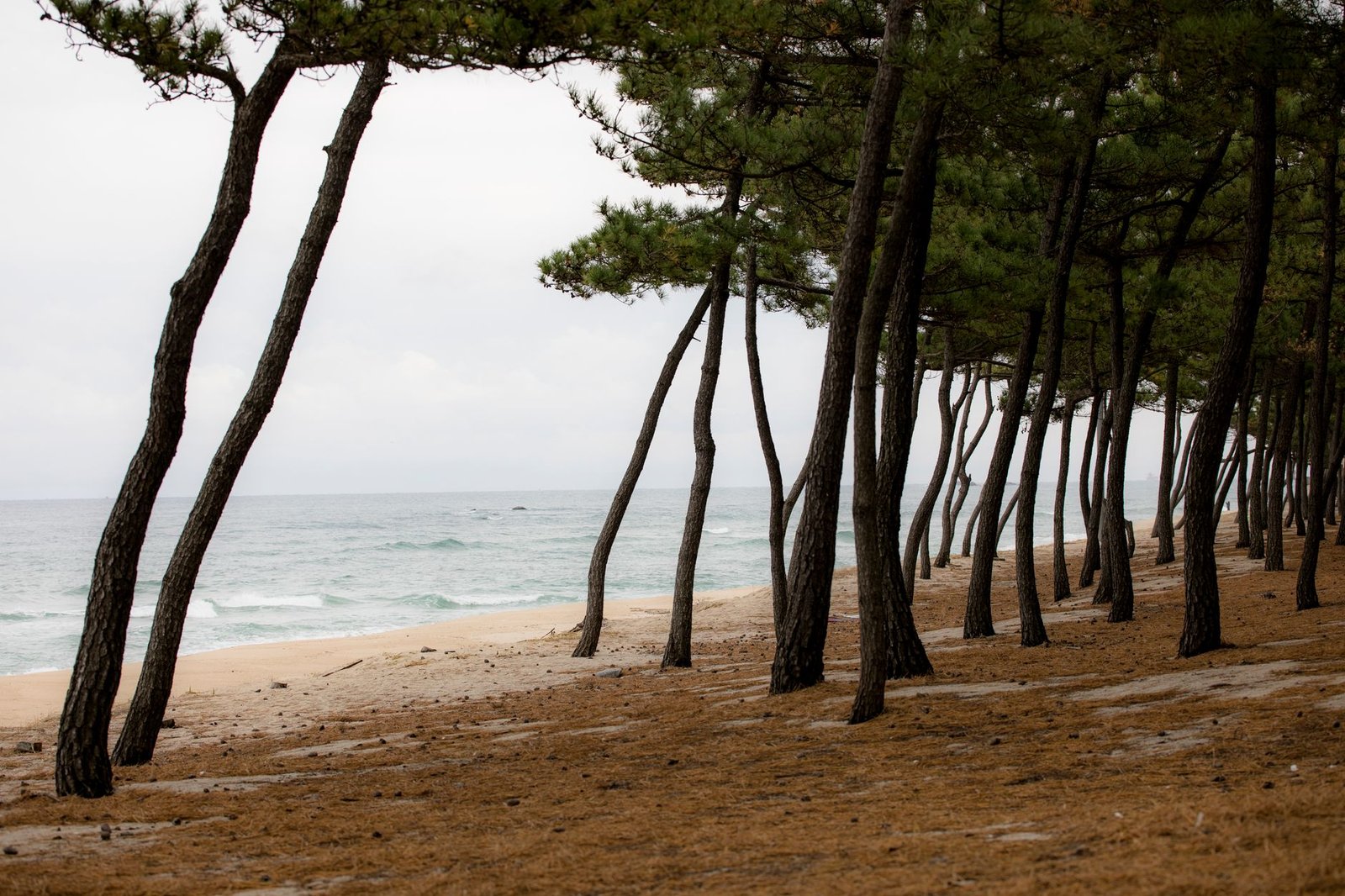
Gangneung works well as a one- or two-day coastal trip from Seoul. Focus on coffee, Jungang Market, a beach at sunrise, and Ojukheon, reached by KTX in roughly 1.5 hours.
Why Visit Gangneung From Seoul
Gangneung sits on Korea's east coast, and it gives you something Seoul cannot: open sea, a long beach, and a slower pace. It suits travellers who have already covered the main palaces and markets in the capital and want a change of scenery without a complicated itinerary.
The picks below are ordered roughly as a visitor would use them: coffee and old-town wandering, market food, the beach, and one historic site. Each has a practical note and one honest drawback, so you can decide what to keep and what to skip.
- Best for: a night away, or a long day trip if you start early.
- Not ideal for: travellers who want nightlife or a packed sightseeing list.
If you are still planning your Seoul days, the November Seoul guide pairs well with a coastal side trip.
1. Gangneung Coffee Street and Old Town
What it is: Gangneung is known across Korea for its coffee culture, and the best-known concentration of cafes is along the seafront strip near Anmok Beach, often called Coffee Street. Many cafes face the water and roast their own beans.
Why it fits you: If you enjoy the slow cafe habit that Koreans treat as a destination in itself, this is the place to do it with a sea view. For background on ordering and etiquette, see the Korean coffee shop guide.
Practical details: Hours differ by cafe, so check each one on its map listing rather than assuming a standard schedule. Prices on the menu are the final price, and no tip is expected (as of October 2026, VISITKOREA).
Go mid-morning on a weekday if you can. Window seats facing the water fill first, and weekend afternoons draw crowds.
Honest drawback: Popular cafes here can be crowded and priced above ordinary city cafes, and a few are more about the view than the cup. Pick one or two rather than hopping through many.
2. Gangneung Jungang Market Food Guide
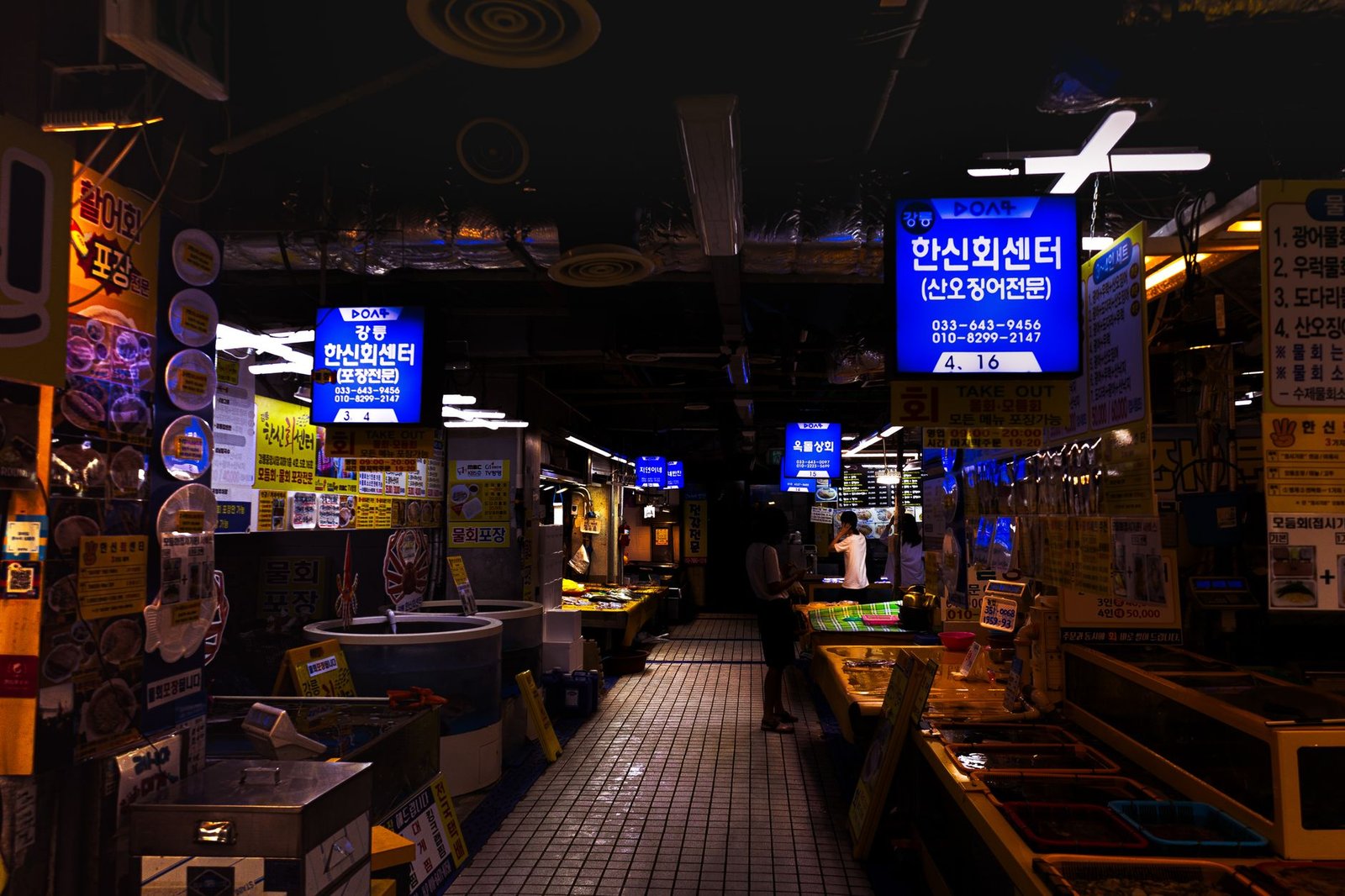
What it is: A large traditional market in the city centre where stalls sell snacks, seafood, produce and prepared dishes. It is the easiest way to eat several local things in one stop.
Why it fits you: Stall food is cheap to sample, easy to point at, and a good lunch for travellers who do not read Korean. If you have used Seoul's markets, the approach is the same as in the Gwangjang Market ordering guide.
- Hours
- Core hours 08:30 to 21:00 daily (as of October 2026, VISITKOREA); individual stalls vary
- Closed days
- No overall closing days; some stalls may close on certain public holidays (as of October 2026, VISITKOREA)
- Tipping
- Not expected; displayed prices include VAT (as of October 2026, VISITKOREA)
Prices and hours can vary by branch and season — check the official site before you go.
What to look for: Fried snacks, fresh seafood, and simple bowls of noodles or rice dishes. For a wider sense of what to order across the country, the Korea food guide is a useful companion.
Honest drawback: Stalls open and close on their own schedules, so a vendor you read about may not be operating when you arrive. Late evening can be thin on options.
3. Beaches and Sunrise Spots Near the City
What it is: Gyeongpo Beach is the main city beach, a wide stretch of sand with pine trees behind it and cafes and restaurants nearby. It is open 24 hours daily, year-round, with no closed days (as of October 2026, VISITKOREA).
Why it fits you: Because the beach is always open, you can fit it around your own schedule: a walk after the market, or an early start to watch the sun come up over the East Sea. The east-facing coast is the reason sunrise is a standard Gangneung activity.
- Check the sunrise time for your date the evening before.
- Dress in layers; the shoreline is windy and cold before dawn in autumn and winter.
- Plan a warm cafe or breakfast stop afterwards.
Practical details: Entry is free. Swimming is a summer activity; outside the season, treat the beach as a place to walk, not swim, and respect any posted warnings or flags.
Do not assume lifeguards or facilities are operating outside the summer season. Stay back from the waterline in rough weather.
Honest drawback: In cooler months the sea air is sharp and the beach is mostly for walking and photographs. Weather can also cloud over the sunrise.
4. Gangneung Kim Clan Village Visit
What it is: The Ojukheon area is a historic site tied to the Kim clan, with traditional buildings, a house and a municipal museum on the grounds. It gives you a quiet, historical counterweight to the beach and cafe stops.
Why it fits you: If you want one cultural stop that takes an hour or two and does not require advance planning, this is the one.
- Hours
- 09:00 to 18:00; last ticketing and admission at 17:00 (as of October 2026, VISITKOREA)
- Admission
- Adults ₩3,000, teenagers ₩2,000, children ₩1,000; free for children 6 and under and seniors 65 and older (as of October 2026, VISITKOREA)
- Closed days
- Open all year with no scheduled closures; outdoor grounds remain open on Seollal and Chuseok (as of October 2026, VISITKOREA)
Honest drawback: Signage and explanations may be mostly in Korean, and the site is modest in scale. Visitors expecting a large palace complex may find it small.
5. How to Get From Seoul to Gangneung
The KTX-Eum train is the simplest option. It runs from Seoul Station and from Cheongnyangni Station to Gangneung Station.
| Departure | Approx. travel time | Standard fare, one way |
|---|---|---|
| Seoul Station | 1 hr 30 min to 1 hr 50 min | ₩27,600 (First Class ₩38,500) |
| Cheongnyangni Station | 1 hr 20 min to 1 hr 40 min | ₩26,000 |
Times and fares are as of October 2026, KORAIL. Check the KORAIL booking page for current schedules before you travel, as services and fares can change.
If your hotel is on the eastern side of Seoul, Cheongnyangni can be quicker and slightly cheaper than Seoul Station.
Honest drawback: Weekend and holiday trains can sell out, so book ahead if your dates are fixed. Getting between sites inside Gangneung also takes local buses or taxis, which adds time.
6. Practical Tips for US Travellers
- Entry: US passport holders are temporarily exempt from the K-ETA requirement for visa-free entry through December 31, 2026, and submit an arrival card instead. Applying voluntarily costs ₩10,000 plus a processing fee (as of October 2026, K-ETA official website). Check the official K-ETA notice before you fly, since the exemption has an end date.
- Tipping: Not customary in restaurants, cafes, markets or taxis, and cash offered may be declined (as of October 2026, VISITKOREA).
- Power: Outlets are Type C and F at 220V and 60 Hz. US devices that are not dual-voltage need a converter, and US plugs need an adapter (as of October 2026, VISITKOREA).
- Language: English is limited outside Seoul, so save addresses in Korean on your phone. The English-friendliness guide covers the basics.
For a simple plan, take a morning KTX, eat at Jungang Market, walk Gyeongpo Beach, and spend the evening at a seaside cafe. Stay overnight if you want sunrise and Ojukheon without rushing, and confirm train times with KORAIL before you commit.
Sources checked October 2026: k-eta.go.kr, visarun.ai, visitkorea.or.kr, haniseoul.com, traveloka.com, koreatimes.co.kr.