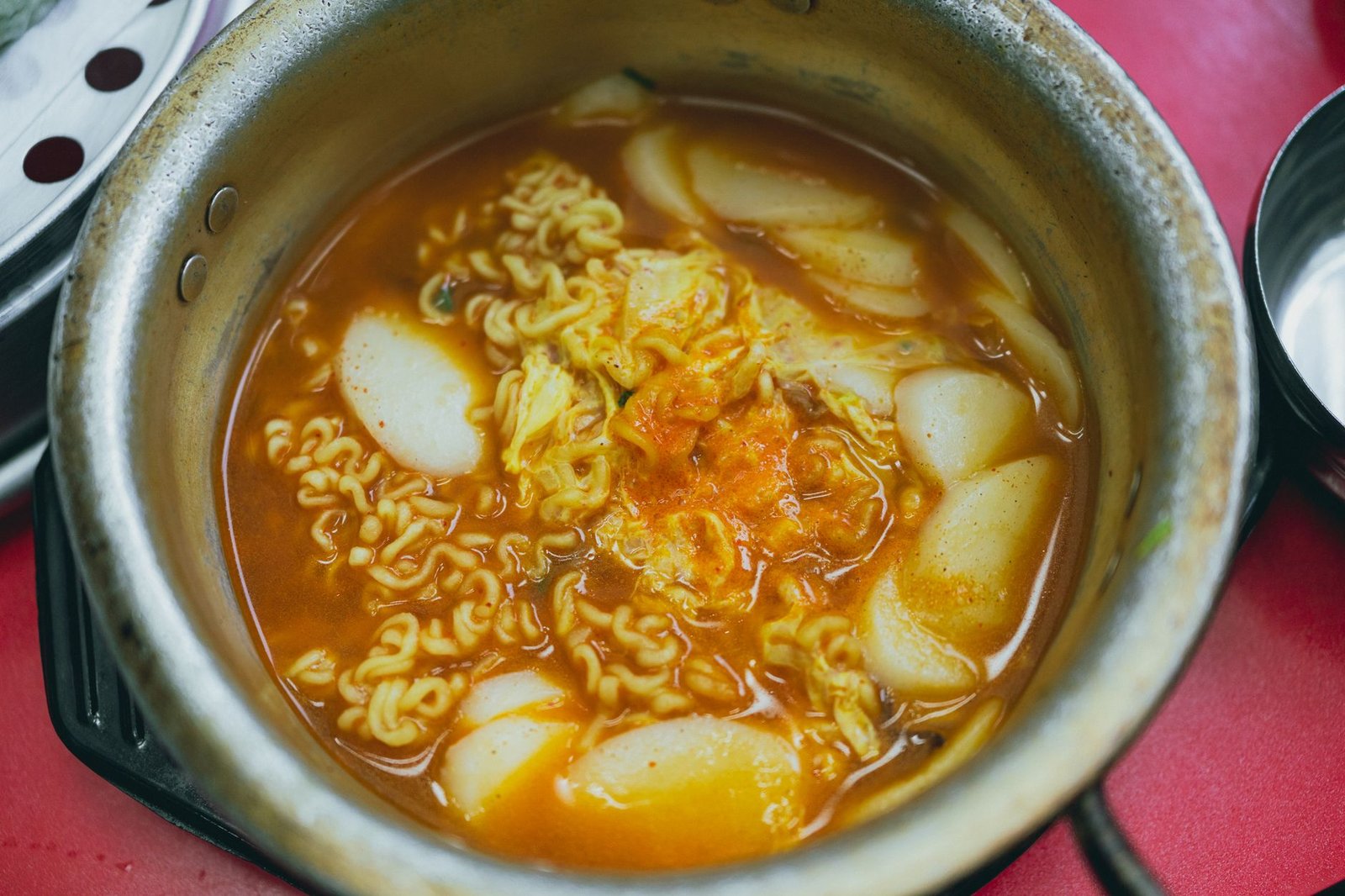
Start with tteokbokki, odeng, hotteok, bungeoppang and dakkochi at Seoul's markets. Carry cash, check posted prices, and ask about ingredients if you avoid pork, meat or seafood.
What Counts as Korean Street Food
Korean street food, often called bunsik (snack food) or simply stall food, is cheap, hot, and eaten standing or on the move. You will find it in traditional markets, around subway exits, and in shopping districts. Most stalls specialise in one or two items, and many sell the same core menu: rice cakes, fish cakes, fried snacks, skewers, and sweet griddle treats.
This list covers 15 snacks, grouped by type, in the order most visitors meet them. Where a price matters, you will see how the figure was sourced. Where the research behind this guide could not confirm current prices, the text says so rather than guessing, because stall prices change often and differ between Gwangjang, Myeongdong, and smaller neighbourhood markets.
For the wider picture of Korean dining beyond stalls, see the Korea Food Guide: What to Eat, Where to Go, and How to Order.
Savory Classics: Tteokbokki, Odeng, and Gimbap
1. Tteokbokki
What it is: Chewy cylindrical rice cakes simmered in a sweet-spicy gochujang sauce, often with fish cake and sometimes a boiled egg.
Why it fits you: It is the most recognisable Korean street snack and easy to point at and order. Most stalls let you choose a portion size, and the heat level is usually moderate.
Practical: Look for it at market stalls such as Gwangjang and in busy shopping streets. Current price lists could not be verified for this guide, so check the posted price at the stall.
Drawback: The sauce is often made with anchovy-based stock and can be hotter than it looks. If you are spice-sensitive, ask for a milder version or choose a stall with a non-spicy variety.
2. Odeng (Fish Cake Skewers)
What it is: Flat fish cake folded onto a skewer and kept warm in a savoury broth. The broth is usually offered in a paper cup to sip.
Why it fits you: It is light, warm, and a good counterpoint to spicy rice cakes. It also works as a small snack when you are not hungry for a full portion.
Practical: You usually take a skewer from the pot and pay by the count when you finish, so keep track of how many you eat. Check the stall's posted price.
Drawback: It is fish-based, so it does not suit anyone avoiding seafood, and the broth is salty.
3. Gimbap
What it is: Rice and fillings such as egg, pickled radish, carrot, and spinach rolled in seaweed and sliced into rounds.
Why it fits you: It travels well and is a sensible quick meal for market days. Stalls often sell small mini rolls, while shops sell full ones.
Practical: Common near markets and stations. Fillings vary, and ham or fish cake appears in many versions. Check the stall's price on site.
Drawback: Rolls sitting out for hours are not at their best, so choose a busy stall with visible turnover.
Sweet Treats: Hotteok, Bungeoppang, and Dalgona
4. Hotteok
What it is: A yeasted pancake pressed flat on a griddle and filled with brown sugar, cinnamon, and nuts or seeds.
Why it fits you: It is a classic cold-weather snack and sold in many markets. It is also usually meat-free in its standard sweet form.
Practical: Eat it right away while the filling is molten. Prices differ by stall; check the board.
Drawback: The syrup filling is very hot and can burn your mouth. Let it cool for a minute.
5. Bungeoppang
What it is: A fish-shaped waffle-like pastry, traditionally filled with sweet red bean paste. Some stalls offer custard or other fillings.
Why it fits you: It is easy to eat while walking and is closely tied to winter street food culture. For more cold-season picks, see Best Korean Food in Winter: 10 Warming Dishes to Try.
Practical: Often seasonal, so availability can be patchy in summer. Check prices at the stall.
Drawback: Red bean is an acquired taste for some visitors. Ask what fillings are offered.
6. Dalgona
What it is: A thin disc of caramelised sugar and baking soda pressed with a shape, which you try to lift out without cracking.
Why it fits you: It is a cheap, nostalgic novelty and fun with children.
Practical: Found in tourist-heavy streets and festivals rather than every market. Prices are not confirmed in the research notes; check on site.
Drawback: It is mostly a novelty, and the sugar is the only flavour.
Meat and Grill Snacks: Dakkochi and Gyeranppang
7. Dakkochi (Chicken Skewers)
What it is: Grilled chicken pieces, often alternated with scallion, brushed with a sweet-spicy or soy glaze.
Why it fits you: It is a fast, protein-heavy snack that is easy to eat while walking. It also tends to be less spicy than tteokbokki.
Practical: Common in busy shopping streets. Ask for the sauce on the side if you want to control the heat. Check the stall's price.
Drawback: Skewers can be thin on meat at the cheapest stalls, so look for chunky pieces and good turnover.
8. Gyeranppang
What it is: A small oval egg bread, a soft sweet-savoury cake baked with a whole egg in the centre.
Why it fits you: It works as a light breakfast or midday bite and is warm and filling.
Practical: Often sold near transit hubs and shopping streets; check the posted price.
Drawback: It is sweetish, which surprises people expecting a savoury egg snack.
For a snack-focused overview with more ideas, read Spicy, Sweet, and Savory: 7 Must-Try Korean Snacks for Tourists.
Regional Specialties Worth Seeking Out
Beyond the core list, regional specialities add variety. The same general rule applies: confirm prices at the stall because the research notes did not confirm current figures.
- 9. Hotdog-style corn dogs (gamja-hotdog): Sausage or cheese in batter, sometimes rolled in potato cubes. Widely sold; it is heavy and oily, so share one.
- 10. Mandu: Dumplings, steamed or fried, at market stalls. Fillings often include pork, so ask if that matters.
- 11. Sundae: Korean blood sausage with glass noodles, usually served with salt. It is an acquired taste and not for everyone.
- 12. Twigim: Fried vegetables, squid, and dumplings, often eaten with tteokbokki sauce. Best fresh from the fryer.
- 13. Hoeddeok-style filled pancakes in port markets: Regional variants appear in coastal areas, where seafood pancakes also feature.
- 14. Seafood skewers and grilled squid: Typical in port cities and coastal markets, and common at night markets. Freshness depends on turnover.
- 15. Chinese-Korean snacks: Incheon Chinatown is known for its own style of snacks, covered in 6 Must-Try Foods in Incheon Chinatown.
If you are heading to Busan, the guide to Busan Food Specialties covers local dishes worth adding to your list.
Prices: What to Expect to Pay
Street food is generally the cheapest way to eat in Korea, but this guide cannot give exact stall prices. Price lists for tteokbokki, odeng, hotteok, and bungeoppang at Gwangjang Market and Myeongdong have not been published on official tourism channels, so specific numbers would be guesses. Read the posted price board at each stall before ordering.
- Exchange rate
- About ₩1,325 to ₩1,330 per US$1 (as of October 2026, Hankyoreh).
- Payment
- Cash is recommended, as street vendors often do not accept international credit cards (as of October 2026, VISITKOREA).
- Markets
- Tipping
- Not expected anywhere in Korea, including stalls, and posted prices are final with no service charge or added tax (as of October 2026, VISITKOREA).
Prices and hours can vary by branch and season — check the official site before you go.
Carry small notes and coins in your pocket so you can pay quickly. A busy stall in Myeongdong moves fast, and the area is covered in the Myeongdong shopping guide.
Safety and Hygiene Tips for Street Stalls
South Korea's Ministry of Food and Drug Safety (MFDS) enforces safety standards, food additive rules, and hygiene guidelines for food preparation and distribution (as of October 2026, MFDS). That framework is a reassurance, but individual stalls still vary, so use your own judgment.
- Choose stalls with steady customer turnover, so food does not sit for long.
- Prefer food cooked to order and served hot, such as fried items and grilled skewers.
- Watch how the vendor handles cash and food. Many use gloves or tongs; if not, pick another stall.
- Be cautious with raw or lightly cooked seafood in warm weather.
- If you have allergies, tell the vendor clearly. Common ingredients include fish, shellfish, soy, sesame, wheat, and egg, and sauces often hide them.
Shared sauce brushes and communal broth ladles are normal at stalls. If this concerns you, ask for sauce on the side or choose individually wrapped items.
Halal and Vegetarian Options
Official halal certification from the Korea Muslim Federation (KMF) goes to designated brick-and-mortar restaurants rather than informal street stalls. Official tourism guides list Muslim-friendly restaurants but do not certify standalone street stalls (as of October 2026, VISITKOREA). Muslim travellers should therefore treat street food as uncertified. A list of restaurants is available in the VISITKOREA Muslim-friendly restaurants PDF.
Practical points about ingredients, based on how these snacks are commonly made:
- Fish cake, tteokbokki sauce, and broths often contain fish or anchovy stock. Pork also appears in dumplings and some fillings.
- Hotteok and bungeoppang are usually the easiest to ask about, since fillings are typically sweet, but the batter and oil can still be shared with other items.
- Gimbap fillings vary, with ham, fish cake, or egg common. Ask for a version without meat.
- Vegetarians should ask about broth and sauce, not just visible ingredients.
In every case, ask the vendor directly and decide what you are comfortable with. Using a translation app with a short note about your dietary needs helps at busy stalls.
Wrap-up: Start with tteokbokki, odeng, hotteok, and one grilled skewer, carry cash, and check each stall's posted prices. For a fuller plan around Seoul's dishes, the Seoul Food Guide is a useful next read.
Sources checked October 2026: hani.co.kr, visitkorea.or.kr, mfds.go.kr, visitkorea.or.kr, visitkorea.or.kr.