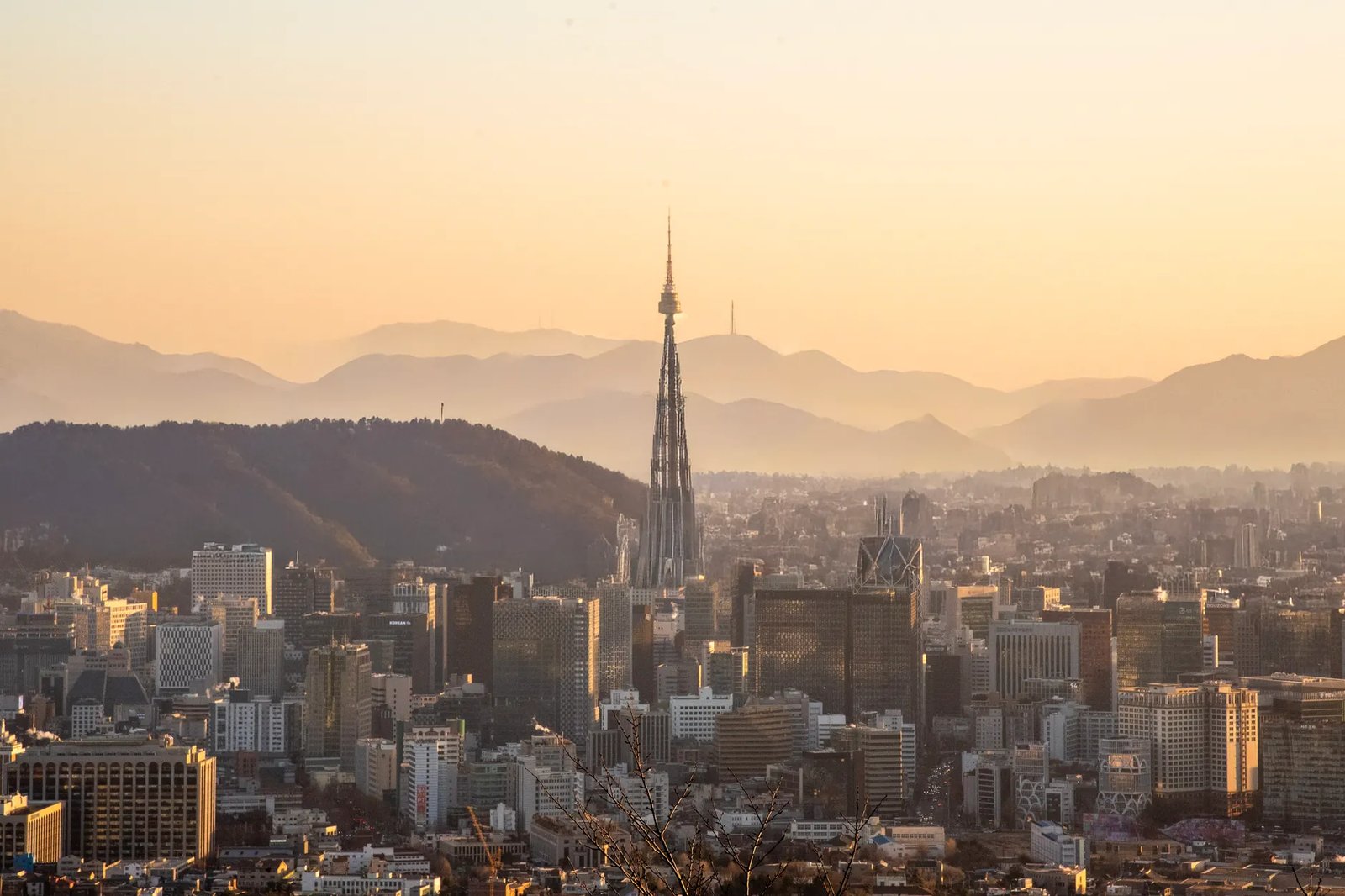
Australian and New Zealand passport holders can enter South Korea visa-free for up to 90 days, and are currently temporarily exempt from K-ETA under current Ministry of Justice rules (check the official K-ETA site at k-eta.go.kr for the latest status).
Do You Need a Visa or K-ETA as an Australian or Kiwi?
For most first-time visitors from Australia and New Zealand, the paperwork is light. Passport holders from both countries can enter South Korea without a visa for stays of up to 90 days under visa waiver agreements (as of November 2026, Korea Tourism Organization). That covers a typical holiday of one to four weeks with room to spare.
The K-ETA is the online travel authorisation many other nationalities must complete before boarding. Australian and New Zealand citizens are temporarily exempt under current Ministry of Justice rules (as of November 2026, K-ETA official site). The word temporarily matters, because exemptions can be changed or ended.
- Visa-free stay
- Up to 90 days (as of November 2026, visitkorea.or.kr)
- K-ETA for AU/NZ
- Temporarily exempt (as of November 2026, k-eta.go.kr)
- K-ETA fee, if required
- 10,000 KRW per person, roughly AUD 12 (as of November 2026, k-eta.go.kr)
Check the official K-ETA site again a few weeks before you fly. If the exemption changes, applications must be made online before boarding and generally need approval at least 72 hours before departure (as of November 2026, k-eta.go.kr). An approved K-ETA is valid for up to three years or until passport expiry, with multiple entries.
Also make sure your passport has enough validity for your travel dates, and confirm entry conditions with your airline, since they check documents at check-in.
Flights From Australia and New Zealand to Korea
Most travellers from Australia and New Zealand fly into Incheon International Airport (ICN), which serves Seoul and is the main international gateway. Gimpo (GMP) is mainly used for domestic routes, including Jeju, so it matters later in your trip rather than on arrival.
Specific direct schedules, operators and flight durations from Sydney, Melbourne, Brisbane, Perth and Auckland were not verified for this guide, so check airline and airport websites for current timetables rather than relying on a general estimate. Whether a route is direct or involves a connection changes both total travel time and price noticeably, so compare both.
- Compare departure cities. If you live near more than one major airport, price both, including domestic add-on legs.
- Consider open-jaw tickets. Flying into Seoul and out of Busan, or the reverse, can save backtracking if your route covers both cities.
- Check baggage rules. Allowances differ between fare types, and shopping tends to add weight on the return.
Plan your arrival day lightly. Long-haul arrivals can land early in the morning or late at night, and a smooth first day is easier if your first hotel is close to a subway line from the airport.
Timing your booking is a matter of watching fares rather than following a fixed rule. Set alerts, stay flexible by a day or two on either side, and avoid committing to non-refundable internal connections until your international flights are confirmed.
Choosing the Best Season: Reversed Seasons Explained
Korea is in the Northern Hemisphere, so seasons are the reverse of home. When Sydney and Auckland are warming into summer, Korea is heading into winter. Thinking in terms of season rather than month avoids most planning mistakes.
Spring (March to May)
Spring is widely favoured for mild days and cherry blossom. It also means popular palaces, parks and blossom spots get crowded, so book accommodation early for peak blossom weeks.
Summer (June to August)
Summer is hot and humid, with a rainy period that often runs through part of the season. It suits beaches and island time better than long city walking days. Australians used to dry heat may find the humidity the harder part.
Autumn (September to November)
Autumn brings clear skies and colourful foliage, and many consider it the most comfortable time for sightseeing and hiking. Like spring, it is popular, so expect busier attractions on weekends.
Winter (December to February)
Winter is cold and dry, and can be very cold for visitors from warm climates. Pack proper layers. Indoor options such as spas, markets and cafes are easy to enjoy, and a wellness-focused trip suits the season; see our guide on how to plan a wellness tour in Korea.
Also consider public holiday periods, when domestic travel is heavy and trains and accommodation fill early. Check holiday dates for your travel year before locking in plans.
Budgeting in AUD and NZD: What Things Cost
Exchange rates move daily, and a current KRW to AUD or NZD rate was not verified for this guide. Check a live rate before you budget, and treat any converted figure as approximate. One official reference point: the K-ETA fee of 10,000 KRW is listed at roughly AUD 12 (as of November 2026, k-eta.go.kr), which gives a rough sense of scale, though it is not a substitute for a live rate.
A practical approach is to build your budget in won first, then convert at a rate you check shortly before departure. Break spending into flights, accommodation, food, local transport, activities and shopping. Flights are usually the largest single item for Australians and Kiwis, with accommodation next.
- Accommodation: Varies widely by area, season and room type. Compare several neighbourhoods rather than one.
- Food: Casual local restaurants and markets are generally easier on the budget than tourist-focused dining.
- Transport: Cheap within cities, with the main cost being intercity trains or flights.
- Shopping: Easy to overspend, so set a limit in advance.
Add a buffer of around ten percent in your own budget for exchange-rate movement and card fees. That is a planning habit, not an official figure.
For a fuller breakdown, see How Much Does a Trip to Korea Cost? Budget Breakdown for 2026. If shopping is a priority, our guide to Seoul outlet malls helps you decide which are worth the trip.
Getting Around: Subway, KTX and Buses
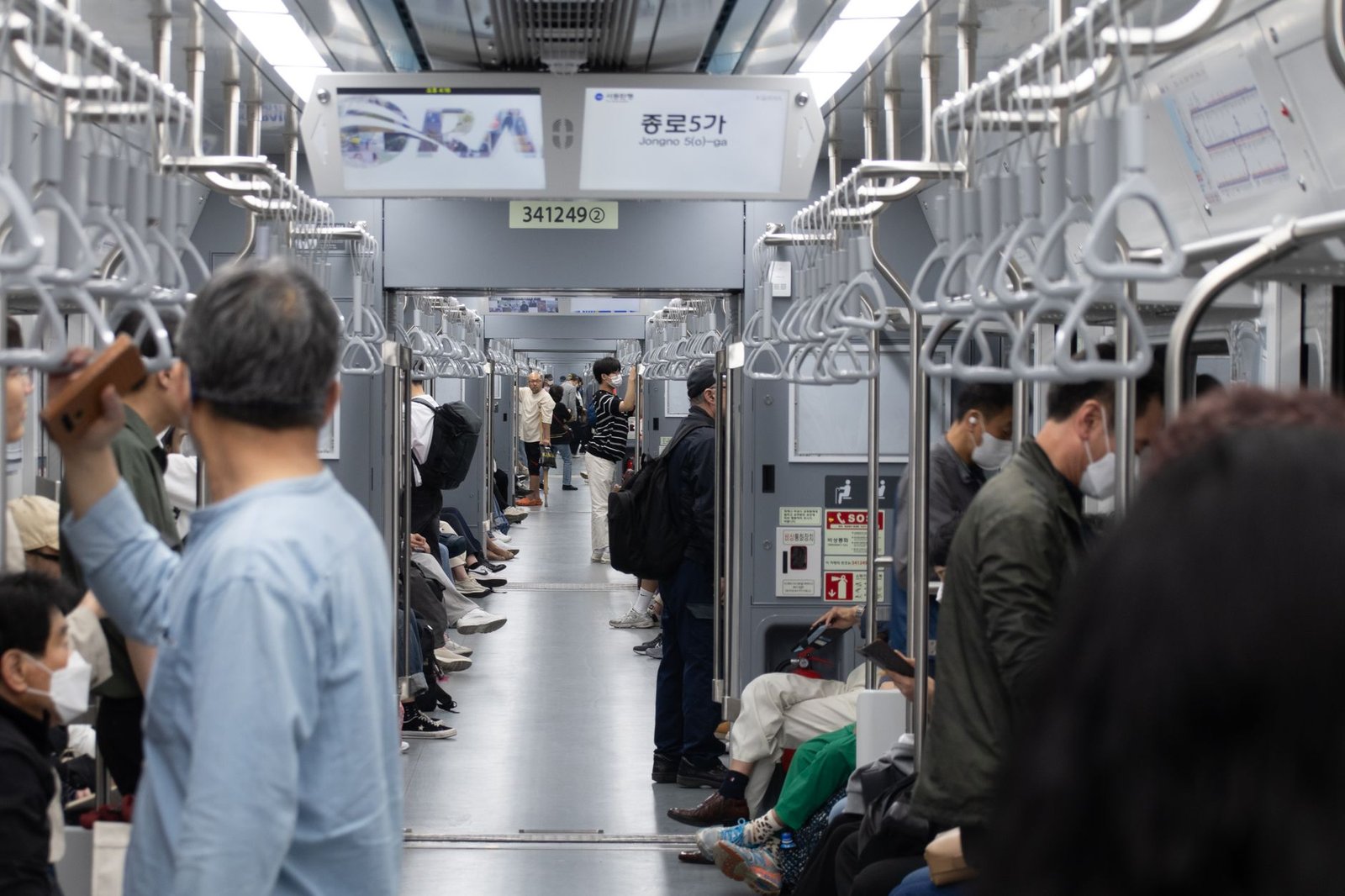
Public transport in Korean cities is straightforward once you have a rechargeable card. A basic T-money card costs from 2,500 KRW to buy, and you can top up from a minimum of 1,000 KRW (as of November 2026, visitkorea.or.kr). It works on subways and buses, and you tap in and out.
Exact subway base fares and standard KTX fares between Seoul and Busan were not verified here, so check the operators before budgeting. The subway is the backbone of Seoul and Busan travel, and signs and announcements include English.
- Buy a T-money card at a convenience store or station machine and load a small amount.
- Tap on entry and again on exit at subway gates.
- Top up when the balance runs low, rather than loading a large amount at once.
Intercity trains
KTX is the high-speed service linking Seoul with cities such as Busan. Foreign visitors can also use the Korail Pass in 2-, 3-, 4- or 5-day options valid within a 10-day window, with unlimited standard-cabin travel on Korail trains including KTX and up to two seat reservations per day (as of November 2026, visitkorea.or.kr). Prices were not verified, so compare the pass against individual tickets for your actual itinerary.
Passes can be bought on the official Let's Korail site (www.korail.com), through designated travel agencies, or at Korail Tourist Information Centers in stations including Seoul, Yongsan and Busan.
For the Seoul to Busan leg, our KTX vs domestic flight comparison sets out the trade-offs.
Money, SIM Cards and Staying Connected
Korea is a card-friendly country, but carrying some cash is still sensible for small vendors, markets and occasional machines. Check with your Australian or New Zealand bank about foreign transaction fees, and tell them your travel dates to avoid blocked cards. Some travellers prefer a travel-focused card to reduce fees; compare options before you go.
For mobile data, the two main routes are an eSIM or a physical SIM or pocket Wi-Fi. An eSIM is convenient because you can install it before leaving home, provided your phone supports it and is unlocked. Confirm both before buying.
- Check phone compatibility for eSIM and unlock status.
- Install before departure if the provider allows it, and activate on arrival.
- Keep your home SIM safe, and consider switching off roaming to avoid charges.
Download offline maps and a translation app before you fly. Mobile data helps, but offline backups are useful when signal or battery lets you down.
If your trip includes Japan as well, our guide to the best eSIM for a Korea and Japan trip covers plans and setup. Because plan prices change often, check the provider page for current rates rather than relying on older figures.
One more practical point: Korea uses a different plug standard from Australia and New Zealand, so bring an adapter, or confirm your accommodation provides one.
Safety, Emergencies and Local Etiquette
Korea is generally regarded as a safe destination for visitors, and normal city precautions apply. Keep valuables secure in crowds, stay aware late at night, and keep copies of your passport and insurance details separate from the originals.
- Police
- 112 (as of November 2026, visitkorea.or.kr)
- Fire and ambulance
- 119 (as of November 2026, visitkorea.or.kr)
- Korea Travel Helpline
- 1330, open 24 hours, 7 days a week, with English and other major languages (as of November 2026, visitkorea.or.kr)
The 1330 helpline is useful for non-emergency questions, such as directions, transport problems or translation help. Save the numbers in your phone before you land.
Etiquette basics
- Remove your shoes when entering homes, many guesthouses and some restaurants with raised floors.
- Offer and receive items with both hands, or with one hand supported, especially with elders.
- Keep your voice low on the subway, and avoid taking calls on speaker.
- Tipping is not customary in most settings.
- Priority seats on the subway are for elderly, pregnant and disabled passengers.
Buy travel insurance that covers medical care, since the visa-free entry does not include health cover. Check that any activities you plan, such as hiking, are included.
If you plan to visit the border region, our guide on what to expect inside the Third Tunnel explains how DMZ visits work, including the rules you will be asked to follow.
Entry Paperwork Checklist Before You Fly
The existing visa section covers the basics, so this part is about turning that information into a pre-departure routine. Australian and New Zealand passport holders are eligible for visa-free entry for stays of up to 90 days under visa waiver agreements (as of October 2026, english.visitkorea.or.kr). Separately, Australian and New Zealand citizens are temporarily exempt from K-ETA requirements under current Ministry of Justice rules (as of October 2026, k-eta.go.kr). The word temporarily matters: exemptions can change, so treat the official site as the final word rather than a blog post, including this one.
If you ever need a K-ETA, for example on a different passport or if the exemption ends, the process is online and must be done before boarding. The notes say approval is generally needed at least 72 hours before departure, and the fee is 10,000 KRW per person, roughly AUD 12 (as of October 2026, k-eta.go.kr). An approved K-ETA is valid for up to 3 years or until the passport expires, and allows multiple entries (as of October 2026, english.visitkorea.or.kr). Do not rely on the AUD figure for budgeting, since live exchange rates were not verified.
- Check that your passport is valid and note its expiry date well ahead of booking flights.
- Open k-eta.go.kr and confirm the current rule for your passport before you travel.
- If an application is required, submit it online, allowing well over the 72-hour minimum.
- Save the approval or confirmation on your phone and keep a printed copy with your itinerary.
Only apply through the official k-eta.go.kr address. Look-alike sites exist, and you should never pay more than the official fee for a service that is not required for your passport.
Flight schedules, operators and durations from Sydney, Melbourne, Brisbane, Perth and Auckland to Incheon (ICN) and Gimpo (GMP) could not be verified here, so check airline and airport websites directly before you build your plan around a particular arrival time. A late arrival affects how you reach your accommodation, so confirm that before you book a first-night hotel.
Using the Korail Pass and T-money Without Overspending
Two small purchases shape most of your daily movement: a T-money card for city transit, and, if you plan several long rail trips, a Korail Pass. They solve different problems, so it helps to decide on each separately.
T-money for city travel
A basic T-money card costs from 2,500 KRW to purchase, and top-ups can be loaded from a minimum of 1,000 KRW (as of October 2026, english.visitkorea.or.kr). Small top-ups are useful because you can add credit as you go instead of guessing your needs on day one. Standard subway base fares were not verified, so check the transit operator's official site if you want a precise per-ride figure.
Load a modest amount first and top up again when the balance runs low. Any leftover credit is easier to manage when you are not carrying a large balance on your last day.
When the Korail Pass makes sense
The Korail Pass is available only to foreign visitors. It comes in 2-, 3-, 4- or 5-day options, valid within a 10-day window, with unlimited standard-cabin travel on Korail trains including KTX and up to 2 seat reservations per day (as of October 2026, english.visitkorea.or.kr). Prices for each tier could not be verified, so check the official Let's Korail site (www.korail.com) for current figures. Standard KTX fares between Seoul and Busan were also not verified, which means the only reliable way to compare is to price your actual trips against the pass on the official site.
- Who can buy it
- Foreign visitors only
- Options
- 2-, 3-, 4- or 5-day passes within a 10-day window
- Seat reservations
- Up to 2 per day
- Where to buy
- Online at www.korail.com, designated travel agencies, or Korail Tourist Information Centers at major stations such as Seoul, Yongsan and Busan (as of October 2026, english.visitkorea.or.kr)
Because the pass counts travel days within a window rather than a fixed run of consecutive days, it suits a trip where you base yourself in Seoul and take one or two separate rail journeys. Count your planned long-distance trips first, then compare. For a worked example of the Seoul to Busan leg, see our KTX vs domestic flight comparison, and for a single-day version of that trip, the Busan day trip itinerary.
The pass covers Korail trains only. Do not assume it replaces your T-money card for subways and buses in the city.
Emergency Numbers and Help While You Travel
Most trips are uneventful, but it is worth saving a few numbers before you land. South Korea's official emergency numbers are 112 for police and 119 for fire and ambulance services (as of October 2026, english.visitkorea.or.kr). Add both to your phone contacts so you do not need to search for them under stress.
For non-emergency questions, the Korea Tourism Organization's 1330 Korea Travel Helpline operates 24 hours a day, 7 days a week in major languages including English (as of October 2026, english.visitkorea.or.kr). It is a sensible first call if you are unsure about directions, a transport problem or where to find a service, and it keeps the emergency lines free for real emergencies.
- Police
- 112
- Fire and ambulance
- 119
- Korea Travel Helpline
- 1330, 24 hours, 7 days, English available
Make sure you have working mobile data before you need to make a call. Our eSIM guide covers the setup, and it is easier to sort out at home than at the arrivals hall.
A short pre-trip routine
- Save 112, 119 and 1330 in your phone.
- Write your accommodation address in Korean and English, so a taxi driver or helper can read it.
- Keep your passport details and travel insurance policy number somewhere offline as well as in your email.
- Check the official K-ETA page once more shortly before departure, since the exemption is described as temporary.
To finish your planning, set your budget using our trip cost breakdown, then confirm flights, rail pass pricing and exchange rates on live official sources, because those are the figures that could not be verified here. With entry rules checked, transit sorted and emergency numbers saved, the remaining decisions are about where you want to spend your days.
Planning Your Route: Seoul, Busan and Jeju
For a first trip, a route built around Seoul, Busan and optionally Jeju covers a good mix of city life, history, coast and nature. Resist the urge to add more stops than your time allows; Korea is compact, but transfers still cost half a day.
Seoul
Seoul deserves the largest share of your time, with palaces, markets, neighbourhoods and food all within reach by subway. Day trips are easy from the city. One well-regarded option is the UNESCO-listed fortress at Suwon; see how to visit Suwon Hwaseong Fortress.
Busan
Busan offers beaches, hillside neighbourhoods and seafood. If you are short on time, a single day is possible, and our Busan day trip itinerary from Seoul lays out a realistic plan. Staying overnight is less rushed.
Jeju
Jeju is an island with volcanic scenery, coastal walks and a slower pace. It generally requires a domestic flight, so factor in transfer time and baggage rules. It suits a relaxed finish to the trip.
- Decide how many nights you have in total.
- Anchor the first block in Seoul, allowing time to adjust to the time zone.
- Add Busan by KTX, and compare Korail Pass value against single tickets.
- Add Jeju only if you have enough days to avoid rushing.
Before you book, recheck entry rules on the official sites, confirm flight schedules with airlines, and fix your budget in won using a live exchange rate. With those three checks done, the rest of your Korea plan can be built step by step with the guides above.
Sources checked November 2026: visitkorea.or.kr, k-eta.go.kr, visitkorea.or.kr, visitkorea.or.kr, visitkorea.or.kr, visitkorea.or.kr.