Start with bibimbap, Korean BBQ, stews, kimbap, and market street food. Tipping isn't expected, cards work almost everywhere, and a little cash helps at market stalls.
Essential Korean dishes to try first
Korean meals are built around rice, soup or stew, and shared side dishes called banchan. For a first trip, a short list of reliable dishes will cover most of what you see on menus, and each one shows a different side of the cuisine.
- Bibimbap: rice topped with seasoned vegetables, usually egg, and gochujang (chili paste), mixed together at the table.
- Korean BBQ (gogi-gui): meat grilled at the table, often pork belly (samgyeopsal) or beef, eaten wrapped in lettuce with garlic and sauces.
- Kimchi jjigae and sundubu-jjigae: bubbling stews served with rice. Sundubu uses soft tofu and is often quite spicy.
- Bulgogi: thinly sliced marinated beef, sweet and savory, and usually the mildest option on this list.
- Kimbap: rolled rice and fillings, a simple, portable meal.
- Naengmyeon: chewy cold noodles, a regional favorite that is eaten year-round.
Many restaurants specialize in one dish, so a place that sells only stew or only grilled pork is normal and usually a good sign. For a wider overview of what to order and where, see the Korea Food Guide.
If you are nervous about spice, start with bulgogi, galbi-tang (beef rib soup), samgyetang (ginseng chicken soup), or gimbap. You can ask for dishes "not spicy" by pointing at the menu and saying the word for spicy, maewo, with a questioning tone.
Regional dishes worth planning around
Korean food changes noticeably by region, so it pays to match meals to where you are traveling. Coastal cities lean on seafood, while inland areas have their own traditions built around rice, vegetables, and fermented flavors.
Busan is known for seafood, pork soup with rice, and a strong market food culture. The Busan food specialties guide covers nine dishes and where to find them, which helps if you have limited meals in the city.
Jeonju is often described as a food capital, with a long tradition of elaborate rice and banchan meals, and bibimbap is closely associated with the city. Our Jeonju guide pairs food with the hanok village and day trip logistics from Seoul.
Gangneung, on the east coast, combines fresh seafood, soft tofu, and a well-known coffee culture. The Gangneung guide shows how market food fits into a beach-and-coffee day.
- Eat what a city is known for rather than repeating Seoul favorites everywhere.
- Allow one meal per stop for the regional specialty.
- Ask a hotel or guesthouse host for a nearby local place; they often know which restaurants are not aimed at tourists.
This approach also spreads your spending and keeps the trip varied, which matters after a long flight from the US, covered by reasonable timing in your itinerary planning.
Street food and market snacks
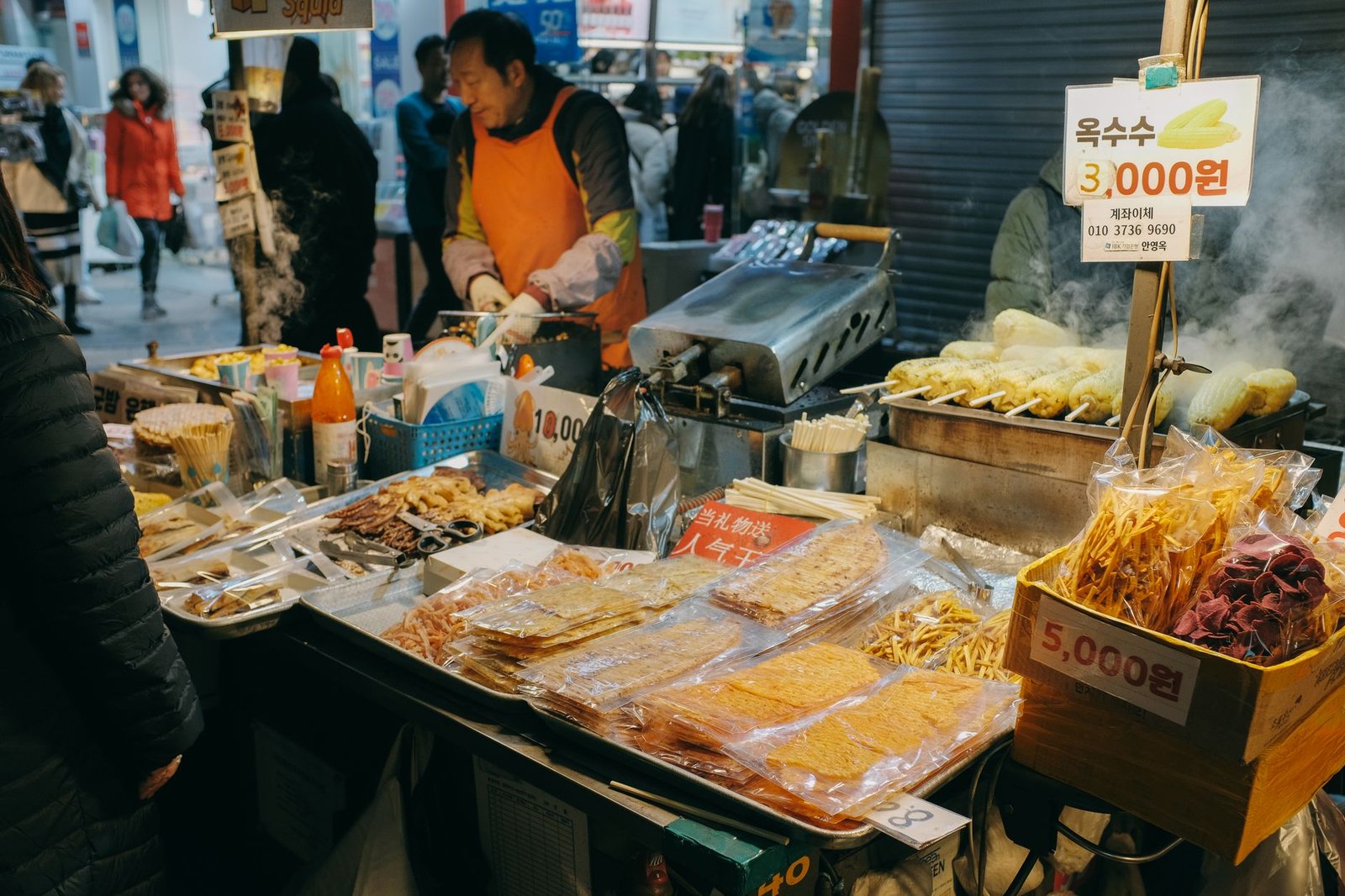
Street food is one of the easiest ways to eat in Korea. Stalls and market alleys sell hot, quick snacks, often for a modest amount, and you can try several things without committing to a full meal.
- Tteokbokki: chewy rice cakes in a sweet-spicy red sauce.
- Hotteok: a pan-fried pancake filled with brown sugar and nuts, popular in cold weather.
- Odeng (fish cake) skewers: served in warm broth, which you can usually sip.
- Twigim: assorted fried items, often dipped in tteokbokki sauce.
- Gyeran-ppang: a small egg bread, sweet and savory.
Our street food list goes through 15 snacks in Seoul and beyond, with a sense of what each one is like.
Carry a small amount of Korean won for stalls. Cards are accepted almost everywhere in restaurants and cafes, but traditional market stalls and street vendors often work better with cash (as of November 2026, Korea Tourism Organization).
Many stalls let you eat standing nearby, and some provide a small cup for broth or a bin for skewers. Finish what you are holding before walking on, since eating while moving through crowded markets is less common and can be awkward.
Korean restaurant customs and etiquette
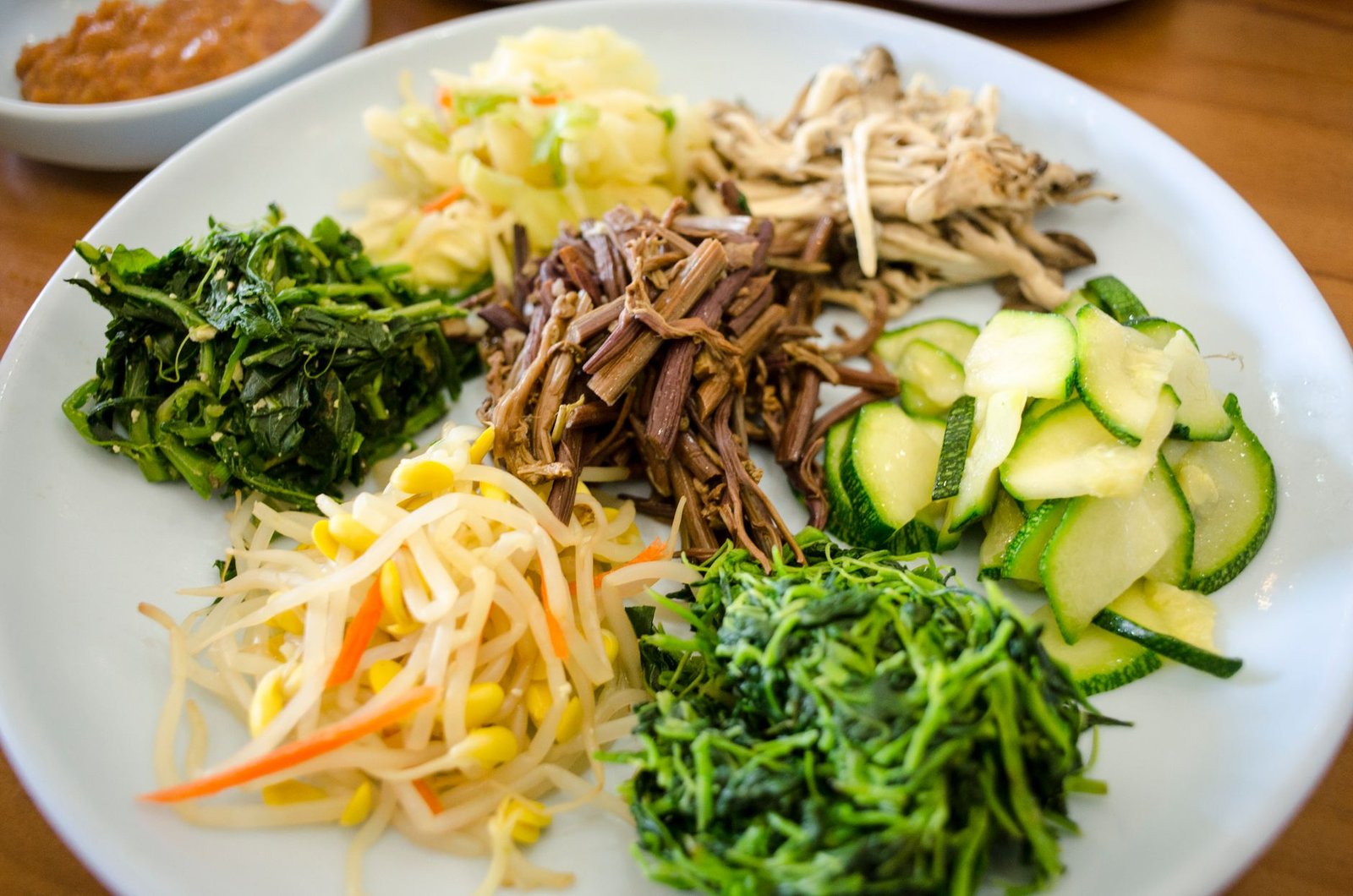
Korean dining is communal. Dishes are placed in the center, and everyone shares the stews, grilled meat, and banchan. Rice and soup are individual, and you eat them with a spoon, while chopsticks, usually metal, handle the side dishes.
Some practical habits help you fit in without effort:
- Wait for the oldest person at the table to start eating, if you are with a group.
- Use the spoon for rice and soup, and avoid sticking chopsticks upright in rice.
- When someone pours a drink for you, receive the glass with both hands if you can, and pour for others in return.
- At grill restaurants, staff often cook or cut the meat for you at first. Let them, then follow their pace.
- Do not blow your nose at the table; step away instead.
Banchan is usually refilled free of charge, and it is fine to ask for more of something you like. Some restaurants have self-service stations for side dishes and water.
Many grill restaurants require a minimum of two portions per table, and solo diners can find this frustrating. Look for stew, bibimbap, or noodle shops, which are usually set up for one person.
Shoes come off at some traditional floor-seating restaurants. Look for a shoe shelf or a raised floor at the entrance, and follow what other guests do.
How to order, pay, and tip as a US visitor
Ordering in Korea is more mechanical than in many US restaurants, and that makes it easier. Many restaurants have table-call buttons to summon servers, and some use digital kiosks or self-service counters for ordering, water, and side dishes (as of November 2026, Korea Tourism Organization).
- Sit down and look for a call button on the table or a kiosk near the entrance.
- Order by pointing at the menu, a photo, or a translation on your phone.
- Press the button when you need water, more banchan, or the bill.
- At many places, you pay at a counter near the door when you leave, rather than at the table.
Credit cards, including Visa and Mastercard, are accepted almost everywhere in restaurants and cafes. Carry a small amount of won for traditional markets and street vendors (as of November 2026, Korea Tourism Organization).
- Tipping
- Not customary or expected, and not required (as of November 2026, Korea Tourism Organization).
- Tax and service
- Menu prices legally include VAT, and separate cover fees or mandatory service charges are generally not added (as of November 2026, Korea Tourism Organization).
Prices and hours can vary by branch and season — check the official site before you go.
This is a real difference from the US: the price on the menu is generally the price you pay. Calling a server with the button is normal and not considered rude.
Vegetarian, allergy, and dietary tips
Korean food relies on fish sauce, anchovy broth, and meat in many dishes that look vegetarian. Kimchi often contains fish sauce or shrimp paste, and stews are frequently made with meat or seafood stock. Asking is more reliable than assuming.
Temple food is a distinctive option for plant-based eating, and some cities have vegan restaurants. Our guide on finding vegan restaurants and temple food in Korea goes through how to search and what to expect.
The Korea Tourism Organization offers travel information and dining guidance for travelers who need vegetarian options or customized meals because of food allergies (as of November 2026, Korea Tourism Organization). It also publishes Muslim-friendly restaurant classifications: Halal Certified, Self-Certified, Muslim-Friendly, and Pork-Free (as of November 2026, Korea Tourism Organization). You can start from the official Visit Korea page.
For serious allergies, do not rely on a menu description alone. Save a short written note in Korean listing your allergens, and show it to staff before ordering. Cross-contact is hard to rule out in shared kitchens and shared grills.
- Common allergens in Korean cooking include soy, sesame, shellfish, peanuts, and egg.
- Sesame oil is used widely, often as a finishing touch.
- Ask whether the broth is meat- or seafood-based before ordering any soup.
Where to eat by budget
Official sources do not publish fixed nationwide prices for dishes like kimbap, bibimbap, or Korean BBQ in 2026, since prices vary by location, restaurant style, and meat cut. So rather than quoting numbers, it is more useful to think in tiers and check menus posted outside restaurants.
Lower cost
Street stalls, market food courts, kimbap shops, and simple noodle or rice-bowl restaurants are the usual low-cost options. Many post their menu and prices on the wall or window, so you can see before you sit down. Convenience stores also sell prepared meals, which can help on early mornings or late nights.
Mid-range
Single-dish specialty restaurants, such as stew, soup, or noodle shops, offer filling meals without much fuss. Grill restaurants usually cost more per person than stews because meat is priced by portion, and cuts of beef often cost more than pork.
Higher end
Hanjeongsik (a multi-course traditional meal), premium beef restaurants, and hotel dining sit at the top. Reservations are more useful there, and the menu may include set courses.
Use lunch for the bigger sit-down meal. Many restaurants offer set lunch menus, and eating your main meal earlier makes street food and snacks more enjoyable in the evening. Check each restaurant's posted menu for current prices.
Eating in winter and by season
Season changes what is worth ordering. In cold months, hot stews, soups, and street snacks make a big difference to how comfortable a day outdoors feels, and plenty of dishes taste best when it is cold.
Our guide to Korean food in winter lists 10 warming dishes, from stews to sweet snacks. If you are planning a cold-weather trip, the 7-day winter itinerary shows how to fit meals around snow and sightseeing.
- Winter: hotteok, odeng broth, hot stews, and roasted sweet potatoes at stalls.
- Summer: cold noodles such as naengmyeon, and chilled soups.
- All year: kimbap, bibimbap, and grilled meat are available whatever the weather.
Hot broth at a stall is a practical way to warm up between sights, and it costs little. Plan indoor meals for the coldest part of the day and street food for walking stretches, rather than the other way around.
Arrival, jet lag, and your first meals
US visitors usually arrive in Incheon tired. Nonstop flights from Los Angeles take roughly 11 to 13 hours, from San Francisco about 12 to 13 hours, and from New York around 14 to 15 hours, depending on direction (as of November 2026, airport.kr). So your first meal is often a gentle one.
US passport holders can enter without a visa for tourism or short stays of up to 90 days (as of November 2026, K-ETA). Check the K-ETA site for the current entry status before you fly, since rules can change.
- Choose a mild, familiar dish first, such as bibimbap, kimbap, or a clear soup.
- Drink water and keep spicy dishes for the second day if your stomach feels unsettled.
- Eat at local meal times where you can; many restaurants are busy at lunch and dinner and quieter in between.
Jet lag often makes you hungry at odd hours. Convenience stores and some 24-hour restaurants can help, but hours vary by place, so check the listing before heading out late.
Paying, Calling the Server, and Ordering Without Stress
Most first-time visitors worry about the mechanics of a Korean meal more than the food itself. The good news is that the system is simple once you know a few habits, and the research basis here is the Korea Tourism Organization (english.visitkorea.or.kr).
Paying the bill
Credit cards, including Visa and Mastercard, are accepted almost everywhere in restaurants and cafes (as of October 2026, english.visitkorea.or.kr). Carry a small amount of Korean won in cash for traditional market stalls and street food vendors, where card readers are less dependable. If you are heading to a market, see our Korean street food list for ideas on what to look for.
Tipping and service charges
Tipping is not customary or expected in South Korea, and you do not need to leave one (as of October 2026, english.visitkorea.or.kr). Menu prices legally include value-added tax, and separate cover fees or mandatory service charges are generally not added to the bill. The price on the menu is, in practice, the price you pay.
Table-call buttons, kiosks, and self-service
Many restaurants place a call button on the table. Press it when you are ready to order, need more side dishes, or want the bill. Calling out across the room is not necessary, and waiting quietly for the server is normal. Some places use a digital kiosk or a self-service counter for ordering, water, and side dishes (as of October 2026, english.visitkorea.or.kr).
If you cannot see a server, look at the table edge, the wall, and the counter before assuming nobody is available. A call button, a water station, or a kiosk near the entrance is common.
- Sit down and look for a call button or a kiosk before you wave anyone over.
- Order using the menu, the kiosk screen, or by pointing at photos if there are any.
- Use the self-service counter for water and side dishes where one exists.
- Press the button when you want extra items or the check.
- Pay by card at the counter or table, with no tip added.
Do not assume every small stall takes cards. Keep some won on hand for markets so a snack stop does not turn into a search for an ATM.
For a wider overview of dishes and ordering phrases, the Korea food guide pairs well with this section.
Dietary Needs: Halal, Vegetarian, and Allergy Resources
Korean cooking relies on fish sauce, anchovy broth, and pork in many everyday dishes, so a plain-looking menu item can hide ingredients you want to avoid. Planning ahead helps more than relying on guesswork at the table.
Halal and Muslim-friendly dining
The Korea Tourism Organization provides official Muslim-friendly restaurant classifications: Halal Certified, Self-Certified, Muslim-Friendly, and Pork-Free (as of October 2026, english.visitkorea.or.kr). The categories differ, so check which one a restaurant holds. Halal Certified and Pork-Free do not mean the same thing, and you should decide what level suits your needs before choosing.
Vegetarian travelers and food allergies
Korea Tourism Organization platforms also offer travel information and dining guidance for visitors who need vegetarian options or customized meals because of food allergies (as of October 2026, english.visitkorea.or.kr). These are a sensible first stop when building a list of places to eat. For temple food and vegan restaurants specifically, read our guide on how to find vegan restaurants and temple food in Korea.
Broths, sauces, and side dishes are where hidden ingredients usually appear. Ask about them directly, and do not treat a vegetable-heavy dish as automatically safe.
Write down your restrictions in Korean on your phone, or have a translation ready to show staff. A short, specific note works better than a long explanation at a busy counter.
If you have a serious allergy, confirm with the restaurant before you order and consider choosing places that already advertise customized meals.
Planning Meals Around Your Flight and Entry
Your first meals depend on when you land, so it helps to know the flight length and entry basics before you build an eating plan.
Flight times to Incheon
Approximate nonstop flight times to Incheon (ICN) are 11 to 13 hours from Los Angeles, 12 to 13 hours from San Francisco, and 14 to 15 hours from New York (JFK), depending on direction (as of October 2026, airport.kr). After a flight that long, a light, warm meal is often easier than a heavy barbecue session on the first night.
Entry rules for US visitors
US passport holders can enter South Korea without a visa for tourism or short stays of up to 90 days (as of October 2026, k-eta.go.kr). K-ETA temporary exemptions are active for eligible countries, including the United States. Check k-eta.go.kr before departure, since entry rules can change.
Prices: what to expect
- Dish prices
- Official sources do not publish fixed nationwide prices for items such as kimbap, bibimbap, or Korean BBQ. Prices vary by location, restaurant style, and meat cut, so check the menu posted at the door.
- Tax and service
- VAT is included in menu prices, and mandatory service charges are generally not added (english.visitkorea.or.kr).
Because prices are not fixed, compare the menu outside before sitting down, especially in tourist-heavy districts. For regional ideas once you are settled, see Busan food specialties.
In short, bring a little cash, use the table button, check dietary classifications ahead of time, and keep the first meal after landing simple.
Practical tips for eating in Korea
A few habits make eating in Korea smoother, especially in your first days.
- Bring a translation app and download Korean offline, so you can read menus and show allergy notes.
- Carry small won for stalls and markets, and use a card elsewhere (as of November 2026, Korea Tourism Organization).
- Skip the tip. It is not customary or expected, and prices already include VAT (as of November 2026, Korea Tourism Organization).
- Use the call button for water, side dishes, and the bill.
- Look at what other tables are eating and ask for the same; it is a common and accepted way to order.
- Share dishes. Ordering a few items for the table is the usual approach.
Restaurants with plastic food models or photos outside are easy for first-timers, since you can point at what you want.
To wrap up: start with a few essentials, add street snacks at markets, match meals to the region you are in, and ask early about dietary needs. For a broader planner, return to the Korea Food Guide and build your meals around each stop on your route.
Sources checked November 2026: mykoreaq.com, lemon8-app.com, flightq.app, kayak.com, thrivetravel.com, visitkorea.or.kr.